 James Cooper
Most people assume balance gets worse with age the same way hair goes gray: inevitable, random, not much you can do about it. I believed that too, for longer than I’d like to admit. What changed my mind was watching a 71-year-old client named Margaret go from grabbing door frames every time she stood up to hiking a moderately technical trail in the Catskills, twelve weeks after we started working together. That doesn’t happen if balance decline is just “aging.”
So I went looking for the actual reasons. And what I found is that the story most people get, even from their own doctors sometimes, is incomplete in ways that really matter.
Your Balance System Is Actually Three Systems in One
| Balance System | Primary Component | Age of Decline | Key Function |
|---|---|---|---|
| Vestibular | Inner ear hair cells | ~55 years | Detects movement and head position |
| Visual | Eyes | Variable | Depth perception and low-light vision |
| Proprioceptive | Muscle, tendon, and joint sensors | Variable | Spatial awareness without visual input |
Here’s what surprised me when I first started digging into the physiology: balance isn’t a single thing your body does. It’s the product of three separate input systems working simultaneously, all feeding into your brain, which then coordinates a response. Lose significant function in any one of them and you’re working with a handicap. Lose function in two, and falls become a genuine daily risk.
The three systems are your vestibular system (the inner ear, which detects movement and head position), your visual system (your eyes), and your proprioceptive system (sensors throughout your muscles, tendons, and joints that tell your brain where your body is in space without you having to look).
In younger adults, these systems overlap enough that if one gives you bad data, the others compensate. The problem with aging is that all three tend to degrade on roughly the same timeline. The vestibular system starts losing hair cells (the mechanical sensors in the inner ear) after about age 55. Vision deteriorates, especially depth perception and the ability to see in low light. And proprioception, which I’d argue is the most underappreciated of the three, quietly erodes as nerve conduction velocity slows and joint receptors become less sensitive.
When all three are declining at once, there’s no redundancy left. A 72-year-old getting up in the middle of the night, moving through a dark room, walking on carpet that compresses unevenly underfoot, that person is operating on degraded signals from all three systems simultaneously. That’s when falls happen.
The Muscle Problem Everyone Knows About (But Usually Gets Wrong)
Sarcopenia, the age-related loss of muscle mass and strength, gets a lot of attention, and it deserves some. Muscle mass can decline at roughly 1-2% per year after age 50 if you’re not doing anything to fight it, with the rate accelerating after 70. But the piece that gets less attention is which muscles matter most for balance, and the answer isn’t what most people expect.
It’s not core strength. (I know. I was surprised too.) Or rather, core strength matters, but it’s not the limiting factor most commonly responsible for balance failures in older adults. The ankles are.
The ankle musculature, specifically the tibialis anterior at the front and the peroneals on the outside, provides the micro-adjustments that keep you upright during normal standing and walking. These are fast-twitch, reactive movements. They happen before your conscious brain is even aware you’re losing your footing. And those fast-twitch muscle fibers are exactly what sarcopenia hits hardest and earliest.
A study published in the Journal of Gerontology found that ankle plantar flexor power was a stronger predictor of fall risk in adults over 65 than any other single muscle group tested. Not hip strength, not knee extension, not grip strength. Ankles.
I made this mistake myself early in my career: I’d put older clients on programs heavy with seated leg presses and core exercises, wondering why their balance wasn’t improving much. Once I started prioritizing single-leg standing, heel raises, and ankle-stability work, the improvements were faster and more durable.
Medications: The Underreported Culprit
How to Improve Balance | Senior Exercises for Balance · Yes2Next on YouTube
I’ll be honest: this is the section I wish more people talked about openly.
As of July 2026, the average American over 65 takes somewhere between four and five prescription medications simultaneously. That number comes from CDC tracking data, and it’s been climbing for years. And a significant subset of those medications, individually or in combination, directly impair balance.
The categories to know: benzodiazepines (Xanax, Valium, Ativan), sleep aids, first-generation antihistamines like diphenhydramine (Benadryl), antihypertensives (especially if the dose causes blood pressure to drop when standing), and antidepressants, particularly tricyclics. These medications can cause sedation, slow reaction time, impair vestibular function, or create orthostatic hypotension, the dizzy drop you feel when you stand up too fast.
Polypharmacy-related falls are one of the most preventable categories of falls in older adults, and they’re systematically underdiscussed. I’ve had clients come to me after a fall where the real culprit was a medication combination their three different prescribing doctors didn’t know the others had added. That coordination failure is common.
If balance is a concern for you or someone you care about, a medication review with a pharmacist or physician specifically focused on fall risk is worth asking for explicitly. The American Geriatrics Society maintains something called the Beers Criteria, a list of medications considered high-risk for older adults, and it’s publicly available. Look it up.
The Fear of Falling Problem (Which Makes the Falling Problem Worse)
This one is a feedback loop, and it’s genuinely underestimated.
After one fall, or even a near-fall, many older adults start restricting their movement. They stop walking on uneven surfaces, avoid stairs when possible, cut back on social activities that require walking through unfamiliar environments. Research consistently shows that activity restriction following a fall actually accelerates the physical decline that caused the fall in the first place. Less movement means weaker legs, less proprioceptive stimulation, and lower confidence, which leads to more restriction.
Fear of falling is now recognized as an independent risk factor for future falls in the gerontology literature. The psychological component is real and it interacts with the physical components in ways that make both worse.
The worked examples here are telling:
Robert, a 68-year-old retired teacher, fell in his driveway in late winter and fractured his wrist. After recovery, he stopped taking his daily walks out of fear. Six months later, his balance assessments showed meaningful decline across three of four standardized measures. When he restarted a structured walking and balance program, it took him four months to return to his pre-fall functional level. The fear-driven gap cost him almost a year of capacity.
Compare that to Eleanor, a 74-year-old who fell on a walking trail and came to me within three weeks of being cleared by her orthopedist. We started slowly, worked on her proprioceptive training, included gradual exposure to outdoor and uneven surfaces. She was back on trails in eight weeks, with better measured balance scores than she’d had before the fall.
The difference wasn’t just physical. Eleanor’s early return to activity short-circuited the psychological restriction spiral before it could take hold.
What Actually Helps (And One Thing That’s Overrated)
The research on balance interventions for older adults is, honestly, more encouraging than the popular narrative suggests.
Tai chi is the intervention with the strongest evidence base. A meta-analysis covering multiple randomized controlled trials found that regular tai chi practice (generally two to three sessions per week for at least 12 weeks) reduced fall rates in older adults by around 40-50%. That’s a genuinely large effect. The mechanism is probably a combination of proprioceptive training, slower controlled movements that challenge the balance systems, and lower limb strengthening.
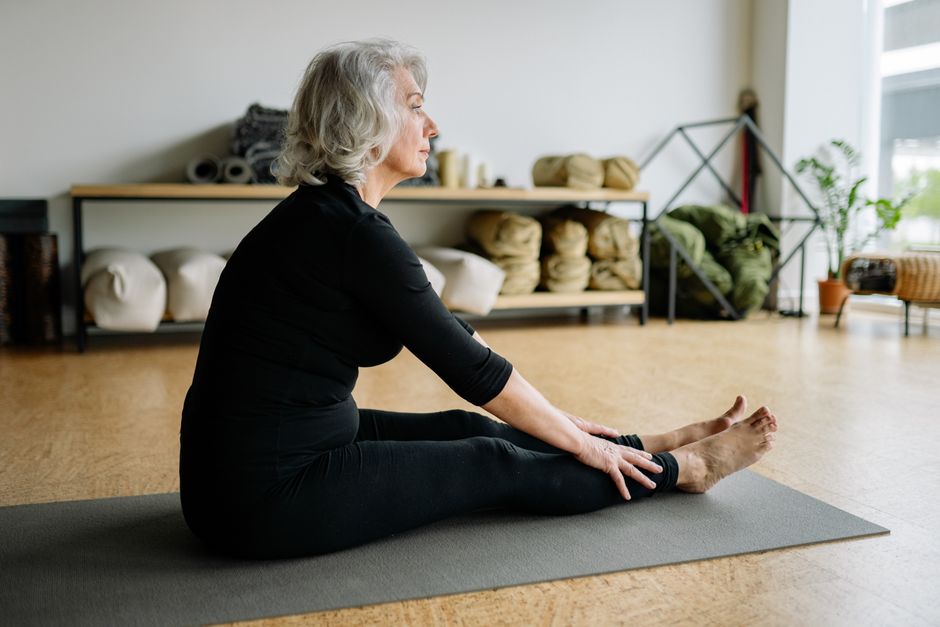
Single-leg standing, done consistently, is cheap, requires no equipment, and has solid evidence behind it. Practice standing on one foot while doing dishes or brushing your teeth. The goal isn’t to hold it forever: just building up to 10 seconds per side with eyes open, then eventually with eyes closed, challenges the vestibular and proprioceptive systems meaningfully.
A concrete example: Dorothy, 77 years old, came to me after her doctor flagged her on a fall-risk screening. She had no recent falls but showed worrying patterns on a Berg Balance Scale assessment. We added 10 minutes of daily single-leg standing practice plus two weekly tai chi classes. After 12 weeks, her Berg Balance Score improved by 9 points (from 43 to 52 out of 56), moving her from moderate fall risk to low fall risk by standard clinical thresholds.
The overrated intervention? Grip rails and grab bars installed without any accompanying balance training. They’re not harmful, and for someone already at high fall risk in the home, they’re sensible. But I’ve seen families spend $800 on home modifications while skipping the balance training that would have done ten times more functional good. The bars are a safety net; they don’t address the underlying problem.
Sources
- American Geriatrics Society: Beers Criteria for Potentially Inappropriate Medication Use in Older Adults, updated guidelines covering medications associated with fall risk in adults 65 and older.
- Journal of Gerontology (Biological Sciences): Research on ankle plantar flexor power as a predictor of fall risk in older adults.
- CDC National Center for Injury Prevention and Control: Epidemiological data on falls among adults 65 and older, including prevalence, hospitalization rates, and risk factor tracking.
- Sherrington C. et al., British Journal of Sports Medicine: Meta-analysis of exercise interventions for fall prevention in community-dwelling older adults, including tai chi outcomes data.
- Vestibular Disorders Association (VeDA): Clinical overview of age-related vestibular changes and their contribution to balance impairment.
Photo: Vlada Karpovich via Pexels
This article is for general informational purposes only and does not constitute medical or fitness advice. Consult your physician or a licensed physical therapist before starting a new exercise program, especially if you have existing health conditions.