 Robert Davis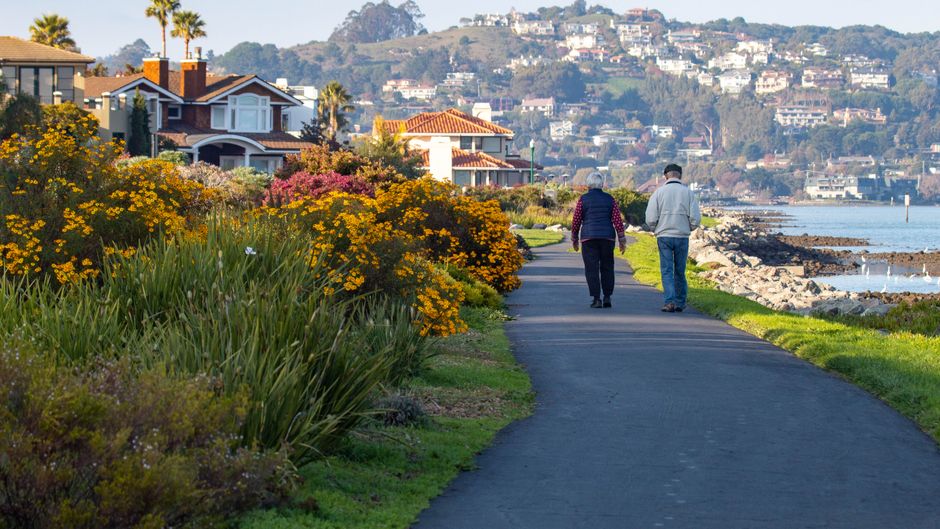
Most people who come to me have already tried something. They walked every day for two weeks, felt good, then pushed a little too hard one afternoon and spent the next three days with aching knees. Or they bought a fitness tracker, followed a generic “10,000 steps a day” plan, and quit after a month because nothing seemed to be changing. Sound familiar?
You might be wondering if there’s actually a smarter way to approach this, or whether walking for fitness at 60, 70, or 80-something is just wishful thinking. Here’s what I tell people when they first sit across from me: walking is probably the single most powerful thing you can do for your long-term health as an older adult, but only if you structure it correctly. Done wrong, it’s just accumulated fatigue. Done right, it builds real strength, measurably improves balance, and can reduce your fall risk by more than you’d expect.
I’ve been working with adults over 60 for nearly 15 years, and I’ve watched people in their mid-70s go from shuffling 10 minutes around the block to walking 45-minute hilly routes. That doesn’t happen by accident. It happens because they followed a plan that respected where they were starting from.
- Start with just 10-15 minutes of walking per day and build no more than 10% per week to avoid overuse injuries.
- Pace matters more than distance: aim for "somewhat breathless but can still talk" as your intensity target.
- Three walking sessions per week beats seven inconsistent ones for sustainable strength and balance gains.
- Adding two short strength days per week amplifies walking benefits significantly, especially for fall prevention.
- Proper footwear (motion-control or stability shoes, $80-$130) is not optional, it changes your gait mechanics.
Why Generic Walking Advice Often Backfires
The “10,000 steps a day” target is everywhere. Pedometers, fitness apps, doctor’s offices, all of them repeat it. The problem is that number came from a 1960s Japanese marketing campaign for a pedometer called the Manpo-kei, which translates roughly to “10,000 steps meter.” It wasn’t based on clinical research. It was a slogan.
The actual research tells a more nuanced story. A landmark study published in JAMA Internal Medicine tracked nearly 17,000 older women and found that mortality benefits leveled off around 7,500 steps per day, with no additional benefit from more steps. For adults starting from a low baseline, even 4,000 to 5,000 steps per day produced significant health improvements. That means if you’re currently walking 2,000 steps a day and you double it to 4,000, you’re doing something genuinely meaningful. You don’t need to triple it.
I made this mistake myself early in my career. I’d tell new clients, “Let’s shoot for 10,000 steps,” and watch them overdo it in week one, get sore, lose motivation, and fall back to zero. Now my first conversation with anyone is about where they actually are, not where they think they should be.
Building Your First 8 Weeks
The structure below is what I’d actually give a new client who’s generally healthy but deconditioned, has some arthritic discomfort, or is recovering confidence after a fall or illness. Adjust it to your own situation. If you have significant balance issues, recent surgery, or cardiovascular concerns, run this by your doctor before you start.
Here’s what a realistic progression looks like:
| Week | Sessions/Week | Duration Per Session | Pace Target | Focus |
|---|---|---|---|---|
| 1-2 | 3 | 10-15 min | Comfortable, conversational | Build the habit, not the fitness |
| 3-4 | 3-4 | 15-20 min | Slightly brisker, still conversational | Add a little challenge |
| 5-6 | 4 | 20-30 min | Somewhat breathless, can still talk | True aerobic zone |
| 7-8 | 4-5 | 25-35 min | Mix of comfortable and brisk | Introduce interval variation |
The “somewhat breathless but can still talk” standard is called the talk test, and it maps reasonably well to a moderate-intensity effort (roughly 40-60% of max heart rate) without requiring any equipment. If you can sing comfortably, you’re going too easy. If you can’t string together a sentence, back off.
One thing nobody tells you: in weeks one and two, you will probably feel like you’re doing nothing. That’s intentional. The early weeks are about building the connective tissue, tendons and ligaments, not just cardiovascular fitness. Those tissues adapt more slowly than your muscles and heart. If you jump to 40-minute walks in week one because it “feels too easy,” you’ll pay for it around day 10, usually in the ankles or knees.
After week 8, you’re not starting over, you’re expanding. At that point you can add gentle inclines, add a few minutes of interval walking (1 minute brisk, 2 minutes easy, repeat), or start layering in the strength work I’ll describe below.
The Surface Question Nobody Asks
10 Minute Full body Strength Workout for Beginners & Seniors // Osteoporosis Friendly · SeniorShape Fitness on YouTube
Here’s a small detail that makes a surprisingly big difference: where you walk matters as much as how long.
Concrete is hard and unforgiving. Asphalt is slightly better. A packed gravel trail or a rubberized track at a local recreation center is easier on your joints than any road surface. Grass is great for proprioception (your body’s awareness of ground position), but uneven grass can be tricky if balance is a concern. Treadmills are fine for days when weather or safety is an issue, but they don’t train your balance the same way outdoor terrain does, because the belt moves under you rather than you propelling yourself forward.
In my experience, people with knee osteoarthritis do noticeably better on softer surfaces. I had one client, a 71-year-old retired teacher named Carol, who had been walking on her neighborhood sidewalks with persistent knee pain for years. We switched her to a local park trail, kept everything else the same, and within about three weeks she was reporting significantly less pain and more consistency. I don’t have a randomized trial to prove it was purely the surface, but anecdotally, it’s one of the first things I ask about.
Footwear: The Place Most People Underspend
A $35 pair of sneakers from the big-box store is not a walking shoe. I know that sounds blunt, but I’ve seen the difference it makes, and I’ll say it plainly.
For adults over 60, I generally recommend stability or motion-control walking shoes. Not running shoes with heavy cushioning in the heel, which can actually reduce ground-feel and make balance slightly harder, but a walking-specific shoe with good arch support, a moderately firm midsole, and a slightly wider toe box. Brands worth looking at: New Balance (their 928 model runs around $110 and is consistently well-reviewed for older walkers), Brooks (Addiction Walker, around $130), or ASICS (Gel-Nimbuswalker line). You don’t need to spend more than that. Above $150, you’re mostly paying for design.
Get fitted at a specialty running or walking store where staff can actually watch you walk. Fleet Feet and Road Runner Sports both offer this service. It takes about 20 minutes and can save you months of preventable foot and ankle trouble.
Replace walking shoes every 400-500 miles, or roughly every 6-12 months for someone walking 4-5 days a week. The cushioning compresses and the structural support breaks down before the outsole looks worn. This is the thing that surprises almost everyone.
Strength Work Makes the Walking Work Better
You might be wondering: if I’m here for a walking plan, why are we talking about strength training?
Because the research on fall prevention is clear, and walking alone isn’t quite enough to close the gap. A 2019 Cochrane systematic review of 108 trials found that exercise programs combining balance and functional training with muscle-strengthening reduced fall rates by roughly 23% compared to control groups. Walking alone, in the same analysis, had a more modest effect.
The good news is that you don’t need to join a gym or spend an hour lifting weights. Two short strength sessions per week, 15-20 minutes each, targeting the hips, glutes, and lower legs, amplifies what the walking is building. Sit-to-stands from a chair (10-15 reps), heel raises while holding a counter (15-20 reps), and side-lying hip abductions (10-12 per side) cover a lot of ground. None of these require equipment.
Scenario: Margaret, 74 years old, started walking 20 minutes three times a week with no strength work added. After 12 weeks, her resting heart rate dropped from 78 to 71 bpm, and she felt better. Then we added two short strength sessions per week. Eight weeks later, her timed-up-and-go score (a clinical balance test where you rise from a chair, walk 10 feet, return, and sit) improved from 13.4 seconds to 9.8 seconds. That’s the difference between a score that flags moderate fall risk and one that falls within the normal range for her age. Walking got her started; the strength work changed her functional outcomes.
What “Progress” Actually Looks Like
Progress in walking programs for older adults doesn’t always look the way people expect.
It’s not always faster. It’s often more stable. Clients describe it as “my feet feel more confident on the ground” or “I’m not thinking about each step as much.” That’s your nervous system adapting, and it’s every bit as real as an improvement on a stopwatch.
A few markers worth tracking:
- Resting heart rate. Check it first thing in the morning. A downward trend over 6-8 weeks means your cardiovascular system is adapting.
- Timed-up-and-go. Do it yourself at home: set a chair against a wall, time how long it takes to stand, walk 10 feet to a mark on the floor, turn, walk back, and sit. Anything under 12 seconds is generally considered low fall-risk for adults over 65. Track it monthly.
- How far you feel like you can go. Subjective, yes, but your perception of effort is a real physiological marker.
Don’t track steps obsessively. Tracking time and perceived effort tells you more, with less anxiety about hitting a number.
Sources
- [Lee IM et al. (2019), JAMA Internal Medicine]: Association of step volume and intensity with mortality in older women; mortality benefits plateaued around 7,500 steps/day.
- [Sherrington C et al. (2019), Cochrane Database of Systematic Reviews]: Systematic review of 108 trials on exercise for fall prevention in community-dwelling older adults.
- [American College of Sports Medicine (ACSM) Position Stand, current as of 2026]: Physical activity guidelines for older adults, including recommended frequency, intensity, and type of exercise.
- [National Institute on Aging (NIA), Go4Life Program materials]: Evidence-based walking and strength resources specifically for adults 65+.
- [Tudor-Locke C and Bassett DR (2004), Sports Medicine]: Original analysis of step-count categories and their relationship to health outcomes; foundation for questioning the 10,000-step myth.
Photo: Robert So via Pexels
This article is for general informational purposes only and does not constitute medical or fitness advice. Consult your physician or a licensed physical therapist before starting a new exercise program, especially if you have existing health conditions.