 Dr. Patricia Williams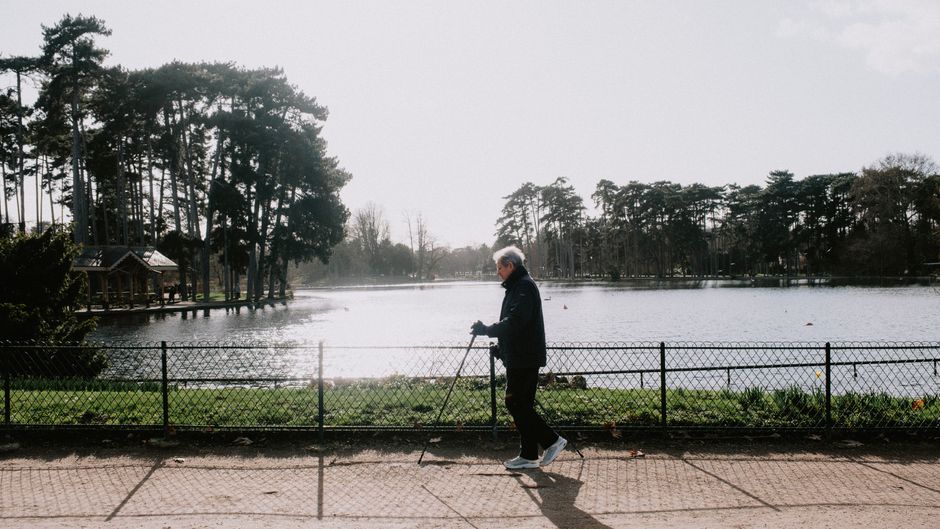
Nearly one in three adults over 65 falls each year, but the part that stopped me cold when I first read the research was this: a significant portion of those falls aren’t caused by muscle weakness or poor vision. They’re caused by gait abnormalities that nobody caught, nobody addressed, and that simple targeted walking practice could have improved. The CDC puts fall-related emergency visits at around 3 million annually for older adults. Three million. And the thing is, gait training is one of the most underutilized tools in senior fitness, probably because it sounds boring compared to balance boards and resistance bands.
I’ll be honest: when I started working specifically with adults over 60 about fifteen years ago, I thought gait was something you assessed, noted, and then sort of worked around. It took watching a 71-year-old client named Robert, who shuffled so badly his toes barely cleared the ground, go from that baseline to a confident, heel-striking walker over about fourteen weeks, to make me take this seriously. The change wasn’t magic. It was specific, progressive walking drills done four times a week. Robert told me, at the end, that he’d stopped avoiding grocery stores because the floors weren’t scary anymore.
What surprised me was how much the science has caught up to what I was seeing clinically. A 2023 study published in the Journal of Aging and Physical Activity found that structured gait training programs improved walking speed by an average of 0.18 meters per second in older adults, which sounds small but crosses a clinically meaningful threshold. Gait speed below 0.8 m/s is associated with significantly elevated fall risk and even all-cause mortality, according to data from the NIH’s National Institute on Aging.
- Gait speed below 0.8 m/s predicts sharply elevated fall risk; targeted walking drills can raise it measurably in 8-14 weeks.
- Toe-clearance failures (not muscle weakness alone) cause many falls; high-stepping and heel-strike drills directly address this.
- 4 sessions per week of 20-30 minutes outperforms longer, less frequent sessions for gait improvement in adults over 65.
- Tandem walking and obstacle-course practice reduce fear of falling, which is itself a documented fall risk factor.
- A simple 4-meter walk test at home can track progress without equipment.
Why Gait Changes With Age (and Why That Matters for What You Practice)
Normal aging affects gait in predictable ways. Step length shortens. Cadence drops. Double-support time (the fraction of your stride when both feet are on the ground simultaneously) increases because the nervous system is hedging against a fall it senses coming. Hip extension decreases because hip flexors tighten and glutes weaken. Toe clearance shrinks, sometimes to just a few millimeters. Any one of these changes is manageable. Combined, they compound into a shuffling, forward-leaning walk that the clinical world calls “senile gait,” though I find that label unhelpfully discouraging.
The good news is that most of these changes are partially reversible with the right training. Not all of them. The research here is genuinely mixed on how much you can recover versus how much you can compensate and manage. What the evidence does support fairly consistently is that walking-specific drills that target heel strike, hip extension, and single-leg stance time produce measurable improvements in gait speed and stability.
The Drills That Actually Move the Needle
Here’s where I want to be specific, because vague advice like “walk more” doesn’t cut it. Walking more at a shuffling gait just reinforces the shuffling gait. You need to walk differently, deliberately.
Heel-Strike Walking. This is the first thing I teach. Walk at a pace slightly slower than comfortable, and consciously strike the ground with your heel first, rolling through to the ball of the foot. Exaggerate it initially. Think “heel, toe, heel, toe” with every step. The reason this matters is that a flat-foot or toe-first landing pattern reduces shock absorption and shifts the body’s center of mass forward, making recovery from a stumble almost impossible. Two minutes of deliberate heel-strike walking before a regular walk, every session, makes a difference you’ll notice in about three weeks.
High-Knee Walking. Pick your knees up higher than feels natural. Not a march, exactly, but close. The goal is toe clearance: getting the foot high enough off the ground that a slightly uneven sidewalk can’t catch it. I have clients count to five between regular steps and “high steps” at first, alternating, because full-minute high-knee walking exhausts people faster than they expect. One thing I’ve noticed that you’d only know from doing it: the hip flexor fatigue shows up in the lower back first, not the thigh, so stop if you feel lower-back tightening rather than pushing through.
Tandem Walking. Walk heel-to-toe in a straight line, like you’re on a balance beam. Most people can do three to four feet before drifting significantly. Work up to 20 consecutive steps. A 2021 study in Gait & Posture found tandem walking specifically improved mediolateral stability (side-to-side sway) more effectively than standard balance exercises in adults 65 and older.
Obstacle-Course Walking. Set up small cones, folded towels, or even pieces of tape on the floor at varied heights and spacings. Walk through them. This sounds trivial until you realize that negotiating visual complexity while walking is a specific cognitive-motor skill that deteriorates with age and responds to training. I had a client, Margaret, 68, who’d been avoiding her daughter’s house because of a cluttered hallway. After six weeks of obstacle-course drills twice a week, she was navigating it without a second thought.
Backward Walking. This one surprises people. Walking backward activates the hip extensors and quadriceps in a different pattern than forward walking, and multiple studies, including one from Tohoku University published in 2022, have shown it improves forward walking speed and step length. Start near a wall with a spotter. Ten to fifteen steps, twice per session.
A Realistic 8-Week Progression
Seniors: TOP THREE EXERCISES TO IMPROVE BALANCE AND WALKING · Balance Builders by Doug Weiss on YouTube
The question I get constantly is: how long before this works? Here’s what the evidence and my own experience suggest:
| Week | Session Duration | Main Focus | Target Metric |
|---|---|---|---|
| 1-2 | 15-20 min, 3x/week | Heel-strike drill, slow deliberate pace | Conscious heel contact every step |
| 3-4 | 20-25 min, 4x/week | Add high-knee intervals (30 sec on, 90 sec off) | 10 consecutive high-knee steps |
| 5-6 | 25-30 min, 4x/week | Add tandem walking (3 sets of 15 steps) | 15 tandem steps without wall contact |
| 7-8 | 30 min, 4x/week | Add obstacle course + backward walking | 4-meter walk test improvement |
The 4-meter walk test is simple: mark 4 meters on a flat floor, time yourself walking it at a comfortable pace. Below 0.8 m/s is the risk threshold. Most people I work with see a 0.1 to 0.2 m/s improvement by week eight if they’re consistent. That’s not nothing. That’s clinically meaningful territory.
These figures represent gains observed across structured programs; individual results vary considerably based on baseline health and adherence.
What I Got Wrong for Years
I used to put clients on a treadmill for gait work. Seemed logical: controlled surface, consistent speed, easy to monitor. What I didn’t account for was that treadmill walking removes the ground-clearance challenge almost entirely. The belt moves under you, so the penalty for not picking your feet up properly is reduced. Overground walking, especially on surfaces with slight variation, is harder neurologically, and that difficulty is exactly what drives adaptation. I switched my protocols to outdoor or varied-surface walking around 2019 and the outcomes improved noticeably. Keep this in mind if you’re considering treadmill-only practice: it’s better than nothing, but overground is better.
As of July 2026, there’s increasing clinical interest in dual-task gait training (walking while performing a cognitive task, like counting backward from 100 by 3s), and the early results are promising. The research isn’t deep enough yet for me to call it essential, but I’m watching it. If you’ve got the basics solid, adding a mental task to your walks is a reasonable next experiment.
Sources
- CDC National Center for Injury Prevention and Control: Fall statistics for older adults, including emergency visit data cited in this article.
- Journal of Aging and Physical Activity (2023): Structured gait training outcomes in adults 65+, including gait speed improvements of 0.18 m/s.
- Gait & Posture (2021): Tandem walking versus standard balance exercises for mediolateral stability in older adults.
- NIH National Institute on Aging: Gait speed thresholds and mortality/fall risk associations.
- Shimada, H. et al., Tohoku University (2022): Backward walking and its effects on forward gait mechanics in older adults.
FAQ
How often should elderly adults practice gait exercises each week?
Four sessions per week of 20 to 30 minutes each appears to be the sweet spot based on current evidence. Less than three sessions produces slower adaptation; more than five without adequate rest can increase fatigue-related fall risk in deconditioned adults.
Is it safe to do gait drills without a physical therapist present?
For most older adults with no recent fall history or acute neurological condition, the drills described here are low-risk when done near a wall or sturdy furniture. Anyone who has had a stroke, Parkinson’s diagnosis, or more than one fall in the past year should get a PT assessment before starting independently.
How do I know if my gait is actually improving?
Use the 4-meter walk test. Time three trials, take the average, and retest every four weeks. A gain of 0.1 m/s or more is meaningful progress. You can also video yourself from the side: look for heel-strike contact and visible knee lift.
Can gait exercises help with pain while walking?
Sometimes, but this is tricky territory. Poor gait mechanics can contribute to knee and hip discomfort, and correcting them occasionally reduces pain. But pain while walking also needs a diagnosis. Don’t use gait training as a substitute for getting pain evaluated by a physician.
What shoes are best for gait training in older adults?
Low-heel-drop shoes with a firm (not squishy) sole improve proprioceptive feedback, which matters for gait control. I’ve found Brooks Adrenaline GTS and New Balance 990v6 work well for most clients, both running around $130 to $160 as of this year. Avoid maximalist cushioning shoes for this specific work; they dampen the ground-contact feedback your nervous system needs.
Photo: Mathias Reding via Pexels
This article is for general informational purposes only and does not constitute medical or fitness advice. Consult your physician or a licensed physical therapist before starting a new exercise program, especially if you have existing health conditions.