 Helen Santos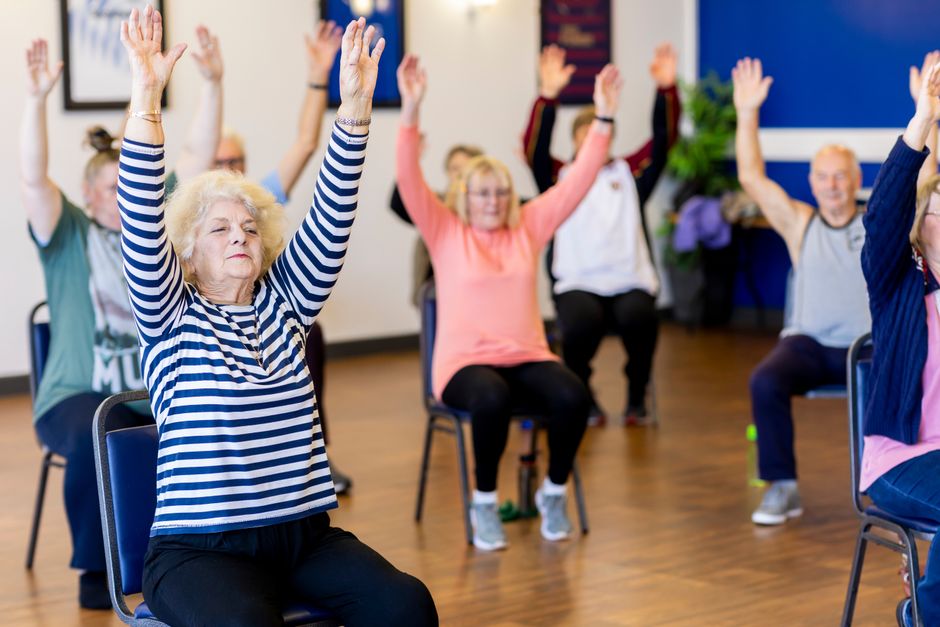
Most of us have heard some version of the same advice for decades: real exercise takes real time. Thirty minutes, five days a week. An hour at the gym. “At least 150 minutes.” And for the majority of older adults who are already sedentary, that math is exactly why they don’t start. A new study out of Penn State is quietly dismantling that assumption, and I’ll be honest, the results surprised me more than I expected.
What the Research Actually Found
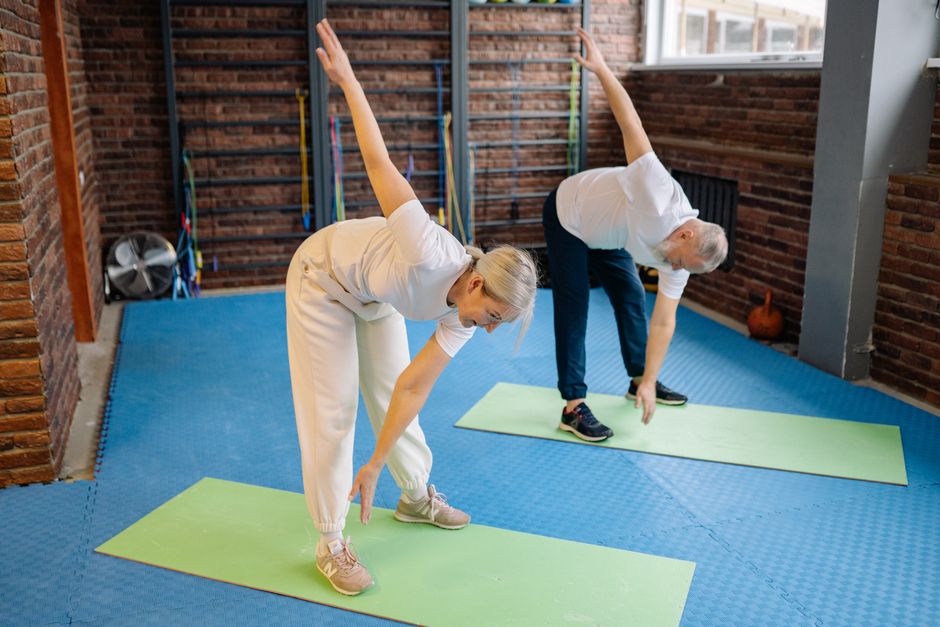
Published in PLOS One in June 2026, the FAST-2 randomized trial from Penn State College of Medicine tested whether four minutes of daily home resistance training could produce real, measurable changes in adults 65 and older. Not “some improvement.” Not “marginal benefit.” Meaningful strength and mobility gains, in 12 weeks, with no gym, no equipment costs, and a time commitment shorter than most people spend waiting for their coffee to brew.
The 97 participants had an average age of 74. Before the study, they were averaging only about 18 minutes of exercise per week total. These weren’t athletes who’d fallen out of a routine. These were genuinely sedentary older adults, which makes what happened next worth paying close attention to.
After 12 weeks, participants improved by 4.2 repetitions in a 30-second chair stand test, gained 3.6 seconds of additional one-legged standing time, and shaved 2.3 seconds off their sit-to-stand time. If those numbers sound abstract, consider that the chair stand test is a direct predictor of fall risk, and that one-legged balance is one of the most reliable markers of whether someone is likely to take a dangerous fall in the next year. These aren’t vanity metrics. They’re the exact measures clinicians use to assess whether an older adult is heading toward independence or toward a hospital.
The adherence numbers were striking too. Participants completed the routine on 81% of study days. Anyone who’s worked with older adults in a clinical or fitness setting knows that completion rate would be impressive for a 20-minute program. For a four-minute one, it starts to make sense.
The Four Exercises (and Why This Specific Combination Matters)
The FAST-2 circuit is deliberately simple. Four exercises, 30 seconds of work, 30 seconds of rest, done in sequence:
| Exercise | Primary Muscles Targeted | Functional Benefit |
|---|---|---|
| Push-ups | Chest, shoulders, triceps | Upper body strength for pushing, getting up from floor |
| Chair stands | Quadriceps, glutes | Sit-to-stand, stair climbing, fall recovery |
| Two-arm rows | Upper back, biceps | Posture, pulling strength, reducing fall-forward risk |
| Stair stepping | Legs, hip flexors, balance | Dynamic balance, leg power, cardiovascular base |
What I found interesting when I looked more closely at this design is that the researchers didn’t just grab four random exercises. This circuit covers both pushing and pulling movements, addresses lower body power specifically (the thing that deteriorates fastest after 65), and includes a dynamic balance component in the stair stepping. That’s a fairly complete stimulus in a very compressed format.
The chair stand and stair stepping components directly mirror the activities of daily life where falls happen most. That’s not an accident.
Why “Only Long Workouts Work” Turned Out to Be Wrong
To Build Muscle After 60, You Must Do THIS · Dr. Dave Candy - Physical Therapist on YouTube
The conventional wisdom that exercise needs to hit a certain duration threshold to be beneficial came largely from cardiovascular research, and it got applied to strength training in ways that weren’t always well supported. The idea that muscles won’t respond meaningfully to short bouts of effort has been getting challenged steadily for about a decade now, but most of that research focused on younger adults.
What’s different about FAST-2 is the population and the real-world design. This wasn’t a lab protocol with supervised sessions and researchers standing over participants. People did this at home, on their own, fitting it into their actual lives. And they still showed up 81% of the time. According to Penn State Health News, fewer than one in five older adults currently meet muscle-strengthening guidelines, which means the barrier isn’t motivation so much as it is the scale of the ask. Four minutes changes that equation completely.
The research here isn’t claiming that four minutes is optimal, or that it’s equivalent to a longer program. What it does show is that it works, that people actually do it, and that it produces clinically meaningful improvements in the specific outcomes that matter most for aging adults.
Who This Is For, and Who Should Talk to a Doctor First
I want to be specific here, because this is the part that sometimes gets glossed over in the coverage I’ve seen. The FAST-2 participants were sedentary but not necessarily managing acute conditions. If you or someone you know has osteoporosis, recent joint replacement, uncontrolled blood pressure, or a history of serious falls, the first conversation should be with a physician or physical therapist before starting any new resistance program, even a four-minute one. Push-ups and rows done with poor mechanics can stress the shoulder. Chair stands performed without proper form can strain the lower back or knees. Short doesn’t automatically mean risk-free.
That said, for a generally healthy older adult who is simply inactive, this program has a much lower barrier to injury than most alternatives. The movements are functional, not extreme. And as Medical Xpress noted in their June 2026 coverage of the study, the home-based format removes a lot of the access and transportation barriers that keep older adults from participating in formal programs.
The practical question isn’t really “is four minutes enough?” It’s “is four minutes more than what you’re doing now?” For most sedentary adults over 65, the answer to that is clearly yes.
What Comes Next After Four Minutes
One thing the FAST-2 researchers didn’t address, and where I think the real follow-up questions lie, is what happens after 12 weeks. Does the benefit plateau? Do participants naturally extend their sessions as they get stronger? The study design doesn’t tell us that yet. My professional instinct, and I’ll flag this as instinct not data, is that four minutes works partly because it’s genuinely manageable for someone who has been completely inactive, and partly because it builds the habit infrastructure that makes adding more volume later feel less daunting.
Think of it as a foundation, not a ceiling. The research shows this floor produces results. Where the ceiling sits is still an open question.
For older adults who’ve been told their whole lives that exercise requires a significant time investment, this study is a legitimate permission slip to start where you actually are, not where you think you should be. Four minutes isn’t a compromise. For 97 people with an average age of 74, it was the thing that worked.
Sources
- Penn State Health News: Four minutes of daily resistance training can quadruple fitness in older adults (June 2026)
- Penn State University News: Four-minute daily workout improves strength, balance in older adults (June 2026)
- Medical Xpress: Four minutes of daily resistance training can quadruple fitness in older adults (June 9, 2026)
- Yahoo Health: Want to age better? Researchers say 4-minute routine may help prevent dangerous falls (June 2026)
- Easy Health Options: 4 minutes of daily resistance training may improve senior fitness (Late June 2026)
Photo: Centre for Ageing Better via Pexels
This article is for general informational purposes only and does not constitute medical or fitness advice. Consult your physician or a licensed physical therapist before starting a new exercise program, especially if you have existing health conditions.