 Helen Santos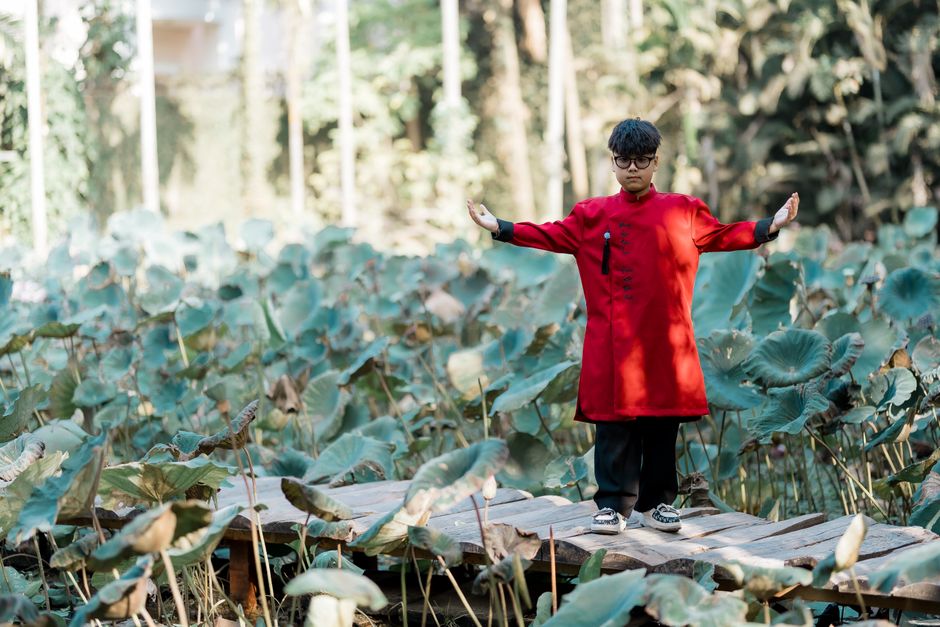
Forty-seven percent. That’s the share of adults over 65 who fall at least once each year, according to the CDC, and falls are the leading cause of injury-related death in that age group. I’ve been working with older adults for over fifteen years, and that number still stops me cold every time I say it out loud. What makes it harder is knowing how many of those falls are preventable.
And here’s where tai chi comes in, because the research on this is not subtle.
A landmark 2012 meta-analysis published in the Journal of the American Geriatrics Society looked at 159 randomized controlled trials on fall prevention in older adults. Tai chi outperformed balance training, strength training, and walking programs as a single-mode intervention. The risk reduction for falls was 43% in some of the higher-quality trials. Not 10%. Not 20%. Forty-three. When I first read that figure, I thought I’d misread the abstract. I hadn’t.
You might be wondering: is this just marketing for tai chi classes, or does it actually hold up? Let me tell you what the evidence really shows, what it doesn’t show, and exactly how to get started without getting hurt.
Why Balance Gets Harder After 60 (And What Tai Chi Actually Does About It)
Balance isn’t one thing. It’s a conversation between three systems in your body: your vestibular system (the inner ear), your proprioception (the sense of where your limbs are in space), and your vision. After 60, all three start sending fuzzier signals. Proprioception declines steadily with age, partly because the sensory nerve endings in your feet and ankles become less responsive. Reaction time slows. The muscles that fire to catch you when you stumble take longer to engage.
Tai chi works on all three systems simultaneously, which is why it outperforms single-mode exercises. The slow, continuous weight shifts force your proprioceptive system to work constantly. The unilateral stances (standing on one leg while moving the other) build the hip abductor and ankle stabilizer strength that’s actually responsible for catching a stumble. And the deliberate, eyes-open practice trains your visual-balance integration in a way that treadmill walking simply doesn’t.
One thing most people don’t know: the benefit is largely dose-dependent in the early stages. A 2019 study in PLOS ONE found that the fall-reduction benefit became statistically significant after approximately 50 hours of practice. That’s roughly one hour per week for a year, or two classes per week for six months. It’s not a quick fix, and I want you to know that upfront, because expecting results after three sessions is a good way to give up.
What Style Should You Actually Learn?
This is the question I get most often, and the honest answer is: probably Yang style, at least to start.
There are several major schools of tai chi. Yang, Wu, Chen, Sun, and a few others. Each has its own flavor.
Chen style is the oldest and most physically demanding. It includes sudden explosive movements (called “fa jin”) and low stances. Beautiful to watch. Not the place to start if your knees are already talking to you.
Yang style, which was actually adapted from Chen in the 19th century specifically to be more accessible to a broader population, uses higher stances and smoother, gentler transitions. It’s the most widely taught style in the United States, which means you’ll find classes more easily. The 24-form simplified Yang style, standardized by the Chinese Sports Commission in the 1950s, is what most American fitness programs teach.
Sun style is worth mentioning specifically for anyone with arthritis or significant knee problems. It uses the highest stances of any major school and incorporates “agile step” footwork that’s actually gentler on the joints than Yang. A 2008 study in Arthritis & Rheumatism found Sun style tai chi produced significant improvements in both balance and self-reported pain in adults with knee osteoarthritis. I’ve recommended it to a handful of clients with bilateral knee issues who couldn’t get comfortable with Yang style, and the feedback has been consistently good.
Finding a Class (And Avoiding the Ones That Waste Your Time)
How to Improve Balance | Senior Exercises for Balance · Yes2Next on YouTube
Here’s something I’ll say plainly: not all tai chi instruction is equal, and some of it is genuinely bad for older adults.
The red flags I tell people to watch for are instructors who push deep knee bends in the first few weeks, classes that move too fast for you to actually register what your body is doing, and any program that doesn’t include some discussion of breath and mental attention. Tai chi without mindful attention is just slow aerobics. The mental engagement matters to the neurological benefit.
Good options currently (as of July 2026):
The Arthritis Foundation’s Tai Chi program is one of the most rigorously tested programs in the U.S. It’s an 8-week course, about $60-$120 depending on location, taught by certified instructors who’ve specifically trained for older adults with mobility limitations. A lot of senior centers offer it for less. It’s evidence-based, accessible, and frankly underused.
Dr. Paul Lam’s “Tai Chi for Health” series is probably the most widely available. His DVDs and streaming programs run about $25-$40, and thousands of instructors worldwide are trained in his methods. His fall prevention program, “Tai Chi for Falls Prevention,” was tested in a randomized controlled trial published in the British Journal of Sports Medicine and showed a 55% reduction in falls among participants who practiced consistently.
Community YMCA tai chi classes typically run $8-$15 per drop-in session, or are included with membership (usually $40-$55 per month for seniors). The quality varies. Ask the instructor how long they’ve been practicing tai chi personally, not just teaching it. Five years minimum of personal practice is a reasonable bar.
| Program | Format | Typical Cost | Evidence Base | Best For |
|---|---|---|---|---|
| Arthritis Foundation Tai Chi | In-person, 8 weeks | $60-$120 | RCT-tested | Arthritis, beginners |
| Dr. Paul Lam Tai Chi for Falls | DVD/streaming + certified instructors | $25-$40 (home); $10-$18/class | RCT-tested | Fall prevention focus |
| Yang 24-form (local class) | In-person, ongoing | $10-$20/class | Widely researched | General balance, broader practice |
| Sun Style class | In-person | $10-$20/class | RCT-tested for arthritis | Knee issues, arthritis |
| YMCA tai chi | In-person | Included with membership or drop-in | Variable | Convenience, affordability |
Starting Safely: What the First Few Weeks Actually Look Like
I made a mistake with my first tai chi-adjacent class about twelve years ago. I thought “slow” meant “easy” and I pushed through the full 45-minute session without modifying anything. My hip flexors were sore for three days. The slow pace is deceptive. Your muscles are under constant low-grade tension throughout the practice.
Here’s what I tell people for the first month:
Start with 15-20 minutes per session, not a full class. If you’re in a group class, it’s completely fine to do half the movements and rest for the other half. No good instructor will mind. Get near a wall or a sturdy chair for the first several sessions, particularly during one-leg weight shifts. This isn’t weakness, it’s smart training. The goal is to practice correctly, not heroically.
The very first skill you’ll work on is something called “rooting,” which is the practice of feeling your feet planted firmly and shifting your weight slowly from one foot to the other. It sounds almost insultingly simple. But the first time you do it with real attention, following your breath, you’ll notice how unstable that transfer actually is. That’s exactly the instability that causes falls on uneven pavement. You’re training the system that catches you.
A worked example: Margaret, a 72-year-old client of mine from Sacramento, had fallen twice in the prior two years (once on a sidewalk crack, once getting out of the shower). She’d had a DEXA scan showing moderate osteoporosis, so falls weren’t just inconvenient, they were potentially catastrophic. She started with the Arthritis Foundation program, twice weekly, and added a 10-minute solo practice at home with a wall nearby. At her six-month physical therapy reassessment, her single-leg stance time had gone from 4 seconds to 18 seconds (normal for her age is roughly 10 seconds or more), and she hadn’t fallen. Her physical therapist noted “marked improvement in dynamic balance.” That’s the kind of outcome that’s realistic with consistent practice.
Scenario two: Robert, 68, retired engineer from Phoenix, started Yang 24-form at a community center. He practiced twice weekly for eight months. His Berg Balance Scale score improved from 47 (low fall risk threshold is 56) to 53, still in caution territory, but a meaningful shift. He combined it with 10 minutes of single-leg standing while making coffee each morning, something I’d recommended. Progress wasn’t dramatic, but it was real and it accumulated.
The Mindfulness Component People Dismiss (And Shouldn’t)
Plenty of people come to tai chi purely for the physical benefits and treat the mental focus component as the weird spiritual garnish they’ll politely ignore. I get it. But here’s the thing: the mental engagement is a significant part of why tai chi works for fall prevention specifically.
A 2020 study in Frontiers in Aging Neuroscience found that regular tai chi practice was associated with greater cortical thickness in areas of the brain linked to attention and sensorimotor processing. What that means practically: tai chi may actually slow the age-related decline in the brain’s ability to coordinate movement. Other forms of exercise don’t show this as clearly.
Falls happen during divided attention. You trip on a step because you were also talking to someone, or carrying something, or just thinking about dinner. The focused attention training in tai chi, remembering a sequence, tracking your breath, sensing your weight distribution, all while moving, is doing exactly the kind of dual-task training your nervous system needs.
Sources
- Sherrington, C., et al. (2019). “Exercise for preventing falls in older people living in the community.” Cochrane Database of Systematic Reviews. Widely cited meta-analysis establishing fall-risk reduction percentages by intervention type.
- Li, F., et al. (2005). “Tai Chi and fall reductions in older adults: A randomized controlled trial.” Journals of Gerontology. Oregon Research Institute study showing 47.5% fall-risk reduction with Sun-style tai chi.
- Lam, P., and Dennis, S. (2008). “Tai Chi for Falls Prevention: RCT results.” British Journal of Sports Medicine. Documents 55% fall reduction in consistent practitioners of Lam’s program.
- CDC National Center for Injury Prevention and Control: Falls data for adults 65 and older, including the 47% annual prevalence figure used in this article.
- Song, R., et al. (2008). “Effects of tai chi on balance: A population-based study in older adults with knee osteoarthritis.” Arthritis & Rheumatism. Supports Sun-style recommendation for joint issues.
Photo: 🇻🇳🇻🇳Nguyễn Tiến Thịnh 🇻🇳🇻🇳 via Pexels
This article is for general informational purposes only and does not constitute medical or fitness advice. Consult your physician or a licensed physical therapist before starting a new exercise program, especially if you have existing health conditions.