 Robert Davis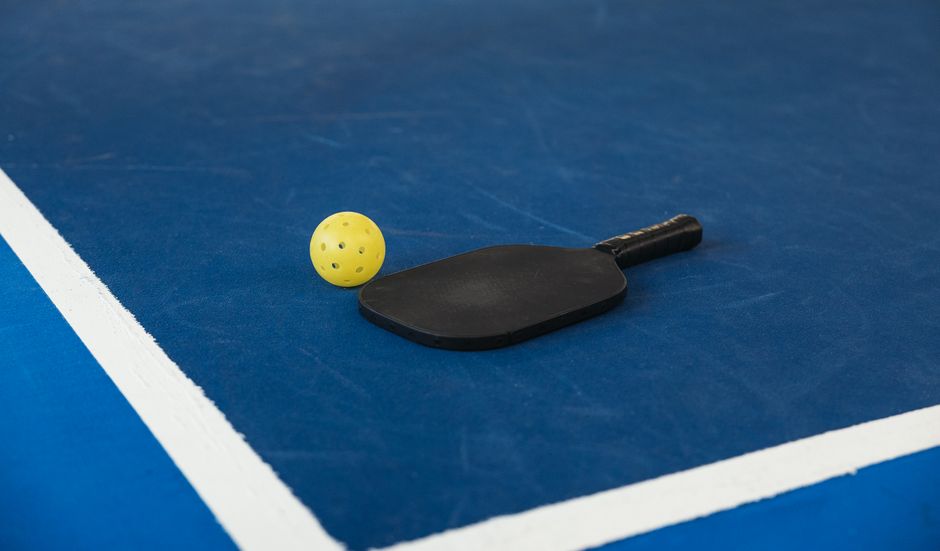
If you’ve picked up a paddle in the last couple of years, you’re in good company. Pickleball participation has exploded across the country, and for adults over 60, the appeal makes complete sense: it’s social, it’s genuinely fun, and it gets you moving in ways that sitting at home absolutely doesn’t. But if you’ve been hearing more about injuries lately, or maybe felt a tweak in your ankle after a hard lateral step, you’re not imagining it. Orthopedic clinics are flagging a real and rising trend this summer, and it’s worth understanding what’s actually going on before you assume the solution is simply playing less.
Spoiler: it usually isn’t. The better answer is building the body that pickleball demands.
Why This Summer Feels Different on the Court
The numbers coming out of emergency rooms and orthopedic offices right now are striking. According to USA Pickleball data analyzed in a 10-year NEISS study published in the American Journal of Sports Medicine, roughly 19,000 pickleball-related injuries are treated in U.S. emergency rooms every year, with falls being the most common injury mechanism in older players. About 7% of those patients end up hospitalized, most often for hip and pelvis fractures. That’s not a minor statistic. A hip fracture in someone over 65 carries serious consequences for long-term independence and mobility.
Here’s what makes the age picture even sharper: Nowak Orthopedic Associates reported in July 2026 that 91% of pickleball injuries occur in players aged 50 and older. Not 51%. Ninety-one percent. And orthopedic specialists at McGovern Medical School at UTHealth Houston issued fresh warnings back in March 2026 specifically about foot, ankle, and Achilles injuries in adults over 50, a pattern that Sports Medicine Weekly echoed in April 2026.
None of this means you should hang up your paddle. It means your off-court preparation needs to match your on-court ambition.
The Specific Demands Pickleball Places on an Older Body
You might be wondering why pickleball specifically generates so many injuries when it looks, from the outside, like a lower-intensity sport than tennis. The court is smaller, the ball moves slower, and rallies are shorter. That’s all true. But the movement pattern is relentless: quick direction changes, sudden stops, lunging at low balls near the kitchen line, and reactive lateral shuffles that happen faster than your brain consciously plans them.
For an adult over 60, the issue isn’t usually cardiovascular fitness. The heart handles pickleball reasonably well for most players. The problem is the neuromuscular gap, the difference between how fast your brain sends a signal and how quickly your muscles actually respond and stabilize a joint. That gap widens with age. When you change direction suddenly on a pickleball court, your ankle, knee, and hip need to absorb and redirect force in a fraction of a second. If the muscles supporting those joints aren’t trained for that demand, something else absorbs the force instead, and that something else is often a tendon, a ligament, or your balance itself.
Achilles tendons are especially vulnerable. They become stiffer and less elastic with age, and they don’t like sudden explosive loads without preparation. McGovern Medical School’s specialists specifically called out Achilles injuries as a serious concern for older recreational players this spring, and it’s a warning I think gets underestimated.
What the Research Says About Building Lower-Body Resilience
5 Exercises for Seniors to do EVERY DAY · Vive Health on YouTube
Here’s what I tell people who come to me after a pickleball scare: the exercises that actually protect you on the court are not glamorous. They’re not trendy. But the evidence behind them is solid.
A February 2026 systematic review and meta-analysis published in Frontiers in Public Health examined wearable-device-based exercise interventions focused specifically on lower-limb strength and balance in older adults. The findings reinforced what clinicians have observed for years: targeted, consistent lower-limb training improves both functional strength and balance outcomes in this population. The technology angle is interesting (and wearables are becoming a real part of how older adults track and motivate their training), but the underlying principle is older than any gadget. You have to train the muscles that protect the joints you’re using.
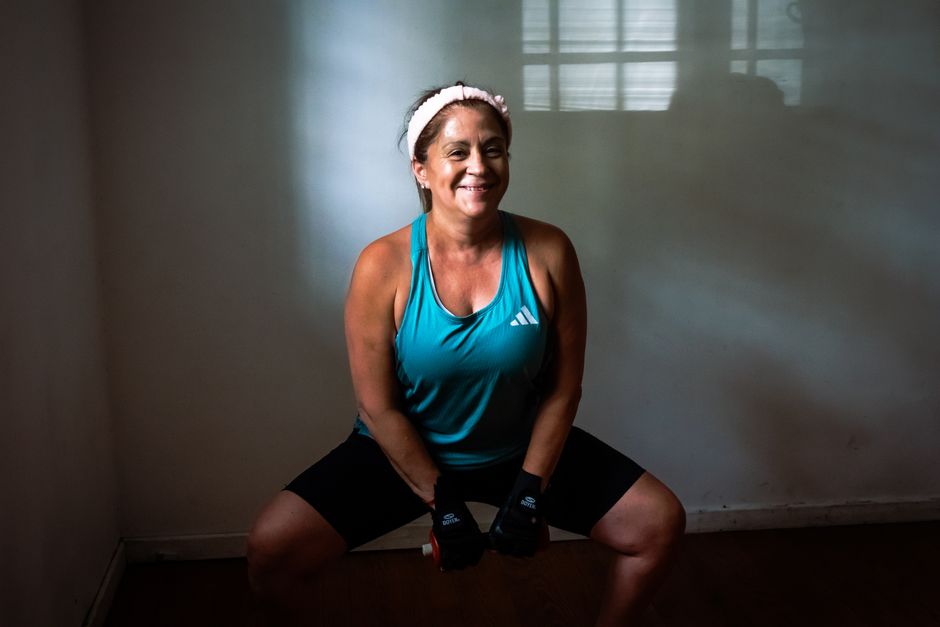
For pickleball, that means single-leg work. Not both legs at once on a leg press machine, but standing on one foot, loading one hip, controlling one knee. A simple single-leg squat to a chair trains the quad, glute, and hip stabilizers in the exact pattern your body uses when you push off a court surface laterally. Calf raises, done slowly and with control, load the Achilles progressively so it adapts rather than snaps. Balance drills on slightly unstable surfaces, even just a folded yoga mat, train the ankle proprioceptors that fire during those reactive direction changes.
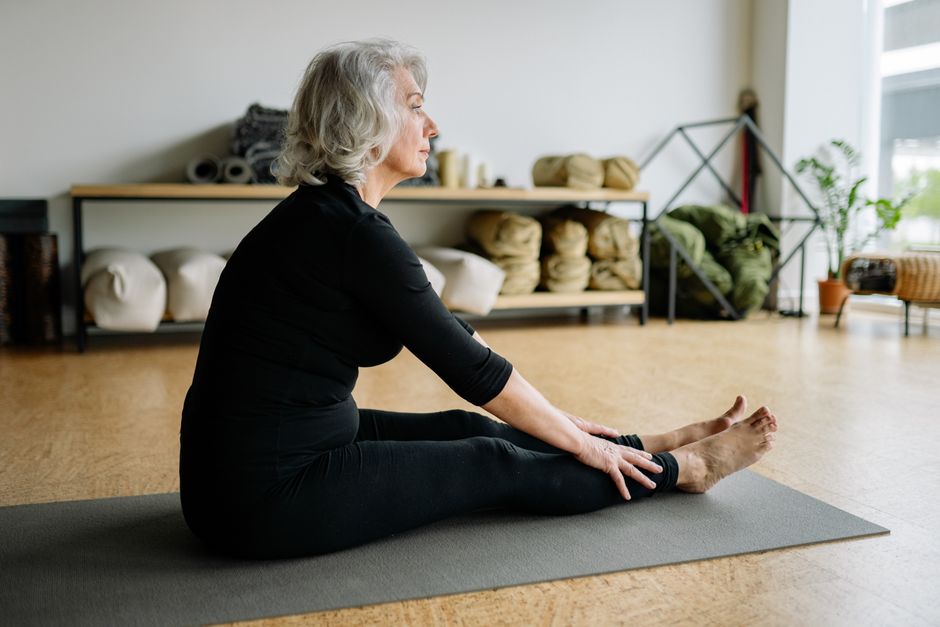
None of this requires a gym membership. Most of it can be done in your living room, three days a week, in about 25 minutes. A physical therapist or certified trainer can help you calibrate the intensity correctly for where you are right now, which I’d genuinely recommend if you’ve had any prior joint issues or recent injury.
The Strength Gap Most Players Don’t Know They Have
The ACSM ranked fitness programs for older adults as the number-two trend in its 2026 Worldwide Fitness Trends report, surveying 2,000 fitness professionals, and for the first time added adult recreation and sport clubs, citing pickleball leagues specifically, to its top-20 list. The demand is clearly there. What’s less visible is the conditioning gap between enthusiasm and physical readiness.
Many recreational players over 60 are aerobically fine. They can sustain the activity. What they haven’t trained is hip abductor strength, rotator cuff stability for overhead paddle work, and the reactive ankle control needed to catch themselves mid-lunge. Falls on the pickleball court often aren’t dramatic wipeouts. They’re a small misjudgment in footwork, a step that lands slightly wrong, a moment where the stabilizers weren’t quite fast enough.
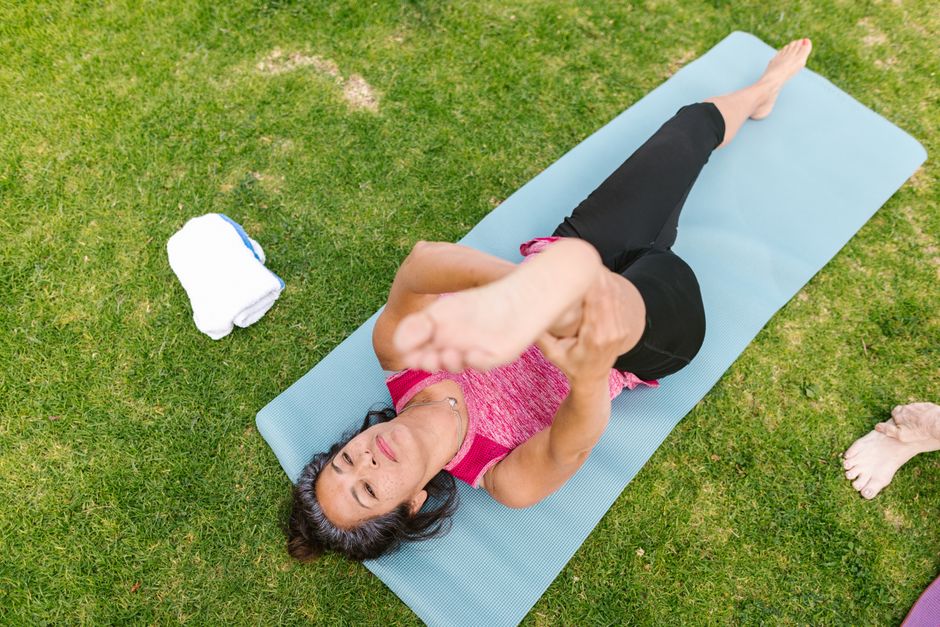
Hip abductor work, side-lying leg raises, lateral band walks, and single-leg bridges are humble exercises. But they’re exactly what closes the gap between your fitness level and the movement demands of a 90-minute doubles match. Resistance bands are cheap, portable, and effective. If you’re playing twice a week, two dedicated strength sessions per week targeting lower body and core is a reasonable and evidence-supported target.
Upper body matters too, particularly for shoulder health, since reaching and swinging with a paddle repetitively can aggravate rotator cuff tissue that’s already less resilient than it was at 40. External rotation exercises with a light band, and scapular stability work, are worth including.
Warming Up Is Not Optional Anymore
You might be rolling your eyes slightly at this one. I get it. Standing around doing leg swings before a match when everyone else is already rallying feels awkward. But the data on Achilles and ankle injuries in older players makes a strong case for taking this seriously.
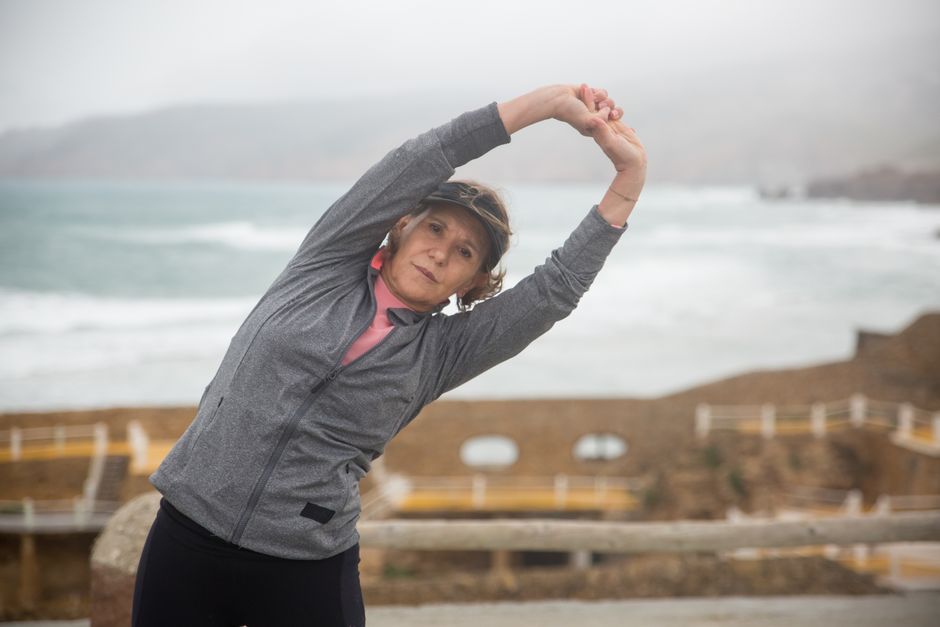
A proper warm-up at this stage of life isn’t about flexibility, it’s about tissue temperature and neuromuscular activation. Cold tendons don’t absorb load the way warm ones do. A five-minute brisk walk followed by dynamic leg swings, ankle circles, lateral shuffles at half speed, and a few bodyweight squats genuinely changes the risk profile of the first ten minutes of play, which is when cold-tissue injuries tend to happen.
Cool-downs matter on the back end too. Gentle calf stretching after play, when the tissue is warm, is one of the simplest things you can do for long-term Achilles health.
Pickleball is genuinely good for you. The social engagement, the cardiovascular benefit, the coordination demands, all of it adds up to something worth protecting. The players I’ve seen stay on the court into their 70s and beyond aren’t the ones who play less. They’re the ones who take what happens between matches as seriously as the matches themselves.
Sources
- Nowak Orthopedics: Injury Prevention Tips for Pickleball Players Over 40 (June 25, 2026)
- Sports Medicine Weekly: Pickleball Injuries Are Rising in 2026 (April 27, 2026)
- McGovern Medical School / UTHealth Houston: Pickleball Foot and Ankle Injuries (March 24, 2026)
- ACSM: The Future of Fitness , Top Trends for 2026 (June 2026)
- PMC / AJSM: Increasing Incidence of Pickleball Injuries in US Emergency Departments (January 2025)
- Frontiers in Public Health: Wearable Device Exercise on Lower Limb Strength and Balance in Older Adults (Meta-Analysis) (February 13, 2026)
Photo: Mason Tuttle via Pexels
This article is for general informational purposes only and does not constitute medical or fitness advice. Consult your physician or a licensed physical therapist before starting a new exercise program, especially if you have existing health conditions.