 Helen Santos
If you’re over 60 and taking a GLP-1 medication like semaglutide or tirzepatide, you’ve probably noticed the weight coming off. Maybe your doctor is pleased. Maybe you feel lighter. But something else is happening alongside that progress, and it’s a problem your prescription won’t solve on its own. Research presented at the Endocrine Society’s annual meeting in Chicago just last month found that adults on GLP-1 receptor agonists were significantly decreasing their physical activity over time while losing weight. Less movement, faster muscle loss. That combination is a real concern for anyone over 60, where muscle is already harder to hold onto.
The study, presented by researcher Maharjan at ENDO 2026 in June, landed with some weight in the clinical community because it confirmed what many trainers and physical therapists have been seeing on the ground: the appetite suppression that makes these drugs so effective also seems to reduce people’s drive to move. And if you’re already losing 10 to 15% of your lean mass when you drop more than 15% of your body weight on high-dose GLP-1 therapy (which is what clinical observations through 2025 and 2026 are showing), then layering reduced activity on top of that accelerates something genuinely dangerous for older adults: sarcopenia, the age-related loss of muscle mass that raises your risk of falls, fractures, and loss of independence.
You might be wondering whether this applies to you, especially if you feel fine right now. It’s worth understanding the timeline. Muscle loss on these medications doesn’t always feel like anything at first.
- GLP-1 users significantly reduced physical activity over time, worsening medication-caused muscle loss (ENDO 2026).
- Adults on high-dose GLP-1s may lose 10–15% of lean mass when losing more than 15% of body weight.
- Adults over 65 are at the greatest risk of lean mass decline on GLP-1 therapy.
- 2026 prescribing guidance recommends resistance training 2–3 times per week and 1.2–1.6 g protein per kg of body weight daily.
- A 12-week exercise and nutrition trial at Rice University (started April 2026) is actively testing how to counter this muscle loss.
Why Muscle Loss on GLP-1s Is Getting So Much Attention Right Now
Muscle loss on GLP-1 medications has become a headline clinical debate, not a fringe worry. It was a central topic at the American Diabetes Association’s 2026 Scientific Sessions, and a July 2026 Medscape report on that debate reflects how seriously prescribers are now taking it. The concern isn’t that these drugs don’t work. They clearly do for weight loss and metabolic health. The concern is that “weight lost” is not the same as “fat lost,” and for older adults the distinction matters enormously.
Here’s what I tell people: when you lose weight rapidly through any means, your body doesn’t just pull from fat stores. It pulls from muscle too. GLP-1 drugs don’t change that basic biology. What they add to the equation is reduced appetite (good for caloric deficit, but also reduces protein intake if you’re not careful) and, as this new ENDO 2026 research suggests, reduced physical activity. Less protein coming in plus less muscle-stimulating movement equals accelerated lean mass loss. In someone who’s 65 or older, that’s not a cosmetic issue. That’s a functional one.
What the 2026 Prescribing Guidance Actually Says
The clinical community hasn’t been silent on this. Updated prescribing guidance circulating in 2026 now specifically recommends that patients on GLP-1 therapy do resistance training two to three times per week, consume 1.2 to 1.6 grams of protein per kilogram of body weight daily, and get their muscle mass monitored through DXA scan or bioelectrical impedance analysis every three to six months.
That protein target is meaningful. For a 170-pound (77 kg) person, 1.2 to 1.6 g/kg translates to roughly 92 to 123 grams of protein per day. When your appetite is suppressed, hitting that number takes real intention. It doesn’t happen automatically. And the monitoring recommendation matters too, because you can’t feel gradual muscle loss the way you can feel joint pain or shortness of breath. A DXA scan gives you actual numbers before the functional consequences appear.
| Recommendation | Target |
|---|---|
| Resistance training frequency | 2–3 times per week |
| Daily protein intake | 1.2–1.6 g per kg of body weight |
| Muscle mass monitoring interval | Every 3–6 months |
| Preferred monitoring methods | DXA scan or bioelectrical impedance (BIA) |
If your prescribing doctor hasn’t mentioned any of this yet, bring it up. These aren’t optional add-ons to the medication. Given the ENDO 2026 findings, they’re increasingly seen as core parts of the treatment plan.
What Resistance Training Actually Looks Like for Older Adults on These Drugs
5 ESSENTIAL Exercises For People Over 60 · Body Fix Exercises—for over 50s on YouTube
You might be wondering: if my appetite and energy are lower on these medications, how am I supposed to do strength training? It’s a fair question, and it’s one I hear constantly. The honest answer is that you don’t need a gym membership or heavy weights to stimulate muscle protein synthesis. You need progressive resistance, meaning the challenge needs to gradually increase over time, but the starting point can be gentle.
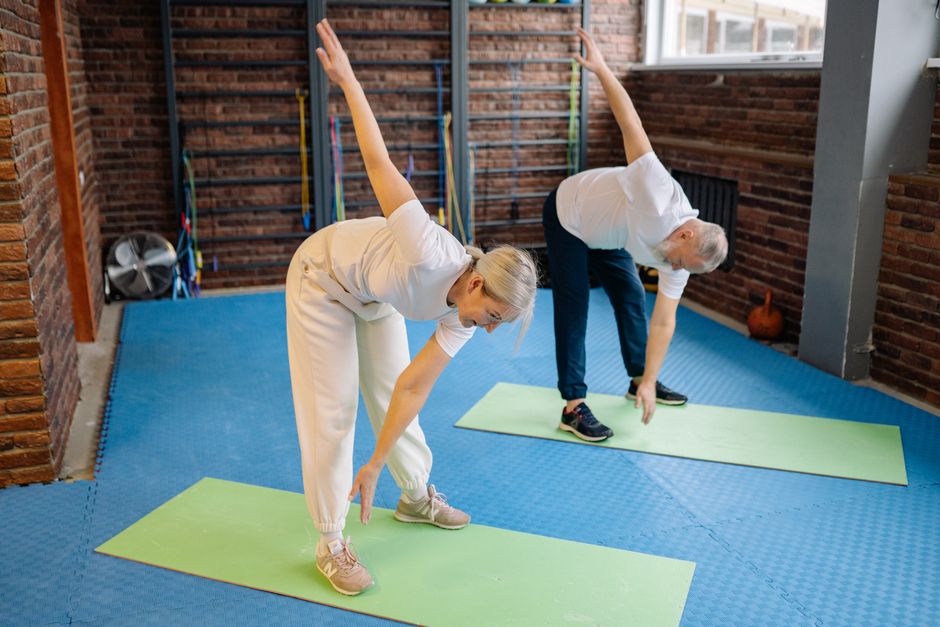
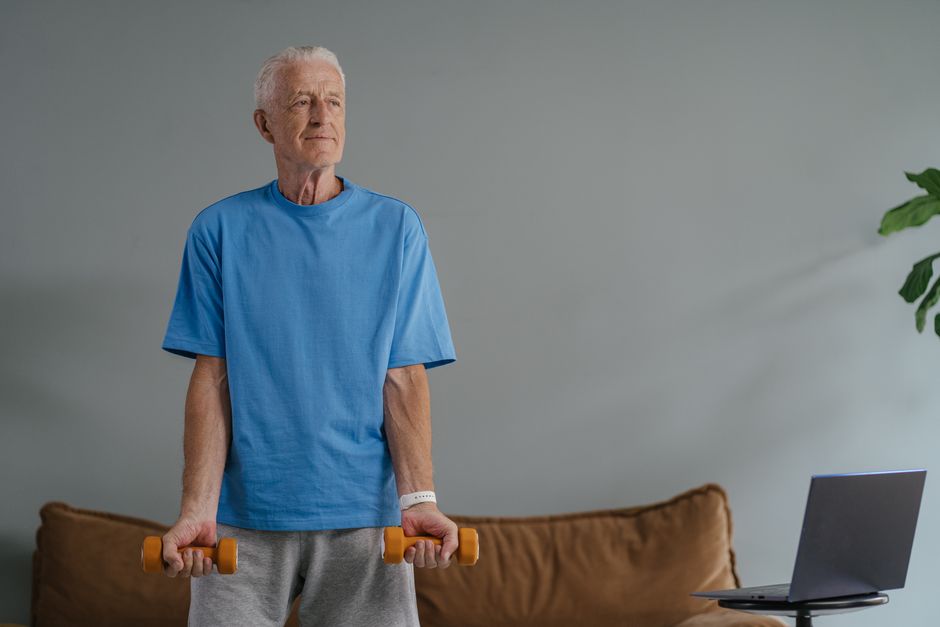
For most adults over 60 on GLP-1 therapy, I’d suggest starting with movements that train the muscles most connected to fall prevention and daily function: squats (even to a chair), step-ups, wall push-ups, and resistance band rows. Two sessions per week is enough to begin. The goal isn’t to become an athlete. The goal is to send your muscles a signal that they’re still needed, still being loaded, still worth preserving while the weight comes off.
The Rice University and Methodist Hospital Research Institute launched a clinical trial in April 2026 (NCT07554417, estimated to wrap in August 2026) that’s testing exactly this kind of combined exercise and nutrition program in adults on GLP-1 medications. We don’t have the results yet, but the fact that this research is happening reflects how seriously the question is being taken at the institutional level. Real answers are coming. In the meantime, the direction of the existing evidence is clear enough to act on.
The Muscle Loss You Can’t See Is the Most Dangerous Kind
Here’s what makes this situation particularly tricky for older adults. You may look and feel better as the weight drops. Your clothes fit differently. Your blood sugar improves. Your doctor is encouraged. And underneath all of that, you might be quietly losing the lean mass that keeps you stable, keeps you out of the emergency room, and keeps you independent at 75 or 80.
This isn’t alarmism. It’s the specific risk profile that the ENDO 2026 research and the ADA 2026 debate have put in sharper focus. Adults over 65 are identified as being at the greatest risk of lean mass decline on these medications. If that’s you, the research is pointing in one direction with unusual consistency: lift something, eat enough protein, and ask your doctor to measure your muscle mass, not just your body weight.
GLP-1 drugs can be genuinely beneficial. But they work best as part of a broader strategy, and right now the evidence suggests that resistance training isn’t an optional add-on for older adults. It’s the thing that protects the outcome you’re working toward.
Sources
- Exercise decreases among people taking GLP-1 medication (Endocrine Society / ENDO 2026) (June 13, 2026)
- People taking GLP-1 weight loss drugs like Ozempic started moving less (ScienceDaily) (June 14, 2026)
- Should We Be Concerned About Muscle Loss With GLP-1s? (Medscape, ADA 2026 debate) (July 2026)
- Critical 2026 Update: New GLP-1 Rules to Stop Muscle Loss Now (Ubie Health) (June 17, 2026)
- Combatting Muscle Loss in Obese Adults on GLP-1 Medications, NCT07554417 (ClinicalTrials.gov) (April 28, 2026)
- Muscle Loss and GLP-1 Weight-Loss Drugs: 2026 Update (Affinity Whole Health) (May 13, 2026)
Photo: Ketut Subiyanto via Pexels
This article is for general informational purposes only and does not constitute medical or fitness advice. Consult your physician or a licensed physical therapist before starting a new exercise program, especially if you have existing health conditions.