 Dr. Patricia Williams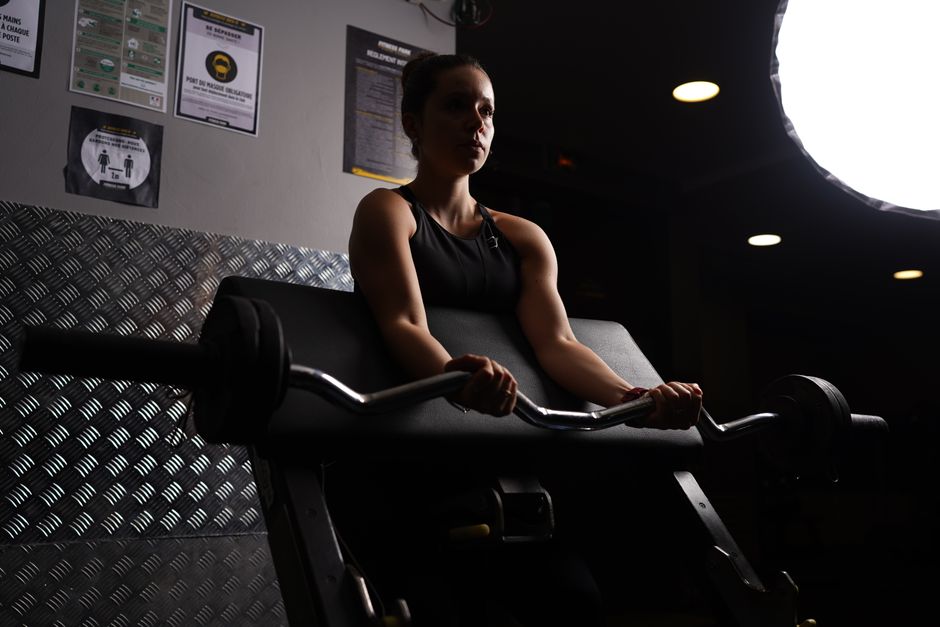
Forty percent of adults over 80 fall every year, and the single strongest predictor of who gets back up, who stays independent, and who ends up in a care facility isn’t balance programs or medication management. It’s muscle mass. That one fact, pulled from a 2022 analysis in The Journals of Gerontology, changed how I approach every client who walks through my door leaning on a walker.
You might be wondering if it’s too late. Whether someone who’s 78, or 85, or 91, and who hasn’t lifted anything heavier than a grocery bag in years, can actually build meaningful strength. I want to answer that honestly, because I’ve seen the research and I’ve sat across from the people the research describes.
The answer is yes. With important caveats.
- Muscle can be rebuilt at any age: studies show 10-12% strength gains in frail adults over 80 after just 8 weeks of progressive resistance training.
- Start with bodyweight or 1-2 lb resistance and progress slowly; jumping ahead is the #1 cause of injury and dropout.
- Chair-based exercises are clinically valid, not a compromise , they reduce fall risk while building the foundation for standing work.
- Protein intake matters as much as the exercise itself: 1.2-1.6 g per kg of body weight daily is the current evidence-backed target.
- A supervised program beats a solo one, but even 2 sessions per week produces measurable results.
What “Frail” Actually Means (And Why the Word Matters)
Most people don’t love the word frail. I get that. But clinically, frailty has a specific meaning: it’s a syndrome characterized by low muscle mass (sarcopenia), reduced grip strength, slow walking speed, exhaustion, and low physical activity. Researchers use a tool called the Fried Frailty Phenotype, developed at Johns Hopkins, to identify it. You need three or more of those five markers to be classified as frail; one or two puts you in the “pre-frail” category.
Why does the label matter? Because the training approach for a pre-frail 70-year-old who’s just deconditioned and a genuinely frail 84-year-old with osteoporosis and a recent hospitalization are genuinely different. Treating them the same is where a lot of well-meaning programs go wrong, and where a lot of older adults get hurt or burned out in the first two weeks.
Here’s what I tell people who bristle at the term: frailty isn’t a life sentence, it’s a clinical baseline. It tells us where to start, not where you’ll end up.
The Research Is More Encouraging Than You Think
I spent years assuming the evidence on strength training in the very old was thin. I was wrong, and I’ll tell you exactly what changed my mind.
A landmark 1994 study by Maria Fiatarone Singh and colleagues at Tufts University put 100 nursing home residents, average age 87, through a 10-week progressive resistance program. These weren’t healthy 70-year-olds. Many used walkers. Several had multiple chronic conditions. After 10 weeks, participants gained an average of 113% in leg strength and several were able to discontinue walking aids entirely. That study is now 30 years old, and the replication evidence since then has been consistent.
More recently, a 2021 systematic review in Age and Ageing covering 33 trials found that resistance training in adults classified as frail produced significant improvements in gait speed, chair-stand performance, and self-reported quality of life, with a low rate of adverse events when programs were properly supervised.
That downward slope is real. Gains are smaller at 88 than at 68. But 11% strength improvement in a person who’s at fall risk is clinically meaningful. That might be the difference between catching themselves on a counter and hitting the floor.
Where to Actually Start
To Build Muscle After 60, You Must Do THIS · Dr. Dave Candy - Physical Therapist on YouTube
This is the section most articles get wrong, so I’m going to be specific.
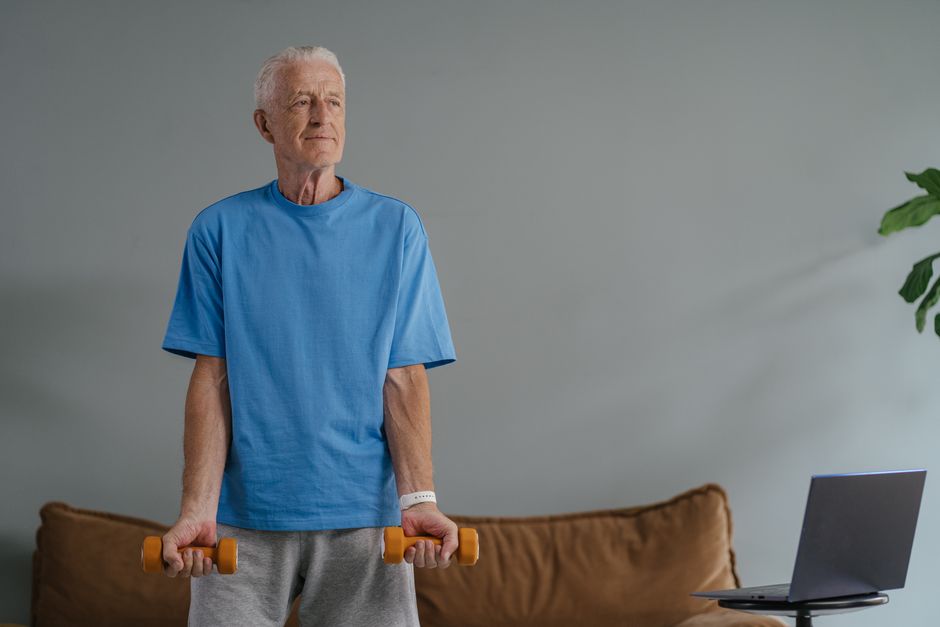
The single most common mistake I see is beginning with too much resistance, too fast. A well-meaning family member buys a set of 5-pound dumbbells because that “sounds light,” and within a week the program is abandoned because the person’s shoulder hurts or they’re simply exhausted. For a genuinely frail adult who hasn’t trained, starting with 1-pound wrist weights, or even just the weight of their own limbs, is appropriate and evidence-backed.
Here’s a practical starting framework, based on what actually works in supervised settings:
Weeks 1-2: Chair-based seated marching, seated leg extensions (no weight), and wall push-ups. The goal here is neurological, teaching the body to activate muscles it hasn’t recruited efficiently in years. Progress isn’t about adding weight yet.
Weeks 3-4: Add 1-2 lb resistance to leg movements. Introduce sit-to-stand from a firm chair (this is one of the most functional exercises that exists, by the way). Three sets of 8 repetitions is a reasonable starting target, but honestly, three sets of 5 is fine if that’s what’s manageable.
Weeks 5-8: If the person is tolerating the above without excess soreness (mild muscle fatigue the day after is normal; sharp pain is not), increase resistance by the smallest available increment. TheraBand resistance bands in yellow and red are my go-to for this phase, around $10-$14 for a set. Ankle weights in 1-lb increments, like the SPRI brand available at most sporting goods stores for about $12-$18 a pair, work well for lower body work.
One thing you’ll notice that no article mentions: when someone is genuinely deconditioned, the first week often produces disproportionate soreness, even from movements that look trivially easy. Warn your person about this. I’ve had clients quit after day three because nobody told them that their legs would feel stiff after seated leg lifts. Set the expectation, and they stay.
The Protein Problem
Exercise without adequate protein is like building a house without lumber. The stimulus is there, but the raw material isn’t.
Current evidence (as of August 2026, this is the professional consensus from groups including the European Society for Clinical Nutrition and Metabolism and the Academy of Nutrition and Dietetics) puts the target for older adults at 1.2 to 1.6 grams of protein per kilogram of body weight per day. For a 150-pound (68 kg) person, that’s roughly 82-109 grams daily.
Most frail older adults are eating around 50-60 grams. That gap is significant, and it’s one reason some people train conscientiously and still don’t see results.
| Body weight | Minimum daily protein target | Higher-end target |
|---|---|---|
| 110 lbs (50 kg) | 60 g | 80 g |
| 130 lbs (59 kg) | 71 g | 94 g |
| 150 lbs (68 kg) | 82 g | 109 g |
| 170 lbs (77 kg) | 92 g | 123 g |
| 190 lbs (86 kg) | 103 g | 138 g |
Getting protein up isn’t always easy for older adults. Appetite decreases, dental issues affect what people can comfortably chew, and some medications affect taste. I don’t have a magic solution for every situation, and I’ll be honest: if someone has kidney disease, these targets need to go through their physician first, full stop, because high protein is contraindicated in certain stages of CKD.
For those without restrictions, practical tactics include Greek yogurt (around 17g per 3/4 cup), eggs, cottage cheese, and if appetite is genuinely poor, a protein supplement like Orgain Organic or Ensure High Protein. The research on leucine-enriched protein taken within an hour of exercise is encouraging, though the effect size in very old adults is modest. Worth doing, but it’s not going to compensate for inadequate total intake.
What Supervision Actually Buys You
A reader named Margaret from Tucson emailed me last spring after her 81-year-old mother fell for the second time. She’d been doing a YouTube exercise video for seniors and wanted to know if that was enough. My honest answer: maybe, for some people. For a genuinely frail older adult, probably not.
Supervision catches two things that videos can’t: form errors that accumulate into injury, and the gradual progression that matches the individual’s actual adaptation. A physical therapist (PT) who specializes in geriatrics will typically run an initial evaluation for $150-$250, with follow-up sessions around $80-$150 each depending on location and insurance coverage. Medicare Part B covers PT when it’s medically necessary, which frailty-related deconditioning often qualifies as, though the prior authorization requirements can be frustrating (your PT’s office should handle this, but ask explicitly).
A certified personal trainer with a specialty in senior fitness (look for NASM-CES, ACE Senior Fitness Specialist, or ACSM credentials) is a less expensive alternative, typically $50-$90 per session. Not a replacement for PT when there are active injury or post-surgical concerns, but a strong option for supervised progressive programming.
Two sessions per week with a professional, supplemented by one or two independent sessions, is the model that tends to produce the best adherence in my experience. Three or more supervised sessions per week is often logistically impossible and can feel overwhelming.
Sources
- Fiatarone Singh MA et al. (1994): “Exercise training and nutritional supplementation for physical frailty in very elderly people.” New England Journal of Medicine. The foundational nursing home strength training study.
- Dent E et al. (2021): “Physical frailty: ICFSR international clinical practice guidelines for identification and management.” Journal of Nutrition, Health & Aging. Current consensus on frailty screening and intervention.
- Coelho-Junior HJ et al. (2021): “Resistance training and frailty in older adults: a systematic review and meta-analysis.” Age and Ageing. Covers 33 trials on resistance training outcomes in frail populations.
- Bauer J et al., ESPEN Expert Group (2013): “Evidence-based recommendations for optimal dietary protein intake in older people.” Journal of the American Medical Directors Association. Basis for current protein targets.
- CDC Older Adult Falls Data (2026): Current national fall statistics and hospitalization rates. Available at cdc.gov/falls.
Photo: Jessy Mesme via Pexels
This article is for general informational purposes only and does not constitute medical or fitness advice. Consult your physician or a licensed physical therapist before starting a new exercise program, especially if you have existing health conditions.