 Linda Chen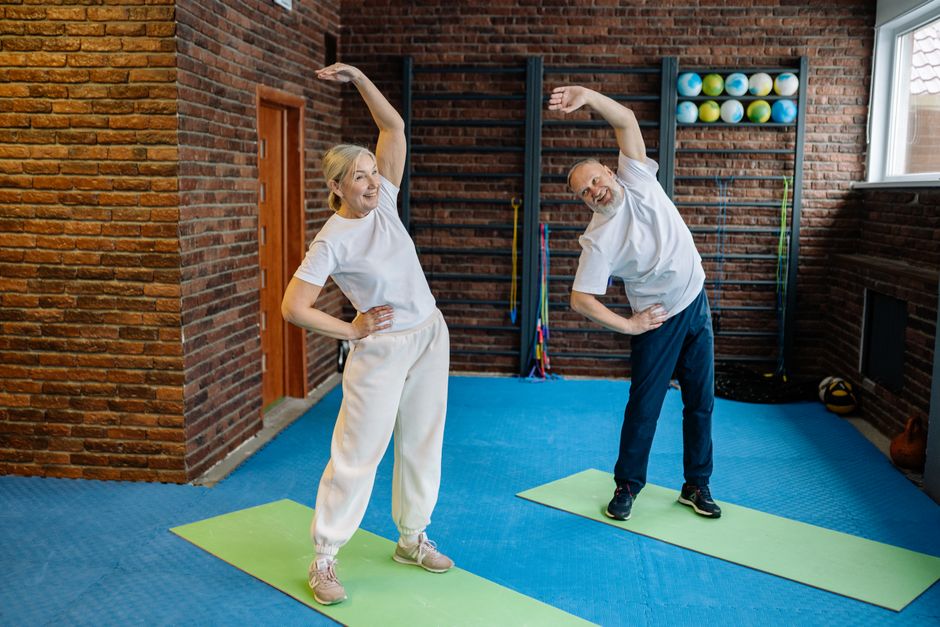
Most people come to me after a fall, or after a close call, or after watching someone they love lose their independence. They’re not here because they want to be. They’re here because something happened, and now they’re scared, and they want to know if it’s too late to fix it.
It’s not. I say that to almost everyone who sits down with me, and I mean it almost every time.
Balance is trainable at any age. That’s not just encouragement, it’s physiology. A 2015 study in the British Journal of Sports Medicine followed adults in their 60s and 70s through a 12-week balance training program and found statistically significant improvements in both static and dynamic balance across the board. A 2019 paper in JAMA Internal Medicine confirmed that targeted balance exercises reduce fall risk by roughly 23% in community-dwelling older adults. These aren’t people who started young. They started where you might be starting right now.
- Balance training reduces fall risk by ~23% in older adults, per JAMA Internal Medicine research.
- Standing exercises outperform seated ones for real-world balance improvement.
- You can see measurable gains in 4-6 weeks with 3 sessions per week.
- A sturdy chair or countertop is all the equipment you genuinely need to start safely.
- Progression matters more than intensity, tiny increases week over week beat occasional hard sessions.
Why Standing Exercises Specifically
Here’s what I tell people who ask about chair-based balance work: it has its place, especially early in recovery or with very limited mobility, but it doesn’t transfer the way standing work does. Your balance system learns in the context you train it. If you want to feel steadier walking to the kitchen at 2am, you have to train on your feet.
The body’s balance system pulls from three sources at once: your inner ear (vestibular), your vision, and the sensory receptors in your feet and ankles called proprioceptors. Proprioception is the one most people over 60 have quietly lost ground on, and it’s also the one most directly trained by standing exercises. You actually feel this when you try standing on one foot with your eyes closed. Most of my clients are surprised by how hard that is the first time.
I made the mistake for years of jumping clients straight into single-leg work before their ankles could handle it. The wobble would spike their anxiety, they’d grip the chair so hard their knuckles went white, and they’d leave feeling worse about themselves. Now I always start with tandem stance, feet staggered, heel to toe, before anything involving one foot off the ground. Takes longer. Works better.
The Exercises, From Easier to Harder
Don’t race through this progression. The goal isn’t to reach the hardest version. The goal is to find the level where you feel challenged but not panicked, and build consistency there.
Tandem stance (modified) Stand with one foot in front of the other, a few inches apart at first rather than heel-to-toe. Hold the back of a sturdy kitchen chair (not a rolling office chair, not a lightweight folding chair). Aim to hold 30 seconds without gripping. When that gets easy, close the gap. When that gets easy, try it without touching the chair, arms at your sides.
Weight shifts Stand with feet hip-width apart, chair in front of you for support. Slowly shift your weight to your right foot, feeling it build through your heel and the outside of your foot, then shift back to center, then left. The key detail most instructors miss: let your trunk move with the shift rather than staying rigidly upright. That’s how walking actually works.
Heel raises Both feet flat, hold the chair lightly (fingertips, not grip). Rise to the balls of your feet, pause, lower slowly. The slow lowering is the part that builds strength in the soleus and gastrocnemius, the muscles that essentially catch you mid-step. Most people rush down. Don’t rush down.
Single-leg stand When you’re consistently comfortable with tandem stance, try lifting one foot just an inch off the ground. Eyes open, chair within reach. Hold 10 seconds. Work toward 30. Then try with eyes closed, which removes the visual crutch and forces your proprioceptors to work harder. It’ll feel completely different.
Tandem walking (heel-to-toe) Walk a straight line, placing one foot directly in front of the other. Five steps, turn slowly, five steps back. Use a wall alongside you for reassurance rather than active support. This is the one I use as a rough progress check with clients after four weeks.
What Actually Determines Your Progress
Single BEST Exercise to Improve BALANCE in Seniors · Tim Fraticelli - PTProgress on YouTube
Three things, in my experience.
Frequency beats duration. Thirty minutes three times a week is dramatically better than 90 minutes once a week, for balance in particular. The nervous system consolidates these motor patterns during rest, so you need the repetition across days, not just across a single long session.
Surface variety matters more than most guides acknowledge. Once you’re stable on a flat floor, try standing on a folded yoga mat or a balance pad. (The AIREX Balance Pad is the one I’ve used in my practice for years, runs around $50 on Amazon and holds up forever.) The slightly unstable surface amplifies proprioceptive feedback without dramatically increasing fall risk, if you have your chair nearby.
Anxiety is a real obstacle, not just a mindset issue. When someone is frightened of falling, their muscles actually tense up in ways that reduce coordination. I’ve seen clients who were technically capable of single-leg stance but couldn’t execute it because fear was overriding their motor output. If this sounds like you, starting with both hands on a counter rather than fingertips on a chair isn’t failure. It’s meeting your nervous system where it is.
Realistic Timelines and What to Expect
Here’s a rough breakdown based on what I typically see working with adults in their 60s, 70s, and 80s. These aren’t guarantees. Individual health conditions, medications (some blood pressure medications affect balance significantly), and starting baselines all shift these numbers.
| Starting point | Typical first improvement | Noticeable in daily life | Plateau prevention |
|---|---|---|---|
| Mostly sedentary, grip-dependent | 3-4 weeks | 6-8 weeks | Increase surface challenge monthly |
| Some walking activity, mild unsteadiness | 2-3 weeks | 4-6 weeks | Add single-leg work at week 4 |
| Post-rehab, rebuilding after fall | 4-6 weeks | 8-10 weeks | Work with PT alongside this program |
| Active but wanting to improve | 1-2 weeks | 3-4 weeks | Vary eye position, add dual-task |
One real-world example from my practice: a 71-year-old client named Margaret came to me six months after a hip replacement, still holding the wall when she walked down her hallway. After six weeks of three-sessions-per-week standing balance work (tandem stance to single-leg, plus daily heel raises) she completed a tandem walk test without needing the wall alongside her. Small number, huge life change.
Another: a 68-year-old retired teacher, Robert, was taking amlodipine for blood pressure and didn’t realize it was contributing to lightheadedness during balance work. Once we flagged it with his doctor and adjusted to morning sessions after medication timing shifted, he progressed from dependent on chair grip to eyes-closed single-leg stance within eight weeks.
Sources
- Sherrington et al., British Journal of Sports Medicine (2015): Meta-analysis confirming balance exercise efficacy in older adults, including 12-week program outcomes.
- Hopewell et al., JAMA Internal Medicine (2019): Randomized trial data showing ~23% fall risk reduction through targeted balance training in community-dwelling older adults.
- American College of Sports Medicine Position Stand on Exercise and Aging (2022): Current ACSM recommendations on balance training frequency and intensity for adults 65+.
- CDC STEADI (Stopping Elderly Accidents, Deaths & Injuries) Initiative: Evidence-based fall prevention resources and screening tools for older adults. Current as of August 2026.
- National Institute on Aging Exercise Guide: Free balance and strength exercise resource specifically for older adults, with illustrated progressions.
Photo: Yan Krukau via Pexels
This article is for general informational purposes only and does not constitute medical or fitness advice. Consult your physician or a licensed physical therapist before starting a new exercise program, especially if you have existing health conditions.