 Helen Santos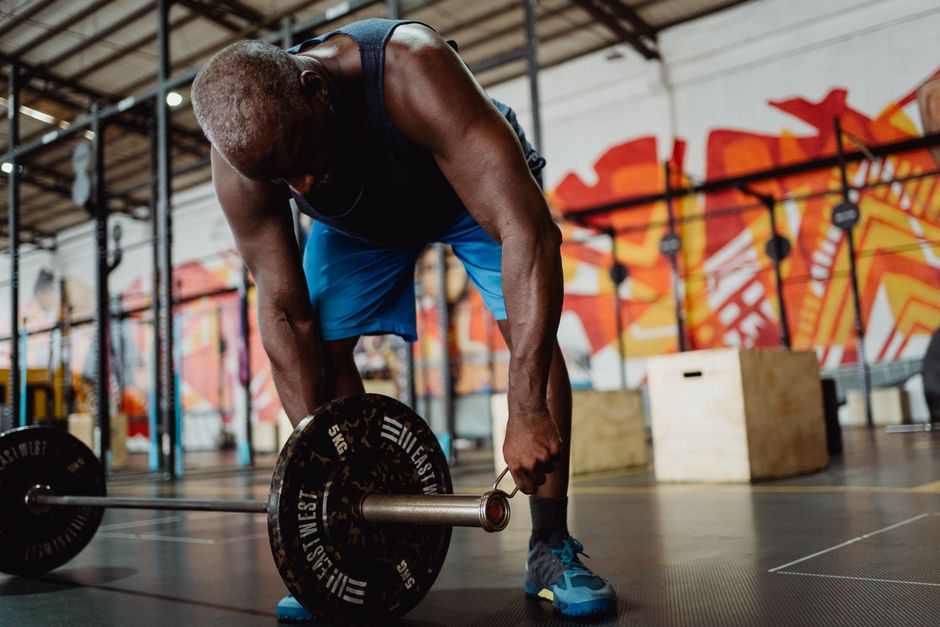
Most fitness content aimed at older adults spends three paragraphs warning you about your doctor before it says anything useful. Let’s skip that part. You’re an adult. You know your own body. What you might not know is how badly the standard “light weights, high reps” advice that gets recycled for seniors actually serves you, and in some cases, actively works against you.
Here’s what the research is increasingly clear on: meaningful resistance training, with weights that actually challenge you, is one of the most protective things a person over 60 can do. A 2022 review published in the British Journal of Sports Medicine found that strength training two or more days per week was associated with a 23% lower risk of all-cause mortality. That’s not a rounding error. And yet the default advice still tends to be “grab a light dumbbell and do some curls,” which accomplishes roughly nothing after the first few weeks.
So here’s a guide that takes you seriously.
Why “Go Light” Is the Wrong Default
The logic sounds reasonable: older joints are more vulnerable, muscles recover more slowly, so keep the weights low and the reps high. The problem is that low-load training doesn’t adequately stimulate muscle protein synthesis in older adults. You need a certain threshold of mechanical tension to signal the body to build and maintain muscle. Below that threshold, you’re just going through motions.
Sarcopenia, the age-related loss of muscle mass, accelerates after 60 and really picks up after 70. You lose roughly 1-2% of muscle mass per year if you’re sedentary, and the losses in strength run even steeper than that. The only reliable intervention that actually reverses this trend is progressive resistance training: lifting weights that challenge you, and gradually increasing that challenge over time.
“Challenging” does not mean reckless. There’s a meaningful difference between lifting at 70-75% of your one-rep maximum (the weight you could only lift once), which is a standard and appropriate training intensity for most healthy adults, and loading up a barbell with no regard for form. The goal is to work hard enough that the last two or three reps of a set feel genuinely difficult. Not painful. Not grinding. Difficult.
If you’ve been doing the same 5-pound dumbbell routine for six months and it feels easy, that’s not a sign it’s working. That’s a sign it stopped working.
Starting Right: What the First 8 Weeks Actually Look Like
| Movement Pattern | Exercise Example | Sets | Reps | Progression Timeline |
|---|---|---|---|---|
| Lower-Body Push | Squat variation | 2, then 3 after 2 weeks | 10-12 | Add weight after 2-3 weeks if easy by rep 8 |
| Lower-Body Hinge | Deadlift or Romanian deadlift | 2, then 3 after 2 weeks | 10-12 | Add weight after 2-3 weeks if easy by rep 8 |
| Upper-Body Push | Press | 2, then 3 after 2 weeks | 10-12 | Add weight after 2-3 weeks if easy by rep 8 |
| Upper-Body Pull | Row or lat pulldown | 2, then 3 after 2 weeks | 10-12 | Add weight after 2-3 weeks if easy by rep 8 |
| Core | Non-crunch variation | 2, then 3 after 2 weeks | 10-12 | Add weight after 2-3 weeks if easy by rep 8 |
The first two months of a new strength program serve a purpose most beginners don’t expect: they’re almost entirely about teaching your nervous system to recruit muscle fibers efficiently. You’ll likely get stronger before you add any appreciable muscle, because your brain is learning to use what you already have. This is genuinely good news for people who think they’re “too old to build muscle,” because initial strength gains happen fast and don’t require perfect conditions.
A reasonable starting structure, two to three days per week on non-consecutive days, looks like this:
Each session should cover a lower-body push (squat variation), a lower-body hinge (deadlift or Romanian deadlift), an upper-body push (press), an upper-body pull (row or lat pulldown), and something for the core that isn’t just crunches. That’s your whole program. Five movement patterns, done consistently, is enough to produce real results for most people new to lifting.
For equipment, adjustable dumbbells (Bowflex SelectTech 552s run around $429 for the pair and cover 5 to 52.5 pounds) or a basic barbell with plates handles the lower-body work well. If you’re joining a gym, a cable machine is your best friend for upper-body pulling, because it maintains tension through the entire range of motion, which is easier on the joints than free weights in many cases.
Start with two sets of 10-12 reps per exercise. After two weeks, add a third set. After another two to three weeks, add a little weight to any exercise that feels easy by rep 8. You are now doing progressive overload. You are now doing what works.
The Form Points That Actually Matter
5 BEST Weight Training Tips If You're Over 60 Years Old · Live Anabolic on YouTube
I’ve watched a lot of people new to lifting hurt themselves not because they lifted heavy but because nobody told them a few specific things. These are the ones I come back to most often.
Brace before you move. Before any lift, take a breath in and tighten your core like you’re bracing for a punch. This is called intra-abdominal pressure, and it stabilizes your spine under load. Most lower back problems during lifting trace back to skipping this step.
Hinge, don’t fold. The Romanian deadlift is one of the single best exercises a person over 60 can do for posterior chain strength, which translates directly to getting up from a chair and carrying groceries. But it confuses people. Push your hips backward, keep your back flat, and let the weights travel close to your legs. You’re not rounding forward at the waist. You’re hinging at the hip. These are different movements, and the difference matters enormously.
Knee tracking on squats. Your knee should travel in the same direction as your second toe when you squat or do a step-up. It shouldn’t cave inward. If it does, the culprit is usually weak hip abductors, not your knees, and the fix is lateral band walks and clamshells, not avoiding squats.
Shoulder position on pressing. When you press anything overhead or in front of you, think about pulling your shoulder blades slightly together and down before you start. This puts the shoulder joint in a mechanically safer position and dramatically reduces impingement risk. A lot of shoulder pain during pressing comes from letting the shoulder blade wing forward, which is a habit most people don’t know they have until someone points it out.
You don’t need to memorize biomechanics textbooks. You need these four cues. Get them right consistently and you’ve solved maybe 80% of the injury risk that comes from lifting.
Machines vs. Free Weights: A Real Answer
The common wisdom is that machines are “safer for beginners” and free weights are for advanced lifters. The truth is messier.
Machines are genuinely great for lat pulldowns, cable rows, leg press if you have knee issues that make squatting painful, and chest press if shoulder instability is a concern. They constrain your movement pattern, which can be protective when you’re learning or managing an existing issue.
Free weights, specifically dumbbells, are better for most things. They require coordination and balance, which means they train the stabilizing muscles you actually use in real life. A dumbbell press is harder to execute than a machine press, but it also trains your rotator cuff and serratus anterior in ways the machine can’t touch.
The barbell is where I’d urge genuine caution for most people starting out after 60, not because it’s inherently dangerous, but because the learning curve is steeper, the margin for error is smaller, and dumbbells get you to the same place with less technical overhead. If you eventually want to barbell squat or deadlift, hire someone qualified to teach you first. One session with a good trainer watching your form is worth more than a year of YouTube videos.
How to Handle Pain vs. Discomfort
This is the question I get most often, and it’s the most important one to get right.
Muscle soreness 24-48 hours after a session is normal, especially early on. It’s called delayed onset muscle soreness (DOMS), and it means you stressed the tissue enough to trigger adaptation. It’s uncomfortable but not alarming.
Sharp pain during a movement: stop immediately. Not “push through it” stop. Actual stop.
Joint pain that persists after you finish lifting and into the next day is worth backing off. Examine your form before your next session.
A useful clinical distinction: if you can rate pain as a 3 or below on a 10-point scale during exercise, and it doesn’t get worse as you continue and isn’t there the next morning, it’s generally within an acceptable range for someone managing a chronic condition like mild osteoarthritis. This is sometimes called the “traffic light” system and it’s used in physical therapy settings. Above a 4, stop.
If you’re managing osteoporosis specifically, there are additional considerations around spinal flexion under load. A session or two with a physical therapist who specializes in this area is genuinely worth the cost before you start.
What Doesn’t Need a Section of Its Own
Rest between sessions matters more for older adults than younger ones. Muscle protein synthesis after a training session peaks around 24 hours and can stay elevated for 48-72 hours in older adults (compared to roughly 24 hours in younger adults). Three days a week with full rest days between sessions isn’t being cautious. That’s actually the right call based on recovery physiology.
Protein intake is deeply underappreciated. You need more of it to trigger the same muscle-building response as a younger person, and most people over 60 eat substantially less than the current research suggests (around 1.6 grams per kilogram of body weight per day for someone actively training). If you weigh 170 pounds, that’s roughly 123 grams of protein per day. Most people are nowhere near that. Greek yogurt, eggs, cottage cheese, chicken, canned fish. Pick the ones you’ll actually eat.
The longer I do this work, the more convinced I am that the biggest obstacle for most people over 60 isn’t ability or even motivation. It’s that the information they’ve been given was too cautious to be useful. Your body responds to challenge. Give it one.
Photo: Ketut Subiyanto via Pexels
This article is for general informational purposes only and does not constitute medical or fitness advice. Consult your physician or a licensed physical therapist before starting a new exercise program, especially if you have existing health conditions.
Sources
- Ketut Subiyanto
- Nutramax Cosequin Senior Dog Soft Chews (60ct)
- Nutramax Cosequin DS Joint Supplement for Dogs (132ct)
- is increasingly clear on: meaningful resistance training
- suggests (around 1
Disclosure: As an Amazon Associate, we earn a small commission from qualifying purchases at no extra cost to you. We only recommend products that genuinely support the topics covered in this article.
- Nutramax Cosequin Senior Dog Soft Chews (60ct) (~$32), Senior-specific Cosequin formula with added Omega-3s, designed for aging dogs with joint and immune health needs.
- Nutramax Cosequin DS Joint Supplement for Dogs (132ct) (~$36), The #1 veterinarian-recommended joint supplement brand, clinically studied for reducing joint pain in dogs.