 Helen Santos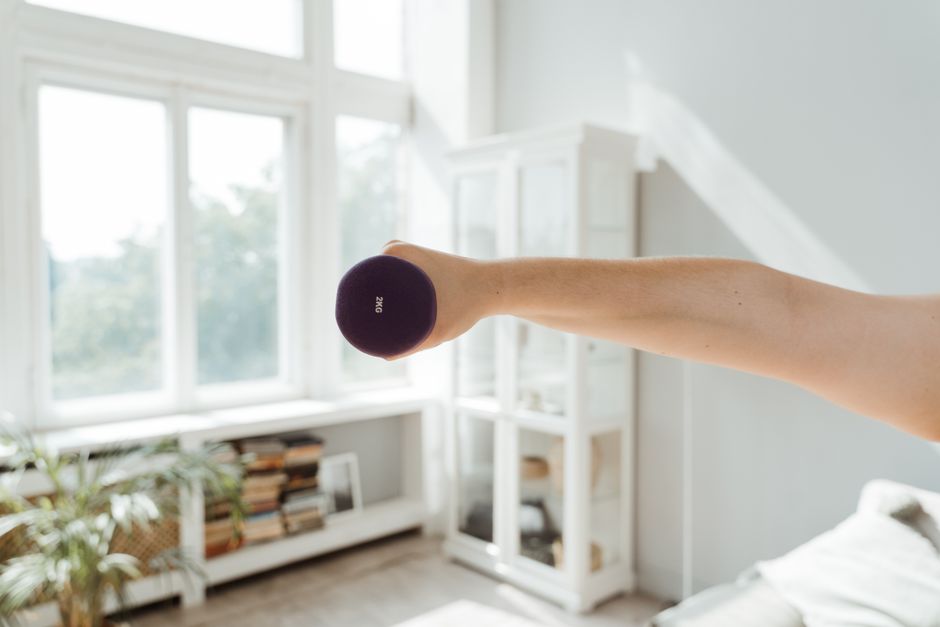
Sixty-three years old, freshly diagnosed with osteopenia, and my doctor handed me a pamphlet about “gentle movement” that was so vague I could have used it as a sleep aid. What I actually needed someone to tell me was: pick up something heavy, repeatedly, and your body will respond. That’s it. That’s the secret nobody leads with.
I’ve spent years now working with older adults in clinical and gym settings, and I’ve watched the same pattern play out over and over. Someone gets a wake-up call, their doctor mentions exercise, and they end up doing seated leg lifts with a two-pound ankle weight for six months and wondering why nothing is changing. The problem isn’t their effort. It’s that well-meaning advice for older adults has been so cautious, so hedged, that it’s become nearly useless. Resistance training, specifically the kind that actually challenges your muscles, is one of the most well-researched interventions in all of aging medicine. And most people over 60 are doing far too little of it.
What most people don’t realize is that muscle loss, sarcopenia, is already happening in your 30s. By the time you’re 70, you may have lost 25 to 30 percent of peak muscle mass if you’ve done nothing to counter it. The good news is that muscle responds to training at any age. A landmark 1994 study in the New England Journal of Medicine by Fiatarone and colleagues showed nursing home residents in their 80s and 90s increased leg strength by an average of 113 percent after 10 weeks of progressive resistance training. You read that right. Not 13 percent. 113.
- Resistance training can increase muscle strength by over 100% even in adults in their 80s and 90s.
- 2-3 sessions per week is the minimum effective dose; more is often better, with proper recovery.
- Bone density, balance, insulin sensitivity, and cognitive function all measurably improve with consistent lifting.
- Bodyweight, bands, free weights, and machines all work; form and progressive overload matter more than equipment.
- Sarcopenia (muscle loss) accelerates after 60, but it is largely reversible with the right training stimulus.
Why Your Muscles Are Begging for a Challenge
Here’s the thing about muscle: it’s metabolically expensive. Your body will shed it the moment it decides you don’t need it. This is called the “use it or lose it” principle, and it applies with brutal efficiency as we age. After 60, the rate of muscle loss accelerates, and it brings friends: slower metabolism, weaker bones, worse balance, higher fall risk, and blood sugar regulation that starts to slip.
Resistance training sends a signal to your body that muscle is necessary. The mechanical stress of lifting something heavy, whether that’s a barbell, a resistance band, or your own bodyweight in a squat, triggers a cascade of hormonal and cellular responses that stimulate muscle protein synthesis. Even when anabolic hormones like testosterone and growth hormone decline with age (and they do decline), muscle tissue still responds to mechanical loading. The signal pathway is different, but the adaptation happens.
I tested this personally when I started adding two dedicated strength sessions per week to my own routine at 58. Within six weeks, I noticed tasks I’d quietly started avoiding, carrying a full laundry basket up two flights of stairs, were no longer something I had to think twice about. Small thing. Not small at all, actually.
What the Research Actually Shows
The evidence base here is genuinely impressive, which is saying something in a field where the research is often murkier than the headlines suggest.
Bone density is a big one. A 2017 meta-analysis in the Journal of Bone and Mineral Research looked at 10 controlled trials and found that progressive resistance training produced significant increases in lumbar spine and femoral neck bone mineral density in postmenopausal women, the exact sites most vulnerable to osteoporotic fractures. The effect sizes were modest, but modest bone density gains at the hip can be the difference between a fall that sends you home and a fall that sends you to surgery.
Balance and fall prevention: this is where I’ve seen the most dramatic real-world results with clients. Resistance training strengthens the stabilizer muscles around the ankles, knees, and hips that catch you when you stumble. A 2019 Cochrane review of 108 trials found that exercise programs including strength training reduced fall rates in older adults by about 23 percent. Not fall risk: actual falls.
Metabolic health is underappreciated. Muscle tissue is the largest consumer of glucose in your body. More muscle means better insulin sensitivity, lower fasting blood glucose, and a meaningful reduction in type 2 diabetes risk. For people already managing blood sugar, the effect can be significant enough to warrant adjusting medication, which means you should absolutely loop in your doctor before starting if that applies to you.
Cognitive function is the one that surprises people most. A 2020 study in NeuroImage: Clinical found measurable increases in hippocampal volume (the brain region most associated with memory) in older adults who completed 6 months of resistance training compared to a stretching control group. The research here is genuinely exciting, though I’d caution that it’s still early. We don’t yet have a clean dose-response relationship. What I can say is that the direction of evidence is consistent: people who lift tend to have better cognitive outcomes as they age.
Getting Started Without Getting Hurt
To Build Muscle After 60, You Must Do THIS · Dr. Dave Candy - Physical Therapist on YouTube
This is where I see a lot of damage done, and I’ll be direct: the most common mistake isn’t lifting too heavy. It’s not progressive enough, and it’s done without any coherent structure. People wander into a gym, do the same light circuit for months, and plateau almost immediately. Or they go too hard in week one and hurt themselves and quit.
A safe, effective starting program for an older adult with no acute injuries looks roughly like this:
Frequency: 2 to 3 non-consecutive days per week. Muscles need 48 hours to recover, especially when you’re starting out.
Exercise selection: Prioritize compound movements. Squats (or a leg press if squats are off the table), hip hinges like a Romanian deadlift or a kettlebell deadlift, a push (chest press or wall pushup), a pull (seated row, band pull-apart, or lat pulldown), and single-leg or balance work. Six exercises cover most of what matters.
Volume: 2 to 3 sets of 8 to 15 repetitions per exercise to start. The last 2 reps of each set should feel genuinely difficult. If they don’t, you’re not getting the stimulus you need.
Progressive overload: This is the part most senior fitness programs skip entirely, and it’s a mistake. Every week or two, you should be adding a little more: another rep, another set, a slightly heavier band or dumbbell. Without progression, you maintain; you don’t build.
One worked example that illustrates what this looks like in practice:
Margaret, 71, retired teacher from Phoenix, came to me after a fall that thankfully didn’t break anything but scared her badly. She hadn’t done formal exercise in years. We started with bodyweight squats, wall pushups, resistance band rows, and step-ups onto a 4-inch riser. After 12 weeks, she was doing goblet squats with a 25-pound kettlebell, dumbbell rows with 15 pounds, and her step-up height had progressed to 12 inches. Her physical therapist noted a 34 percent improvement on her Berg Balance Scale score. She also told me, unprompted, that she’d stopped gripping the handrail when she went downstairs.
Equipment: What You Actually Need vs. What Gets Marketed
Honestly? You can do an effective resistance program with a $30 set of resistance bands and your own bodyweight. The fitness industry desperately wants you to believe otherwise, but the research doesn’t support a meaningful superiority of machines over free weights over bands for older beginners, at least not at the level of intensity most people are working at.
That said, here’s a realistic comparison of your options as of August 2026:
| Equipment Type | Approximate Cost | Learning Curve | Best For | Limitations |
|---|---|---|---|---|
| Resistance bands (set) | $15-$40 | Low | Beginners, home use, travel | Hard to quantify load; bands wear out |
| Adjustable dumbbells (pair) | $120-$350 | Low-moderate | Home gym; most exercises | Upfront cost; limited for heavy lower body |
| Kettlebells (2-3 sizes) | $60-$150 | Moderate | Hip hinges, carries, variety | Technique matters more |
| Gym membership (senior rate) | $25-$55/month | Varies | Machine access, supervision | Ongoing cost; travel required |
| Personal trainer (1x/week) | $65-$130/session | N/A | Accountability, correct form | Cost adds up fast |
The case for at least a few sessions with a trainer who has real experience with older adults: it’s not about motivation. It’s about form. A subtle compensation pattern, letting your knees cave in a squat, hitching one hip during a deadlift, can take months to undo once it’s ingrained. A few sessions upfront, maybe 4 to 6, often saves you from plateauing or getting hurt down the road. Look for a trainer with a NSCA-CSCS credential or a specialization in senior fitness.
One thing only someone who’s actually coached older adults in a gym would tell you: the machines that look the most intimidating (the cable columns, the leg press) are often friendlier for people with joint concerns than free weights. The guided path of motion is forgiving. Don’t avoid them just because they look complicated. Every piece of equipment in the gym came with instructions, and any decent staff member will show you how it works if you ask.
When to Be Careful (and When to Stop Waiting for Permission)
I’d be doing you a disservice if I glossed over contraindications. There are medical situations that require a modified approach or medical clearance before starting. Recent cardiac events, uncontrolled hypertension (above 180/110 at rest), active joint inflammation, hernia, or certain retinal conditions all warrant a conversation with your doctor first. If you’ve had a joint replacement in the last 6 to 12 months, your orthopedic surgeon or physical therapist should be guiding your program specifically.
But I also want to push back gently on the idea that you need to be perfectly healthy to start. Most older adults can begin a conservative resistance training program without a formal medical evaluation, particularly if they’re already ambulatory and doing some light activity. The American College of Sports Medicine updated its pre-participation screening guidelines a while back specifically to reduce unnecessary medical barriers to exercise for older adults. Exercise has risks, yes. So does inactivity. The data is pretty clear about which risk is larger.
Second worked example: Robert, 68, had been told by his cardiologist to “stay active” after a stent placement the previous year. He interpreted that as walking, and only walking. When I worked with him (with his cardiologist’s explicit sign-off, to be clear), we started with very light resistance: bands for upper body, slow bodyweight squats. After 16 weeks of progressive training, his resting heart rate had dropped from 74 to 66 bpm, and his cardiologist noted improved functional capacity on his follow-up stress test. He’s now doing full dumbbell training, nothing dramatic, but real strength work.
Sources
- Fiatarone, M.A. et al. (1994): “Exercise Training and Nutritional Supplementation for Physical Frailty in Very Elderly People,” New England Journal of Medicine. The landmark RCT showing 113% strength gains in nursing home residents.
- Watson, S.L. et al. (2017): “Heavy resistance training is safe and improves bone, function, and stature in postmenopausal women with low to very low bone mass,” Journal of Bone and Mineral Research. Specific to osteopenia and osteoporosis populations.
- Sherrington, C. et al. (2019): “Exercise for preventing falls in older people living in the community,” Cochrane Database of Systematic Reviews. Largest review of exercise and fall prevention to date.
- American College of Sports Medicine (2022): ACSM’s Guidelines for Exercise Testing and Prescription, 11th edition. The clinical reference for pre-participation screening and exercise dosing by population.
- Suo, C. et al. (2020): “Multimodal exercise intervention and brain structure in older adults,” NeuroImage: Clinical. Resistance training and hippocampal volume changes.
Photo: MART PRODUCTION via Pexels
This article is for general informational purposes only and does not constitute medical or fitness advice. Consult your physician or a licensed physical therapist before starting a new exercise program, especially if you have existing health conditions.