 Robert Davis
A patient I’ll call Margaret, 68, came to see me six months after starting Wegovy. She’d lost 22 pounds, her blood pressure was down, and her doctor was thrilled. But she could barely get up from a chair without using her arms, and she’d fallen twice on her morning walks. The scale said she was winning. Her body said something else was happening.
Margaret’s situation isn’t rare anymore. Millions of older adults are now taking GLP-1 receptor agonists like semaglutide, and the weight loss results can be genuinely impressive. But a surge of clinical data from 2025 and 2026 is making it harder to ignore a serious downside: these drugs can strip away muscle, and for adults over 65, that loss can tip someone from independence into frailty faster than almost anything else I’ve seen in my career.
The Muscle Loss Problem Is Bigger Than Most Patients Are Being Told
Here’s what most people don’t realize when they start a GLP-1 medication: your body doesn’t distinguish neatly between fat and muscle when it’s losing weight quickly. A 2024 review published in Diabetes, Obesity & Metabolism found that between 15% and 60% of total weight lost on GLP-1 receptor agonists may come from lean mass, depending on the individual and the specific drug used. That range is enormous, and the high end of it should give anyone pause.
The newer cohort data is sharper and more alarming. Clinical observations from 2025 and 2026 show that patients losing more than 15% of their body weight on high-dose GLP-1 medications are experiencing an average lean mass decline of 10 to 15%. Adults over 65 and those who already have some degree of sarcopenia, meaning low baseline muscle mass, are at the highest risk.
That matters enormously for older adults specifically because they’re already working against the clock. Natural aging reduces skeletal muscle mass by 12 to 16% over time, according to an editorial in the Annals of Internal Medicine. That’s a significant physiological margin that’s already been spent before someone even fills their first prescription. A GLP-1-related muscle loss of 10 to 15% on top of that doesn’t just reduce strength. It can push someone into clinical frailty, with all the downstream consequences: falls, fractures, hospitalizations, and loss of the independence the weight loss was supposed to protect.
Why This Moment in 2026 Feels Different
The reason I’m writing this now, in June 2026, is that the science is catching up fast, and so is the clinical response. Researchers at Stanford Medicine just published findings in PNAS showing that a 15-PGDH inhibitor already in clinical trials for age-related muscle loss may also counteract the muscle wasting that happens during GLP-1 treatment. The fact that a major research institution is investigating a specific pharmaceutical workaround for this side effect tells you how pressing the medical community now considers this problem to be.
Separately, Rice University and The Methodist Hospital Research Institute launched a clinical trial in April 2026 that’s testing whether a 12-week exercise and individualized nutrition program can meaningfully reduce muscle and bone loss in obese adults on GLP-1 medications. Results are expected in August 2026. We don’t have the outcome data yet, but the existence of that trial reflects a real shift in how clinicians are thinking. The question is no longer whether muscle loss is a concern on these drugs. It’s how to stop it.
What the Current Guidance Actually Recommends
| Component | Recommendation | Key Detail |
|---|---|---|
| Resistance Training | 2-3 times per week | Progressive; targets major muscle groups and daily-function movements |
| Protein Intake | 1.2-1.6 g/kg body weight daily | ~87-116 g/day for a 160-lb person |
| Muscle-Mass Monitoring | DEXA scans or functional tests | Grip strength and timed chair rises flag early loss |
| Provider Conversation | Baseline assessment required | Should include strength and function, not just BMI and blood sugar |
If you or someone you care about is over 65 and taking a GLP-1 medication, the standard of care is evolving quickly. In 2026, leading providers are increasingly recommending what’s now being called a muscle-preserving protocol, and it has four main components.
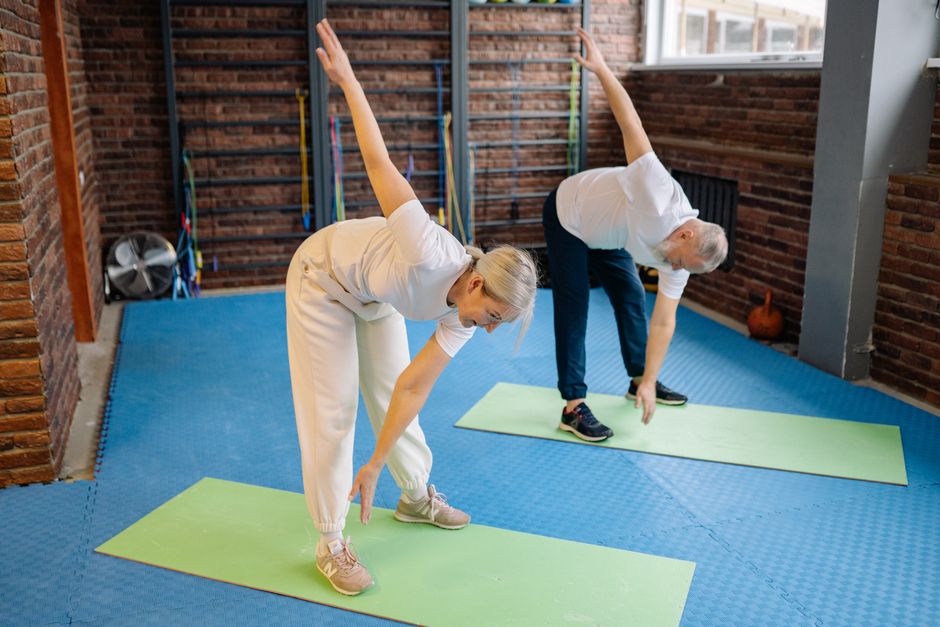
The first is resistance training. Not casual walking. Not yoga alone. Actual progressive resistance work, meaning exercises that challenge your muscles enough to stimulate adaptation. I’ve seen too many older adults told to “stay active” without any specifics, and that guidance simply isn’t adequate here.
The second is protein intake, specifically 1.2 to 1.6 grams per kilogram of body weight daily. For a 160-pound person, that’s roughly 87 to 116 grams of protein per day. GLP-1 medications suppress appetite significantly, which is part of how they work, but that same appetite suppression can make it very easy to undereat protein without realizing it. This is where working with a registered dietitian, not just general nutrition advice from the internet, becomes genuinely important.
The third component is routine muscle-mass monitoring. DEXA scans are the gold standard, but even simple functional tests like grip strength measurement and timed chair rises, which count how long it takes you to stand up from a chair five times in a row, can flag early muscle loss before it becomes a crisis. Ask your prescribing doctor whether this kind of monitoring is built into your follow-up plan. If it’s not, that’s worth raising directly.
The fourth is the conversation itself. Providers who are prescribing these medications should be asking about your baseline strength and function, not just your BMI and blood sugar.
The Resistance Training Piece Deserves More Specificity
I want to spend a moment here because “do resistance training” is advice that’s easy to dismiss or to do ineffectively. What I’ve seen work for adults in their 60s, 70s, and beyond on GLP-1 medications is a program that hits the major muscle groups two to three times per week, focuses on movements that mirror daily function (standing up, carrying, stepping), and progresses gradually over time.
The key word is progressive. If you’re doing the same light band exercises you started with three months ago, your muscles have adapted and you’re no longer challenging them enough to build or maintain mass. That progression doesn’t have to mean heavy barbells. It can mean moving from a chair-assisted squat to a full squat, or adding a second set, or slowing the tempo of each repetition. But it has to keep advancing.
Working with a trainer who has experience with older adults, or a physical therapist who can assess your current function and build a program from there, is worth every dollar, especially if you’re on a GLP-1 medication and actively losing weight. The stakes for getting this right are high enough to justify professional help rather than relying solely on what you find online.
Talking to Your Doctor Without Getting Brushed Off
The frustrating reality is that many prescribers, particularly in primary care, are managing high patient volumes and may not yet be integrating a full muscle-preservation protocol into GLP-1 follow-up visits. That’s not a criticism of individual doctors; it reflects how quickly this area of medicine is moving and how long it takes new evidence to become standard workflow.
If you’re over 65 and on semaglutide or another GLP-1, it’s completely reasonable to bring a printout of recent guidance, reference the Endocrine Society coverage from September 2025, and ask directly: “What are we doing to monitor and protect my muscle mass while I’m on this medication?” That’s not being difficult. That’s being an informed patient.
A consultation with a geriatrician, a sports medicine physician, or a registered dietitian with experience in this area may also give you a more complete picture than a brief follow-up appointment allows. Your prescriber may be excellent, but a team approach, when you can access it, is genuinely more effective here.
The weight loss these medications can produce is real and, for many people, clinically meaningful. Margaret eventually got her strength back, with a structured program and some serious attention to protein. But she’ll tell you herself that nobody warned her what was coming. That warning is overdue.
Sources
- GLP-1 Agonists and Muscle Loss: A Hidden Risk for Older Adults (September 2025)
- Muscle Loss and GLP-1 Weight-Loss Drugs (2026 Update) (May 2026)
- Critical 2026 Update: New GLP-1 Rules to Stop Muscle Loss (June 2026)
- Existing drug enhances muscle repair during GLP-1 weight-loss treatment (June 2026)
- Combatting Muscle Loss in Obese Adults on GLP-1 Medications (April 2026)
- Weighing the risk of GLP-1 treatment in older adults: sarcopenic obesity (2026)
Photo: Ketut Subiyanto via Pexels
This article is for general informational purposes only and does not constitute medical or fitness advice. Consult your physician or a licensed physical therapist before starting a new exercise program, especially if you have existing health conditions.