 Dr. Patricia Williams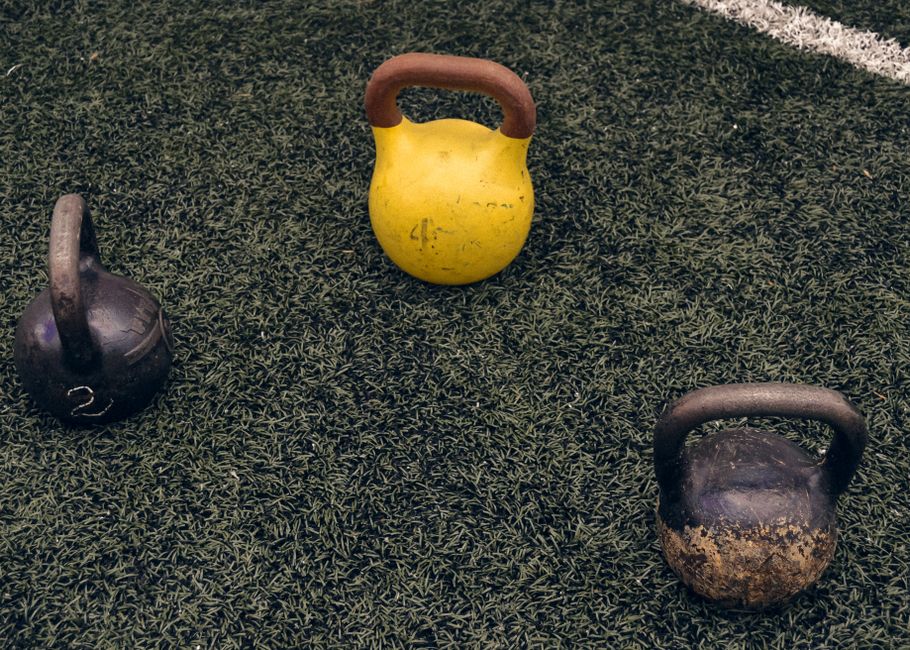
Most fitness content aimed at older adults either talks down to you or quietly assumes you should stick to chair yoga and resistance bands forever. That’s frustrating, and honestly, it leaves a lot of real strength on the table. Kettlebells, used correctly, are one of the most effective tools available for building the kind of functional strength that keeps you upright, independent, and moving well into your seventies, eighties, and beyond.
I won’t pretend there’s zero risk. Kettlebell training done sloppily hurts people of any age. But the answer to that isn’t avoidance. It’s learning the right progressions, picking appropriate weights, and being honest about where you’re starting.
- Start with an 8-12 lb kettlebell for most women over 60; 15-18 lb for most men. Size up only when form is airtight.
- The goblet squat, deadlift, and halo are the three highest-return moves for seniors starting out.
- 2-3 sessions per week, 20-30 minutes each, is enough to produce measurable strength gains in 6-8 weeks.
- Kettlebells train grip, hip hinge, and rotational stability simultaneously, advantages that dumbbells and machines rarely match.
- A quality cast-iron kettlebell costs $40-$90 and lasts decades. You don't need a gym membership.
Why Kettlebells Work Differently Than Machines
Machines isolate muscles. That’s not always bad, but isolation is the opposite of how your body actually moves. Getting up from a chair, catching yourself when you slip, carrying groceries, all of those demand that multiple muscle groups fire in coordination, often under time pressure.
Kettlebells force that coordination. The weight sits off-center in your hand, so stabilizer muscles activate constantly. Your grip works. Your core braces. Your hips load and extend. A single goblet squat trains more of your body than three different leg machines combined.
I’ve watched clients in their late sixties make more noticeable functional progress in eight weeks of kettlebell work than they did in six months of machine-based circuit training. That’s not a knock on machines across the board. It’s a pattern I’ve seen enough times to trust.
The other underappreciated advantage: kettlebells sit on the floor. You load and unload them with a hip hinge, which itself is practice for one of the most important movement patterns in daily life. Every single time you pick up the weight, you’re rehearsing how to lift something safely.
Choosing the Right Starting Weight
Here’s where most people get it wrong, myself included when I first started recommending kettlebells to older clients. I started people too light, thinking I was being safe. What actually happened is they learned bad habits because the weight wasn’t heavy enough to demand good mechanics. A too-light kettlebell swings awkwardly and teaches you nothing about bracing your core.
You want a weight that’s challenging by rep 8 or 10, not by rep 3. As a rough guide:
| Population | Suggested Starting Weight | Typical 6-week Progress |
|---|---|---|
| Women 60-70, moderate activity | 8-10 lb (4 kg) | Move to 12-15 lb |
| Women 70+, or limited strength base | 5-8 lb (2-4 kg) | Move to 8-12 lb |
| Men 60-70, moderate activity | 15-18 lb (7-8 kg) | Move to 20-26 lb |
| Men 70+, or limited strength base | 10-13 lb (5-6 kg) | Move to 15-18 lb |
| Either, post-injury or neurological concern | 5 lb / work with PT first | Varies significantly |
These are starting points, not prescriptions. If 12 lb feels genuinely easy on goblet squats from day one, go to 15. If 15 lb makes your form collapse, drop back. Your form is the data.
For brands: Rogue Fitness kettlebells are the gold standard (cast iron, smooth handle, accurate weight markings), running roughly $2.25-$2.50 per pound as of August 2026. Rep Fitness and Yes4All are solid budget options at $1.50-$1.80 per pound. Avoid the powder-coated plastic-handle versions you’ll find at big-box stores. The handles are often too wide for smaller hands and chip within months.
The Four Moves Worth Your Time
5 Exercises for Seniors to do EVERY DAY · Vive Health on YouTube
Skip the complex stuff for now. Four movements cover the vast majority of what kettlebell training offers seniors, and they build the foundation for anything more advanced later.
The Goblet Squat is the most important lower-body exercise most people over 60 aren’t doing. Hold the kettlebell vertically at your chest, elbows pointing down. Feet shoulder-width, toes turned out slightly. Sit back and down, keeping your chest up and your knees tracking over your toes. Drive through your heels to stand. One thing newcomers never expect: the weight in front actually counterbalances you and makes the squat feel more stable, not less. Most people hit better depth immediately.
Scenario: A 71-year-old client who hadn’t been able to squat past parallel in years, partly from hip tightness and partly from fear of falling backward. We started with a 10 lb goblet squat, hands gripping the horns of the bell. Within three weeks, she hit full depth consistently. By week six, she moved to 15 lb and reported she could get up from low chairs without pushing off the armrests for the first time in several years.
The Deadlift teaches you to pick things up correctly. Stand with the kettlebell between your feet, hinge at your hips (not your waist), grip the handle, and drive your hips forward to stand. Lower back stays neutral the entire time. This is, genuinely, the most functional movement in the list. It maps directly to lifting bags, grandchildren, and laundry baskets.
The Halo builds rotational mobility in the shoulders and thoracic spine. Hold the bell by the horns at chest height, circle it slowly around your head in one direction, then reverse. Start light because the leverage is deceptive. An 8 lb bell feels like 15 when it’s circling around your head. One small detail only experience teaches: let the bell tip slightly as it passes behind your head. Trying to keep it perfectly level causes shoulder strain.
The Farmer’s Carry is almost embarrassingly simple. Pick up one or two kettlebells, stand tall, walk 20-40 feet, turn around, come back. That’s it. It trains grip strength (which correlates with longevity in multiple studies, including a large analysis published in The Lancet in 2015 tracking 140,000 participants), core stability, and posture simultaneously. It also functions as active rest between harder sets.
Balance and the Overlooked Grip Connection
Falls are the leading cause of injury-related death in adults over 65, according to CDC data current as of 2026. That statistic gets cited constantly. What gets cited less often is the grip strength connection.
Weak grip predicts fall risk with uncomfortable accuracy. When grip goes, reaction time for catching yourself goes with it. Kettlebells, more than almost any other training tool, build grip strength progressively and consistently because you’re holding an offset weight that constantly tries to rotate out of your hand.
The farmer’s carry is the most direct grip builder. The swing (once you’re ready for it) is another. Even basic goblet squats, if you’re squeezing the bell hard throughout, generate meaningful grip training stimulus.
The decline is real, but it’s also trainable. Research from the Journal of Aging and Physical Activity found that older adults following a resistance program for 12 weeks improved grip strength by an average of 18-22%. Kettlebells are particularly well-suited because you can’t cheat the grip.
A Practical Starting Schedule
Two sessions per week is enough to start. Three is better once you’ve adapted. More than four, especially for people who haven’t been training, tends to backfire through soreness and discouragement.
A simple 25-minute session:
Warm-up (5 minutes): Hip circles, shoulder rolls, bodyweight squats, and 30 seconds of marching in place. Nothing fancy.
Main work (15 minutes): Goblet squats, 3 sets of 8-10. Rest 90 seconds between sets. Deadlifts, 3 sets of 8. Halos, 2 sets of 6 each direction. Farmer’s carry, 3 lengths of your hallway.
Cool-down (5 minutes): Gentle hip flexor stretch, thoracic rotation, deep breathing.
Scenario: A 68-year-old retired teacher started this exact schedule in January, two sessions per week. At the eight-week mark, she tested herself on a 30-second chair stand test (a validated measure of lower-body strength). Her score moved from 11 repetitions to 16. The normative score for a healthy woman in her late sixties is 12-17, so she went from slightly below average to the high end of normal in two months.
What to Skip, At Least for Now
The Turkish Get-Up is wonderful and I do recommend it eventually. But it demands a lot of spatial awareness and body control. Learn it after you’ve built a solid base with the four movements above, ideally with someone watching your form at least once. Same for the kettlebell swing: powerful exercise, high reward, but the hip hinge mechanics need to be solid first or you’ll load your lower back instead of your posterior chain.
Overhead presses with a kettlebell are also worth setting aside initially if you have any history of shoulder impingement or rotator cuff issues. The rotational demand of the bell is more than most people expect.
Sources
- Centers for Disease Control and Prevention: Falls data and fall-related mortality statistics for adults 65+, updated 2026.
- Leong DP, et al. (2015): “Prognostic value of grip strength,” The Lancet, large multinational cohort study, 140,000 participants.
- Bohannon RW (2019): “Grip Strength: An Indispensable Biomarker for Older Adults,” Clinical Interventions in Aging, review of grip as functional and mortality predictor.
- Journal of Aging and Physical Activity: Resistance training and grip strength improvements in older adults, 12-week intervention data.
- Journal of Hand Surgery (2020): Normative grip strength data by age and decade.
Photo: Екатерина Глущенко via Pexels
This article is for general informational purposes only and does not constitute medical or fitness advice. Consult your physician or a licensed physical therapist before starting a new exercise program, especially if you have existing health conditions.