 Robert Davis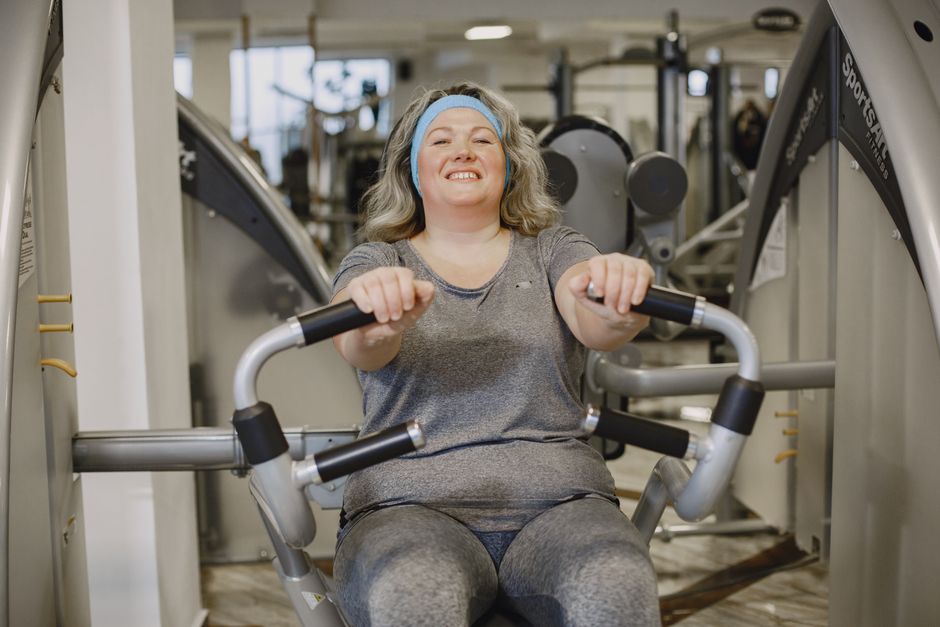
Seventy percent of adults over 65 who fall and fracture a hip will never fully regain their previous level of independence. That number stopped me cold the first time I read it in a 2022 report from the CDC. Not because falls are inevitable, but because the single most effective thing we know of to prevent them, building muscle and bone strength through resistance training, is also the thing most people over 70 are told to avoid.
I’ve been working with older adults in clinical and gym settings for over fifteen years. And I’ll say it plainly: the fear around weight lifting after 70 is doing real harm. Not the lifting. The fear.
You might be wondering whether your body is simply too old for that kind of stress. Whether your joints can handle it. Whether you’re going to hurt yourself more than help yourself. Those are completely reasonable things to wonder, and I want to walk through all of it honestly, because the answer isn’t a flat “yes, go lift heavy.” It’s more nuanced than that, and more encouraging.
- Adults over 70 can safely lift weights; research shows strength gains of 25–30% are achievable in 12 weeks.
- Muscle loss (sarcopenia) accelerates after 70, making resistance training more important, not less.
- Start with 2 sessions per week, 8–12 reps per set, using a weight you can control through full range of motion.
- Medical clearance matters most if you have osteoporosis, recent surgery, uncontrolled hypertension, or heart disease.
- Balance and fall risk improve measurably with consistent resistance training, often within 6–8 weeks.
What the Research Actually Shows
Here’s what changed my thinking early in my career: I assumed older adults needed gentler, lower-intensity work because their muscles were more fragile. That’s wrong. A landmark study published in the Journal of the American Medical Association (Fiatarone et al., 1994) put frail nursing home residents with an average age of 87 through high-intensity leg press training. Ten weeks later, they had increased muscle strength by an average of 113% and walking speed improved measurably. These were people in their late 80s. In a nursing home.
More recently, a 2019 meta-analysis in Sports Medicine reviewed 49 randomized controlled trials on resistance training in adults over 60 and found consistent, meaningful improvements in muscle mass, strength, and functional performance regardless of baseline fitness. The researchers noted that training age (how long you’ve been lifting) matters far less past 60 than people assume. Your muscles respond to progressive overload at 72 the same basic way they do at 42, just a bit more slowly.
What genuinely changes after 70 is recovery time. You need 48 to 72 hours between sessions working the same muscle groups, compared to 24 to 48 hours for younger adults. I’ve seen people get into trouble not because they lifted too hard, but because they lifted Monday, Wednesday, and Friday with no understanding of recovery, felt worse each week, and concluded that lifting “wasn’t for them.”
The Real Risks (and Which Ones Actually Apply to You)
Let me be honest: there are situations where jumping straight into a weight room without guidance is genuinely risky. Uncontrolled hypertension is the big one. Heavy resistance training temporarily spikes blood pressure significantly, and if yours is running 160/100 at rest, you need that addressed before you start loading a barbell. Same goes for recent cardiac events, unhealed fractures, or severe osteoporosis with vertebral compression fractures already present.
But here’s where I’d push back on most generic medical advice: “talk to your doctor” often gets translated into “don’t do it” in the exam room, because many physicians simply haven’t been trained in exercise prescription for older adults. A 2017 survey published in BMC Medical Education found that only 17% of medical schools required a dedicated course in exercise medicine. Your cardiologist might be brilliant and still have no idea how to structure a resistance training program for someone with a pacemaker.
The more useful questions to ask your doctor aren’t “can I lift weights?” They’re: “Are there specific movements I should avoid? Do I need a cardiac stress test before starting? What blood pressure range should I stay within during exercise?” That gives you workable information.
The conditions that genuinely warrant modified (not eliminated) training include:
- Osteoporosis: avoid spinal flexion under load (no good-mornings, careful with sit-ups), focus on hip and leg strength, use machines over free weights initially
- Rheumatoid arthritis: train on low-inflammation days, prioritize range of motion, shorter sets are fine
- Diabetes: monitor blood glucose before and after sessions; resistance training significantly improves insulin sensitivity, which is a good thing, but you need to be aware of the timing
- Post-joint replacement: most people can return to resistance training 3 to 6 months post-op with clearance; I’ve worked with hip replacement patients doing leg press at 8 months with zero issues
What “Safe” Actually Looks Like Week One
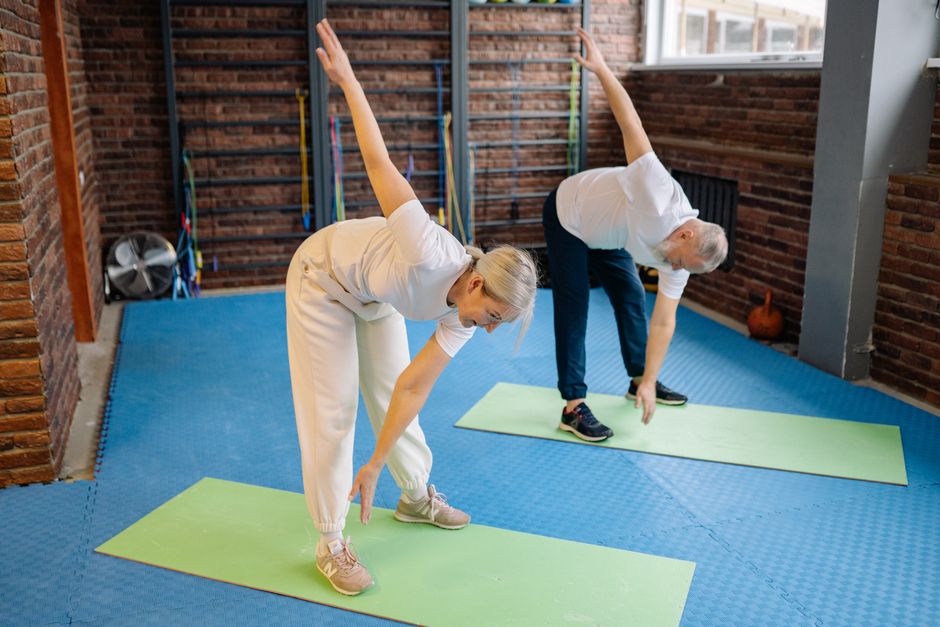
10 Stretching Exercises for 60 Year Olds: Mobility and Strength Training · Yes2Next on YouTube
The first time I put a 73-year-old former banker named Frank on a leg press machine, he wanted to start with what he remembered pressing in his 50s. We laughed about that. We started with 40 pounds. That was the right call.
A safe starting point for most adults over 70 who are new or returning to resistance training looks like this:
Frequency: 2 days per week, non-consecutive (Monday and Thursday, for example). Not three. Not five. Two.
Exercises: Focus on compound movements that mirror daily life. Sit-to-stand (essentially a squat), a pulling motion (seated row or lat pulldown), a pushing motion (chest press on a machine), and a hip hinge (Romanian deadlift with very light weight or a resistance band). These four patterns cover 80% of what your body needs functionally.
Load: Start light enough that the last rep of a set of 12 is somewhat challenging but your form is still clean. If you’re grimacing and your back is rounding at rep 8, the weight is too heavy. One thing that took me a while to trust: older adults often underload far more than they overload, and both are problems.
Rest: 90 seconds to 2 minutes between sets. This is longer than gym culture often suggests, but your cardiovascular system recovers more slowly and your joints appreciate the pause.
Here’s a practical scenario that illustrates how this plays out:
Martha, 74, no prior gym experience, mild osteoarthritis in both knees → started with 2x/week machine circuit (leg press, seated row, chest press, cable pull-down) at very light loads, 12 reps per set → after 8 weeks, leg press load increased from 30 lbs to 85 lbs, reported significantly less difficulty climbing stairs, and her physical therapist noted improved balance on single-leg stance testing.
The Sarcopenia Problem Nobody Talks About Enough
After age 50, adults lose roughly 1 to 2% of their muscle mass per year without intervention. After 70, that accelerates. By 80, many people have lost 30 to 40% of the muscle they had at 40. The clinical term is sarcopenia, and it’s currently recognized as a disease by the ICD-10 coding system (as of 2016). It contributes to falls, fractures, metabolic decline, and reduced immune function.
The part that frustrates me: sarcopenia is almost entirely preventable and partially reversible with resistance training. The American College of Sports Medicine currently recommends (as of August 2026) that older adults perform resistance training at minimum twice weekly. Yet only about 11% of adults over 65 meet that threshold, according to data from the National Health Interview Survey.
That gap isn’t laziness. It’s misinformation, access, and fear.
| Starting point | Expected strength gain in 12 weeks | Expected lean mass change | Fall risk reduction |
|---|---|---|---|
| No prior training, 70-74 | 25-35% | +0.5 to 1.5 kg | Moderate (15-20% fewer falls in trials) |
| No prior training, 75-80 | 20-30% | +0.3 to 1.0 kg | Moderate |
| Prior training, returning after gap | 30-40% | +0.5 to 2.0 kg | Significant |
| Frail/institutionalized | 50-100%+ | Modest | Meaningful (per Fiatarone 1994) |
Ranges drawn from the 2019 Sports Medicine meta-analysis and ACSM position stand. Individual results vary; consult a qualified trainer or physical therapist for personalized programming.
Sources
- Fiatarone MA et al. (1994): “Exercise training and nutritional supplementation for physical frailty in very elderly people,” JAMA. Foundational study on resistance training in adults aged 72-98.
- Lopez P et al. (2019): Meta-analysis of resistance training outcomes in adults over 60, Sports Medicine. Reviewed 49 RCTs across multiple fitness levels.
- CDC (2022): Falls data and hip fracture outcome statistics for adults over 65. cdc.gov/falls
- American College of Sports Medicine Position Stand (updated 2023): Physical activity guidelines for older adults, including resistance training frequency and intensity recommendations.
- National Health Interview Survey (NHIS): Physical activity prevalence data for U.S. adults by age group, ongoing surveillance.
Photo: Gustavo Fring via Pexels
This article is for general informational purposes only and does not constitute medical or fitness advice. Consult your physician or a licensed physical therapist before starting a new exercise program, especially if you have existing health conditions.