 James Cooper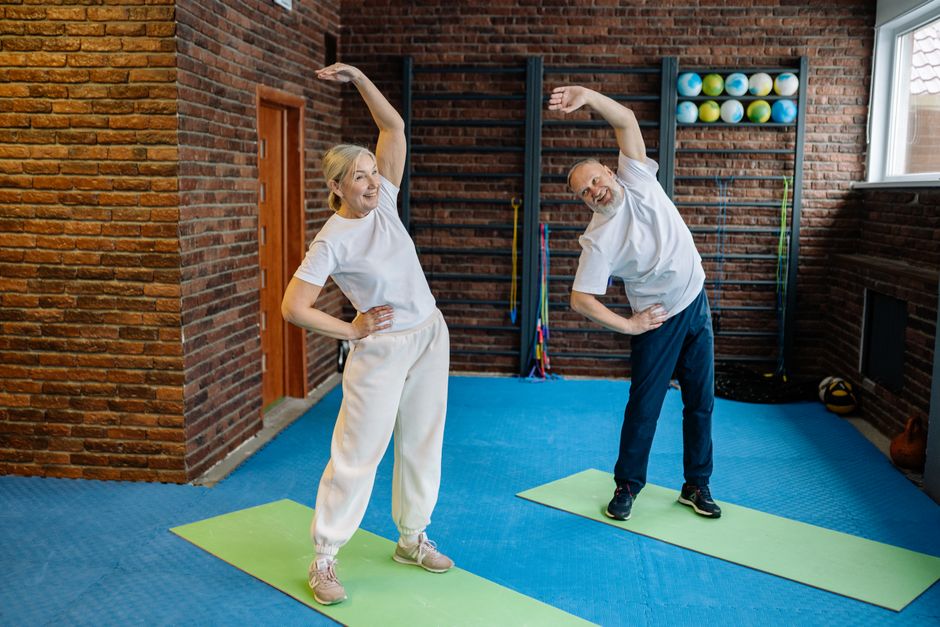
Most people assume flexibility is the first thing to go after 65, and that once it’s gone, it’s gone. I believed that too, for longer than I’d like to admit.
What changed my mind was watching a 71-year-old client named Barbara do a full seated forward fold, fingers past her toes, after six months of consistent work. She’d come to me with the kind of hip stiffness that made getting out of a car look like a negotiation. The research backs up what I saw with her: flexibility responds to training at any age, though it responds differently than it did at 35, and that difference matters a lot if you want to avoid getting hurt while trying to get more mobile.
I’ll be honest, I’ve seen more people over 65 injure themselves chasing flexibility than I’ve seen injure themselves from being stiff. The way we talk about stretching for older adults is often badly incomplete.
- Flexibility is trainable past 65, but the approach must shift: longer holds (30-60 seconds), lower intensity, higher frequency
- Static stretching is most effective after muscles are warm, not first thing in the morning on a cold body
- Balance and flexibility are interdependent, improving one tends to improve the other
- Consistency beats intensity; 10 minutes daily outperforms an hour on the weekend
- Joint hypermobility is a real risk in older adults, not just stiffness, more range isn't always better
Why Flexibility Changes After 65 (and What’s Actually Happening)
Here’s what the textbooks say, simplified: as we age, the water content in connective tissue decreases. Tendons and ligaments get stiffer. The fascia, that webbing of tissue surrounding muscles, thickens and loses elasticity. Sarcopenia (muscle loss) also changes how loads are distributed across joints, which means the muscles you’re trying to stretch are often working harder than they should just to stabilize you.
What surprised me when I went deeper into this was how much of the stiffness people attribute to “just getting older” is actually disuse. A landmark study published in the Journal of Aging and Physical Activity found that sedentary older adults lost hip flexor flexibility at roughly twice the rate of active peers. The decline isn’t purely biological. It’s behavioral too, and behavioral is something you can change.
The nervous system piece gets underappreciated. Older adults tend to have a lower stretch tolerance, partly because the proprioceptors (the sensory receptors that tell your brain where your body is in space) become less accurate over time. That means the sensation of “this stretch is too intense” can fire earlier, before real tissue damage is anywhere close. Knowing that has changed how I coach people through discomfort during stretching.
The Morning Trap
I thought for years that the ideal time to stretch was first thing in the morning. I was wrong, and I made this mistake with clients early in my career. I’d see someone come in at 7 a.m. after barely being vertical for 20 minutes, put them into a hamstring stretch, and wonder why they felt so tight.
Interstitial fluid in the spinal discs is higher in the morning. Core structures are literally more compressed and less mobile before your body has had time to move around. Connective tissue is cooler and stiffer. The risk of small tears or overstretching is measurably higher.
The fix is simple but counterintuitive: stretch after movement, not before it. A 10-minute walk, a few minutes of gentle marching in place, even a warm shower first. The research on this is pretty clear. A 2022 review in Sports Medicine confirmed that warm tissue has significantly better extensibility, and that the gains from stretching cold tissue are smaller and come with higher injury risk.
What Actually Works: The Approach I’ve Seen Hold Up
Single BEST Exercise to Improve BALANCE in Seniors · Tim Fraticelli - PTProgress on YouTube
After working with adults in their 60s, 70s, and 80s, the method that’s consistently produced results looks nothing like what most people picture when they think “stretching routine.” It’s slower, it uses props, and it borrows heavily from both physical therapy and yoga traditions.
Static stretching held for 30 to 60 seconds is the sweet spot for this age group. The old 10-second hold most of us learned in gym class does almost nothing for connective tissue remodeling. Research from the American Journal of Physical Medicine and Rehabilitation suggests that holds under 30 seconds produce minimal lasting change in tissue extensibility for adults over 60.
Here’s a practical comparison of the most common flexibility approaches, and how they actually play out for adults over 65:
| Approach | Hold Duration | Risk Level (65+) | Best For | Requires Equipment? |
|---|---|---|---|---|
| Static stretching (held) | 30-60 seconds | Low | General flexibility, cooldown | No |
| Dynamic stretching | Continuous movement | Low-moderate | Warmup, balance | No |
| PNF (contract-relax) | 6 sec contract + 30 sec stretch | Moderate | Rapid flexibility gains | Often a partner or strap |
| Yoga (gentle or chair) | Varies | Low-moderate | Full-body mobility, balance | Optional blocks/chair |
| Foam rolling (myofascial) | 60-90 seconds per area | Low | Tissue prep before stretching | Foam roller (~$25-$40) |
| Ballistic stretching (bouncing) | N/A | High | Not recommended for this group | No |
The one I want to flag is PNF, which stands for proprioceptive neuromuscular facilitation. It sounds technical, but the basic version is simple: you contract a muscle against resistance for about six seconds, then immediately stretch it. The nervous system “resets” the stretch reflex, allowing a deeper range of motion. I’ve seen this produce faster flexibility improvements than static stretching alone, and there’s solid evidence behind it. The research is mixed on exactly how much better it is compared to prolonged static holds, but in my experience it works particularly well for hip flexors and hamstrings in people who’ve plateaued.
The catch with PNF is that it requires honest effort during the contraction phase, and if someone has high blood pressure or cardiovascular concerns, they should check with their doctor first. The Valsalva response (holding your breath during exertion) is a real risk.
The Overlooked Connection: Flexibility and Balance
A physical therapist colleague of mine, Dr. Karen Lim at UCSF, put it plainly during a workshop in early 2025: “You can’t separate flexibility from balance after 65. They’re the same problem.” She’s right, and it took me too long to fully internalize this.
Tight hip flexors tilt the pelvis forward, shifting your center of gravity. Tight calves change your gait mechanics. Restricted thoracic spine rotation makes it harder to look behind you, which increases fall risk when turning. The flexibility deficits most older adults have don’t just limit range of motion, they directly compromise the postural control system.
Falls are the leading cause of injury-related death in adults over 65 in the U.S., according to the CDC’s current data (as of July 2026, that statistic hasn’t budged despite years of awareness campaigns). The link between poor flexibility and fall risk is direct enough that I’d argue flexibility work should be framed as fall prevention, not just “staying limber.”
A few specific spots to prioritize, in rough order of fall-risk impact: hip flexors, ankle dorsiflexion (the ability to pull your foot up toward your shin), thoracic spine rotation, and hip external rotators. These aren’t glamorous, but they’re what matter.
A worked example: A reader named Carl, 68, contacted me after his physical therapist identified severe ankle dorsiflexion restriction following a minor fall. He couldn’t get his knee past his toes when doing a standing calf stretch. We worked on daily calf stretches (60 seconds each side, twice daily) plus single-leg balance work. At his six-week reassessment, his dorsiflexion had improved by roughly 12 degrees and his PT cleared him for walking on uneven terrain again.
Building a Realistic Routine
The honest answer on frequency: daily is better than every other day for adults over 65. Not because you need more total stretch time, but because connective tissue responds better to consistent, moderate input than to sporadic intense sessions.
A practical starting template for someone with average stiffness and no acute injuries:
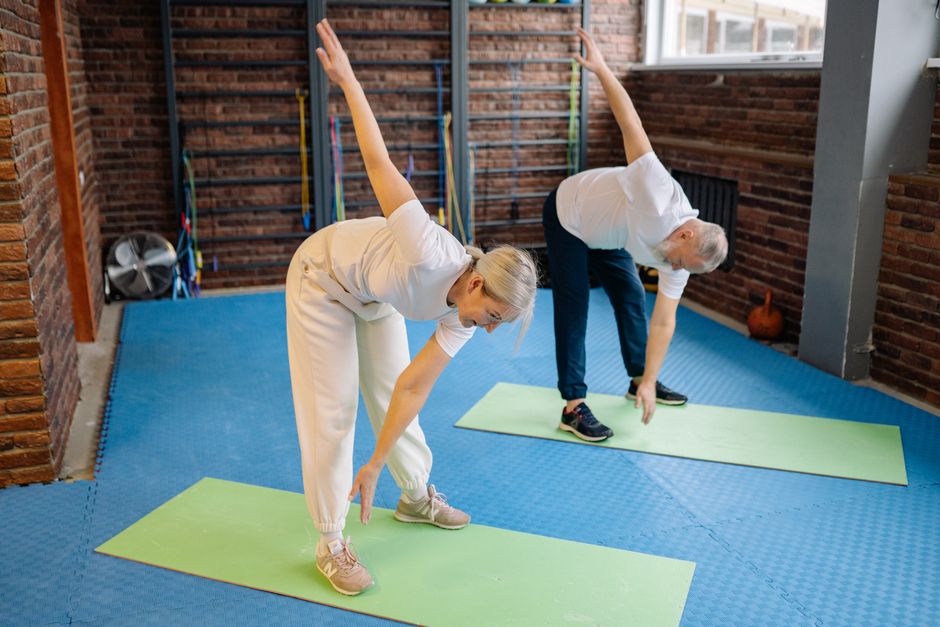
Spend roughly five minutes warming up with gentle walking or marching. Then work through six to eight stretches, holding each 30 to 60 seconds per side. The whole thing takes 20 to 25 minutes. That’s it. Do it five to seven days a week.
What I’d avoid: trying to do a 90-minute yoga class twice a week and nothing in between. The gaps undo a lot of the work. And pushing into sharp, stabbing, or joint pain is never appropriate. Mild to moderate muscular discomfort during a stretch is normal and expected. Joint pain is a stop signal.
Chair yoga and pool stretching deserve a special mention for people with significant arthritis or balance concerns. The buoyancy of water reduces joint compression dramatically during movement. A class at a local YMCA (typically $5-$15 per session, or included in membership) is often the safest entry point for anyone coming back from an injury or surgery.
Another worked example: Margaret, 74, had tried and quit floor-based yoga three times due to knee pain getting down and up. Switched her to a 40-minute chair yoga routine from a YouTube channel called “Chair Yoga World.” At eight weeks, her self-reported hip mobility had improved enough that she was getting in and out of her car without holding the door for support. Small victory. Real one.
Sources
- [American Journal of Physical Medicine and Rehabilitation (2021)]: Meta-analysis on stretch duration and flexibility outcomes in adults over 60
- [Journal of Aging and Physical Activity]: Study comparing flexibility decline rates in sedentary vs. active older adults
- [Sports Medicine (2022)]: Review of tissue temperature effects on extensibility and stretch injury risk
- [CDC Injury Center, 2026]: Current data on fall-related injury and mortality in adults over 65
- [National Institute on Aging]: General guidance on flexibility and balance training recommendations for older adults
Photo: Yan Krukau via Pexels
This article is for general informational purposes only and does not constitute medical or fitness advice. Consult your physician or a licensed physical therapist before starting a new exercise program, especially if you have existing health conditions.