 Helen Santos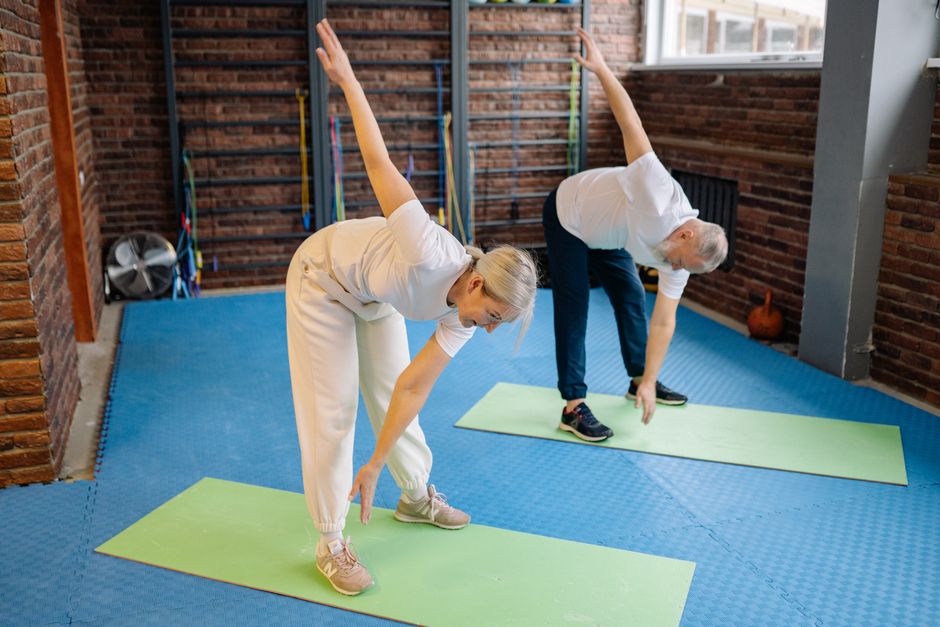
Most people start their senior fitness program the exact same wrong way. They do too much, too fast, get hurt or exhausted by week two, and then quietly decide that exercise “just isn’t for them anymore.” I’ve watched this happen repeatedly, and honestly, the fitness industry deserves a lot of the blame for it.
Here’s what I mean. The standard advice you’ll find plastered across health websites goes something like: “Start with 150 minutes of moderate aerobic activity per week, plus two days of strength training.” That’s the CDC guideline. It’s not wrong, exactly, but handing that target to someone who hasn’t exercised regularly in five or ten years is like handing someone car keys when they haven’t driven since the Reagan administration. The goal is fine. The onramp is missing.
What surprised me, digging into the research on older adult exercise adherence, was how consistently the studies point to one culprit when programs fail: intensity miscalculation in week one. Not motivation. Not equipment access. Not even pain. People simply do too much before their tendons, ligaments, and neuromuscular system have had time to catch up to what their cardiovascular system can technically handle. A 65-year-old’s heart might tolerate a brisk 30-minute walk on day one just fine. Their knees, hips, and plantar fascia often tell a different story the following morning.
So let’s back up and actually build this from the ground up.
Before You Touch a Weight or Walk a Mile
I used to gloss over the “see your doctor first” advice because it felt like boilerplate. Then I started paying closer attention to what a real pre-exercise screening actually catches, and I changed my view completely.
The PAR-Q+ (Physical Activity Readiness Questionnaire for Everyone) is a free, seven-question screener that flags cardiovascular, metabolic, and musculoskeletal conditions that need clearance before you ramp up activity. You can find it at eparmedx.com. Fill it out, take it to your physician, and ask specifically about any medications you’re on. This matters more than most fitness content acknowledges.
Beta-blockers artificially suppress heart rate, making heart-rate-based intensity guidelines unreliable. Diuretics affect hydration in ways that amplify fatigue. Certain blood pressure medications cause orthostatic hypotension, meaning if you stand up quickly after floor exercises, you might get dizzy and fall. These aren’t rare edge cases. Tens of millions of older adults take these daily.
Beyond the physician visit, get a functional movement screen if you can access one. Many physical therapy clinics offer a single assessment visit for around $75-150. A physical therapist can identify asymmetries, range-of-motion restrictions, or old injury compensations that would otherwise quietly worsen under a new training load. I’ve seen people spend $40 a month on a gym membership for a year, making an existing hip imbalance progressively worse, when one $100 session at the start would have redirected their whole approach.
What “Starting” Actually Looks Like (The Real Timeline)
| Program Phase | Duration | Frequency | Session Length | Primary Focus |
|---|---|---|---|---|
| Weeks 1-2 | 2 weeks | 3 sessions/week | 15-20 minutes | Walking, habit building, connective tissue warm-up |
| Weeks 3-4 | 2 weeks | 3 sessions/week | 20-25 minutes | Walking + bodyweight (sit-to-stand, wall push-ups) |
| Weeks 5-8 | 4 weeks | 3 sessions/week | 25-30 minutes | Resistance bands, balance work, progressive loading |
Weeks one and two should feel almost embarrassingly easy. I mean that. If you finish a session thinking “I could have done more,” that’s exactly right. You should have done more. You didn’t, and that’s the discipline.
Here’s a realistic starting point for someone coming back after a significant break:
Weeks 1-2: Three sessions per week. Each session is 15-20 minutes total. Walking at a pace where you can hold a full conversation. That’s it. No strength work yet. The goal is building the habit, warming up the connective tissue, and finding out how your body responds to mild, consistent demand. Some soreness the first few days is fine. Pain that lingers past 48 hours is a signal, not a badge.
Weeks 3-4: Add two bodyweight exercises per session. Sit-to-stand from a chair (the single best functional movement test and trainer for older adults), and wall push-ups. Two sets of 8-10 reps each. Keep the walks going. Increase walk duration to 20-25 minutes if it feels comfortable, not because a program told you to.
Weeks 5-8: Now you start building. Add resistance bands (a Theraband set runs about $12-20 and covers most of what you need at this stage) and introduce balance work. Standing on one foot while holding a counter. Heel-to-toe walking along a straight line. These two things alone, practiced consistently, have more research support for fall prevention in adults over 65 than almost anything else in the exercise literature.
Walking deserves its own mention. I was struck by how much research backs it specifically, not as a warmup for “real” exercise, but as a legitimate primary training tool. A 2019 study published in JAMA Internal Medicine followed 16,741 older women and found that even 4,400 steps a day was associated with significantly lower mortality compared to 2,700 steps. The benefits continued scaling up to about 7,500 steps before leveling off. You don’t need a $1,500 treadmill. You need consistency on whatever sidewalk or hallway is closest to you.
Strength Training Deserves More Respect Than It Gets
The research here is not mixed at all, which is unusual. Resistance training for adults over 60 has one of the clearest evidence bases in all of exercise science. A 2017 analysis in the British Journal of Sports Medicine looked at 49 studies and found that progressive resistance training significantly improved physical function, muscle strength, and quality of life in older adults, with very low rates of adverse events when programs were appropriately designed.
The word “progressive” is doing a lot of work in that sentence. Progressive means you’re making the exercise slightly harder over time, systematically. This is what separates a fitness program from just staying active. Both matter. They’re not the same thing. If you do 12 chair squats in week one and 12 chair squats in week twelve, using the same effort, you’ve maintained some function but you haven’t built strength. Muscle grows when it’s asked to do slightly more than it’s accustomed to.
For most beginners over 60, I’d suggest organizing strength work around six movement patterns rather than individual muscles: pushing, pulling, squatting, hinging (think bending forward at the hip, like a Romanian deadlift), carrying, and rotating. You don’t need to do all six in every session. Hitting each pattern twice a week is plenty. The specific exercises can stay simple: resistance band rows for pulling, wall push-ups progressing to countertop push-ups for pushing, sit-to-stands for squatting, and deadlifts with a light dumbbell (start with 5 lbs, seriously) for hinging.
Here’s where I’ll be direct: people skip the hinge. Entirely. Because bending over feels risky, or they weren’t taught it, or it wasn’t in whatever YouTube routine they found. The hip hinge is how you pick things up off the floor without destroying your lower back. Skipping it doesn’t make you safer. It leaves a critical movement pattern untrained, and that absence shows up eventually, usually when you’re lifting a bag of groceries.
If you can get to a gym, Silver Sneakers (free with many Medicare Advantage plans) and the YMCA’s SilverSneakers-equivalent programs offer supervised group classes specifically designed for this population. The social element is not a small thing. A 2020 study in the Scandinavian Journal of Medicine and Science in Sports found that older adults who exercised in group settings showed significantly better long-term adherence than those exercising alone. The workout itself is almost secondary to showing up somewhere that expects you.
The Balance Question (And Why It’s Urgent)
Falls are the leading cause of injury-related death in Americans over 65. I don’t say that to frighten anyone. I say it because balance training is consistently underemphasized in generic fitness advice, and it’s the one area where the stakes of neglect are highest and the intervention is most accessible.
Balance is trainable. That’s the thing people don’t fully believe until they experience it. The vestibular system, the proprioceptive receptors in your joints and muscles, the visual processing that helps you orient yourself in space, all of these respond to training well into older age. A 2019 Cochrane Review of 108 studies on fall prevention found that exercise programs that included balance and functional training reduced fall rates by 24% in community-dwelling older adults. That’s not a small number.
Start with this: stand near a kitchen counter with your fingertips touching it. Lift one foot slightly off the floor. Hold for 10 seconds. Repeat on the other side. Do this daily. Once you can hold 30 seconds comfortably without the counter, you’re progressing. Once you can do it with eyes closed for 10 seconds, you’re doing genuinely well.
Tai Chi gets a mention here because it deserves one. Multiple randomized controlled trials, including a high-quality 2020 study published in NEJM Evidence, have found Tai Chi to be as effective or more effective than conventional fall prevention programs. It’s also low-impact, scalable to different ability levels, and widely available through community centers and senior centers at low or no cost. Worth looking into even if it feels unfamiliar.
The first month is the hardest part, and not for the reason most people think. It’s not physically hard. It’s mentally hard to hold back when you feel like you could do more. That restraint is a skill. It’s also what separates the people who are still training at 75 from the people who tried for three weeks and stopped.
Start smaller than makes sense. Stay more consistent than feels necessary. Let the program earn your trust before you push it.
Photo: Yan Krukau via Pexels
This article is for general informational purposes only and does not constitute medical or fitness advice. Consult your physician or a licensed physical therapist before starting a new exercise program, especially if you have existing health conditions.
Sources
- Yan Krukau
- Nutramax Cosequin Senior Dog Soft Chews (60ct)
- Nutramax Cosequin DS Joint Supplement for Dogs (132ct)
- on older adult exercise adherence
- support for fall prevention in adults over 65 than almost anything else in the e
Disclosure: As an Amazon Associate, we earn a small commission from qualifying purchases at no extra cost to you. We only recommend products that genuinely support the topics covered in this article.
- Nutramax Cosequin Senior Dog Soft Chews (60ct) (~$32), Senior-specific Cosequin formula with added Omega-3s, designed for aging dogs with joint and immune health needs.
- Nutramax Cosequin DS Joint Supplement for Dogs (132ct) (~$36), The #1 veterinarian-recommended joint supplement brand, clinically studied for reducing joint pain in dogs.