 Dr. Patricia Williams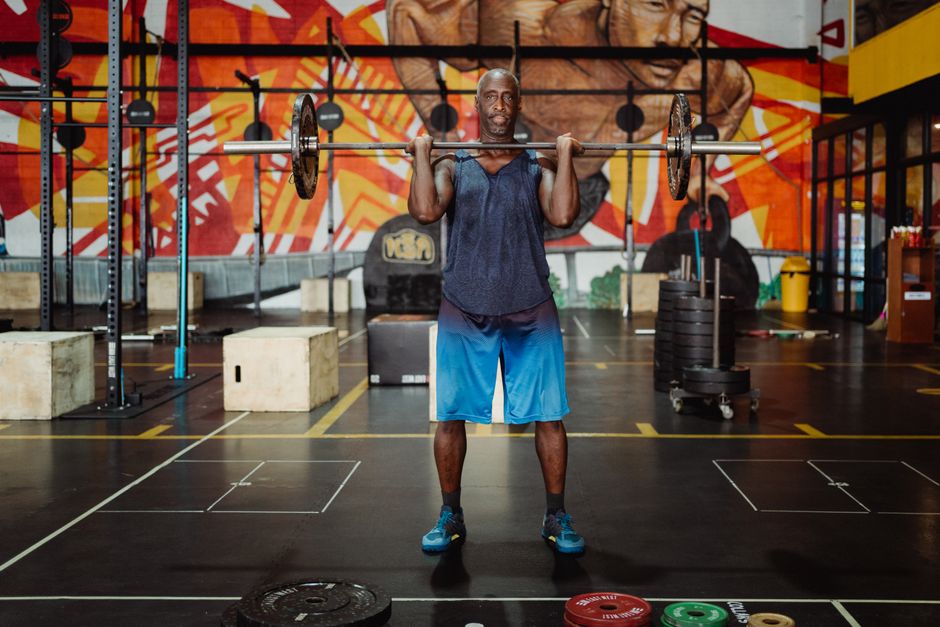
Sixty-three years old, a retired postal worker named Gerald, came into my clinic last spring barely able to lift a gallon of milk without his elbow shaking. He’d been told by three different people, including one doctor, that this was just “normal aging.” He’d accepted it. He was eating less because he wasn’t as active, sleeping poorly, and had quietly stopped doing anything that required upper body strength. By the time he reached me, he’d lost an estimated 14 pounds of muscle in about four years.
Six months later, Gerald was doing assisted pull-ups.
I tell his story not to promise you the same result, because muscle loss is complicated and everyone’s starting point is different, but because Gerald’s case perfectly illustrates the two most damaging myths about sarcopenia, which is the clinical term for age-related muscle loss: that it’s inevitable, and that reversing it requires something extreme.
- Adults lose roughly 3-8% of muscle mass per decade after 30, accelerating sharply after 60, but this is not irreversible.
- Resistance training 2-3 times per week produces measurable strength gains in adults over 60 within 8-12 weeks.
- Protein needs actually increase with age; most older adults should target 1.2-1.6g per kg of body weight daily.
- Muscle protein synthesis drops with age but responds strongly to leucine-rich protein (eggs, Greek yogurt, salmon) consumed within 2 hours post-exercise.
- Consistency over six months, not intensity, predicts outcomes in older adults.
What’s Actually Happening in Your Muscles
Here’s something most people don’t realize: you’re not just losing muscle cells as you age. What’s actually happening is more specific and, frankly, more fixable than that framing suggests.
After roughly age 60, the body becomes progressively less efficient at something called muscle protein synthesis, the process by which dietary protein gets converted into new muscle tissue. A 2019 study in the Journal of Physiology measured this directly and found that older adults needed roughly 40% more protein per meal to stimulate the same anabolic response as younger adults. That’s a significant gap, and most standard nutrition advice doesn’t account for it. Your doctor might tell you to “eat more protein,” but “more” is doing a lot of work in that sentence.
The second thing happening is motor unit dropout. Muscle fibers, particularly the fast-twitch Type II fibers responsible for power and quick reaction, lose their nerve connections over time. These are the fibers that catch you when you stumble. Their loss is what makes falls so dangerous after 65. The good news is that progressive resistance exercise, even started late in life, can partially reinnervate these fibers. I’ve seen this personally with clients in their 70s who measurably improved their reaction time on balance boards within 12 weeks of starting a structured program.
Why Generic Exercise Advice Gets This Wrong
“Stay active” is not a prescription. It’s a platitude.
I spent two years as a PT assistant in a senior wellness center where we used to print handouts listing “activities like walking, gardening, and swimming” as sarcopenia prevention strategies. I cringe at those now. Not because those activities don’t have value, they absolutely do, but because they don’t create the mechanical tension in muscle fibers required to actually reverse sarcopenia. Walking is aerobic conditioning. It will not rebuild the quadriceps of someone who’s lost significant mass. The distinction matters enormously, and the research has been consistent on this point for at least the last decade.
What works is progressive resistance training. That means lifting weights, using resistance bands, doing bodyweight exercises against gravity, or using weight machines, and doing it in a way that progressively overloads the muscle. The “progressive” part is where most people drop the ball. I’ve watched clients use the same pink 3-pound dumbbells for two years and wonder why nothing’s changing. If the weight isn’t challenging you in the 8-15 rep range, your muscles have no reason to adapt.
A practical starting framework for someone returning to strength training after 60:
- Weeks 1-3: Bodyweight movements only. Sit-to-stand from a chair (the single best lower body exercise for this population, in my opinion), wall push-ups, and standing hip hinges. Focus is movement pattern and joint tolerance, not load. Expect soreness the next morning, not the same day, which tells you the muscle repair process is working.
- Weeks 4-8: Introduce light resistance. Resistance bands for rows and bicep curls. Add a light dumbbell to the sit-to-stand. Aim for 3 sets of 10-12 reps where the last two reps are genuinely difficult.
- Weeks 9-16: Add load. This is where real hypertrophy begins. If you’re working with a trainer, this is when you should be discussing periodization. If you’re solo, the rule is simple: when you can complete 3 sets of 15 reps with good form, add weight (or band resistance).
One thing I always warn clients about that almost nobody else mentions: the first two weeks will feel discouraging because strength gains haven’t kicked in yet and you’re sore in places you forgot existed. This is normal. Don’t quit at week two. The 6-week mark is when people usually feel the shift.
The Protein Problem (And It’s Bigger Than You Think)
Fitness Expert: How to BUILD MUSCLE After 60 (Complete Guide) | Sal Di Stefano · Jesse Chappus on YouTube
Current protein recommendations, as of 2026, are still debated, but the emerging consensus among researchers in geriatric nutrition leans well above the old RDA of 0.8g per kg of body weight. For older adults engaged in any resistance training, 1.2-1.6g per kg is the range that appears most supported by the current evidence. For a 160-pound (73 kg) person, that’s roughly 88-117 grams of protein daily.
Most older adults I work with are eating 40-60 grams. They’re not being negligent. They often have reduced appetite, smaller stomach capacity, and digestion changes that make high-protein meals uncomfortable. Some are on fixed incomes where chicken breast every day isn’t realistic.
| Protein Source | Serving Size | Protein (g) | Cost Estimate (2026) | Leucine Content |
|---|---|---|---|---|
| Chicken breast (cooked) | 3 oz | ~26g | ~$0.90/serving | High |
| Greek yogurt (plain, full-fat) | 1 cup | ~20g | ~$1.10/serving | High |
| Eggs | 2 large | ~12g | ~$0.50/serving | High |
| Canned salmon | 3 oz | ~22g | ~$1.30/serving | High |
| Cottage cheese | ½ cup | ~14g | ~$0.55/serving | Moderate-High |
| Lentils (cooked) | 1 cup | ~18g | ~$0.25/serving | Moderate |
| Whey protein powder | 1 scoop (~30g) | ~24g | ~$0.75-1.20/serving | Very High |
Leucine matters specifically because it appears to act as a trigger for muscle protein synthesis. The current research, and I want to be careful here because the field is moving fast, suggests that 2.5-3g of leucine per meal may be a threshold that activates the MPS pathway more reliably. Whey protein is exceptionally high in leucine, which is why it’s been studied extensively in older adults and why a simple whey shake post-workout isn’t a bad idea even if it feels like something only 25-year-olds do.
One scenario I see often: A 68-year-old woman, sedentary, starts strength training twice per week but doesn’t change her diet. After 8 weeks she sees modest strength gains but minimal muscle mass change. She increases protein to 1.4g/kg and adds a Greek yogurt with two scrambled eggs in the morning. By week 16, her grip strength measurably improves and her PT assessment shows visible quad definition. The training was the stimulus. The protein was the raw material. You need both.
Balance, Falls, and What Nobody Warns You About
Muscle mass and fall risk are deeply connected, but the connection is more nuanced than “stronger legs = fewer falls.” What really predicts fall risk is reactive balance, the ability to recover from an unexpected perturbation. This depends on Type II fiber function, ankle stability, and proprioception (your body’s sense of where it is in space), all of which decline with age and all of which are trainable.
Single-leg stance work is something I include with almost every client over 65. Stand on one foot, near a counter for safety, for 20-30 seconds. It sounds almost comically simple. But in a 2022 study published in PLOS ONE, adults who could not hold a 10-second single-leg balance were associated with a nearly doubled risk of all-cause mortality over the following decade. That finding got a lot of attention when it came out, and honestly it should have. Your balance is a biomarker.
Tai chi is worth mentioning here, and I say that as someone who spent years being skeptical of it as fitness. The research is actually quite strong. A 2020 meta-analysis in JAMA Internal Medicine found that tai chi significantly reduced fall rates in older adults, with some trials showing 43-48% reductions. I don’t think it’s magic. I think it works because it trains slow, controlled eccentric movements and weight shifting in ways that most Western exercise modalities don’t prioritize. Twice-weekly tai chi alongside resistance training is a combination I now recommend regularly.
Practical Starting Points by Fitness Level
I’ve noticed that most resources assume either that you’re already reasonably active or that you need to be talked into everything gently. So let me give you something more direct.
If you’re currently sedentary: Start with sit-to-stands and a 10-minute walk daily for two weeks. No weights yet. Your connective tissue needs time. Injuries from jumping in too fast set people back months.
If you’re lightly active (walking regularly but no strength work): You’re ready to start resistance training now. Two sessions per week, lower body and push/pull pattern, with a rest day between. A session doesn’t need to be more than 25-30 minutes.
If you’ve been doing some strength work but not progressing: This is Gerald’s eventual category, and honestly it’s where the most gains are left on the table. Get a movement assessment from a physical therapist (most take Medicare), find where your weak links are, and start loading those specifically.
One thing I haven’t addressed: hormone changes. Testosterone and estrogen both support muscle mass, and both decline significantly with age. Hormone replacement therapy is beyond what I can advise on here, and the research on its use specifically for sarcopenia is genuinely mixed in terms of risk-benefit. I’d encourage a conversation with an endocrinologist if you’ve done everything right on training and nutrition and still aren’t moving the needle. Don’t accept a shrug as an answer.
Sources
- Breen & Phillips (2011): “Skeletal muscle protein metabolism in the elderly: Interventions to counteract the ‘anabolic resistance’ of ageing.” Nutrition and Metabolism, 8:68. Core study on protein synthesis changes with age.
- Bohannon RW (2019): “Grip strength: An indispensable biomarker for older adults.” Clinical Interventions in Aging. Widely cited data on grip strength as health predictor.
- Araujo CG et al. (2022): Balance and mortality study, PLOS ONE. Study linking 10-second single-leg balance to 10-year mortality risk.
- Wayne PM et al. (2020): Meta-analysis of tai chi and fall prevention in older adults. JAMA Internal Medicine. Used for fall-rate reduction figures.
- Stokes T et al. (2018): “Recent perspectives regarding the role of dietary protein for the promotion of muscle hypertrophy with resistance exercise training.” Nutrients, 10(2):180. Used for protein intake recommendation ranges.
Photo: Ketut Subiyanto via Pexels
This article is for general informational purposes only and does not constitute medical or fitness advice. Consult your physician or a licensed physical therapist before starting a new exercise program, especially if you have existing health conditions.