 Helen Santos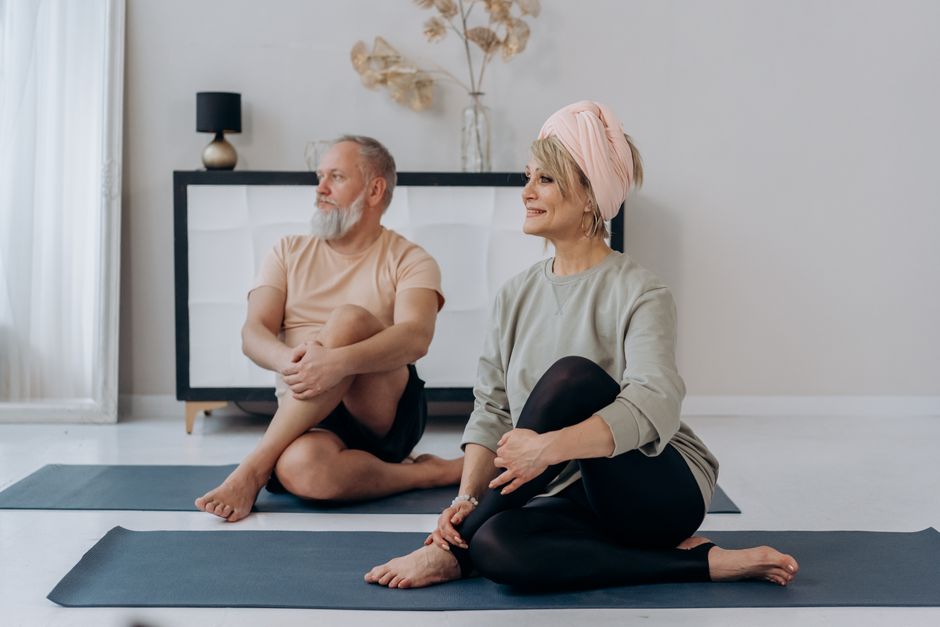
Every week, someone comes to me after getting hurt doing an exercise their doctor told them would be “gentle on the joints.” Walking lunges. Jumping jacks as a “low-impact warmup.” Leg press machines cranked to high resistance because “more weight means more benefit.” And every time, I think: whoever gave that advice wasn’t watching a 68-year-old with early knee osteoarthritis try to execute it.
Joint protection during exercise isn’t complicated, but it’s also not what most people think it is. It’s not about avoiding exercise. It’s not about wrapping yourself in braces and moving at half speed. And it’s definitely not about the “senior fitness” class at your gym where everyone does chair yoga for 45 minutes and calls it a workout. (I love chair yoga. It just shouldn’t be the whole story.)
What I’ve seen, after years of working with adults in their 60s, 70s, and 80s, is that the people who protect their joints best are the ones who understand a few specific principles deeply, rather than a long list of rules shallowly. So let’s do that.
Why Your Joints Are More Vulnerable Now (And It’s Not Just “Aging”)
Here’s what most people don’t realize: cartilage changes alone don’t explain most exercise-related joint injuries in older adults. Synovial fluid production slows down. The muscles surrounding your major joints, especially the knees and hips, tend to weaken from decades of sitting, which means the joint itself is absorbing force that muscle tissue should be absorbing. Ligament elasticity decreases. And the feedback loop between your nervous system and your muscles, what physical therapists call proprioception, gets less reliable over time.
That last one is the sleeper issue. Proprioception is your body’s ability to sense where it is in space and respond in real time. A 2019 study published in Age and Ageing found that proprioceptive deficits in adults over 65 were strongly associated with both fall risk and joint injury during physical activity, independently of muscle strength. Meaning: you can be reasonably strong and still hurt your knee because your body didn’t register the awkward angle fast enough to correct it.
This is why “just strengthen the muscles around your joints” is useful but incomplete advice. Strength training matters enormously, and I’ll get to that. But if you’re not also working on proprioception and movement patterns, you’re leaving a big piece of protection on the table.
The Warmup Problem Nobody Talks About
I made this mistake myself when I first started training older clients. I’d give them five minutes of easy walking on a treadmill as a warmup and move on. Felt like plenty. Felt like what I’d seen other trainers do. It wasn’t enough, and I had a client pay for it.
Warm joints move better because synovial fluid, the lubricant inside your joint capsule, gets distributed more evenly with movement. Cold joints are stiffer, more prone to micro-damage under load. But the type of warmup matters as much as the duration.
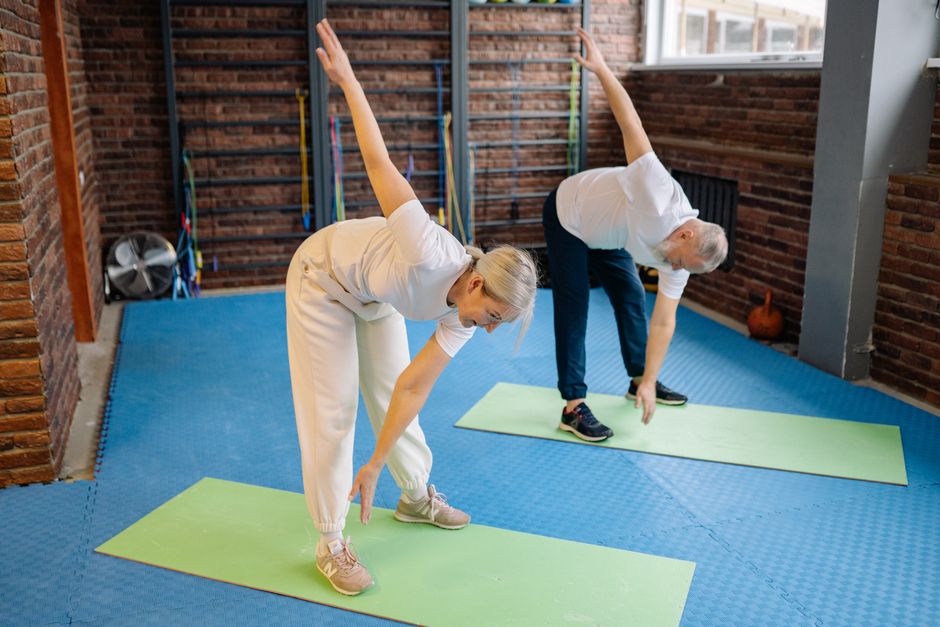
Static stretching before exercise, the hold-a-stretch-for-30-seconds approach, has been shown to actually reduce force production and doesn’t meaningfully prepare synovial fluid. What works better is dynamic movement that gradually increases range of motion and gets blood moving to the surrounding muscle tissue. Think: slow leg swings, gentle hip circles, bodyweight squats done with zero load at a very slow tempo, heel-to-toe walking. Not sexy. Wildly effective.
Minimum warmup time for adults over 60? I’d say 10 to 12 minutes, not five. Joints that have been sitting in a car or at a desk all day need longer to respond than a 30-year-old’s joints. Build it in. It’s not wasted time.
The Load-and-Alignment Principles That Actually Matter
Here’s where I’ll lose the people who want a simple checklist, and I’m okay with that.
Joint protection during exercise comes down to two things, and they interact: how much load you’re placing on a joint, and whether the joint is in a mechanically sound position when it receives that load. Get both right, and joints thrive. Get either one wrong, and you’re accumulating damage even if it doesn’t hurt yet. (That “doesn’t hurt yet” part is why I’m so stubborn about this with clients.)
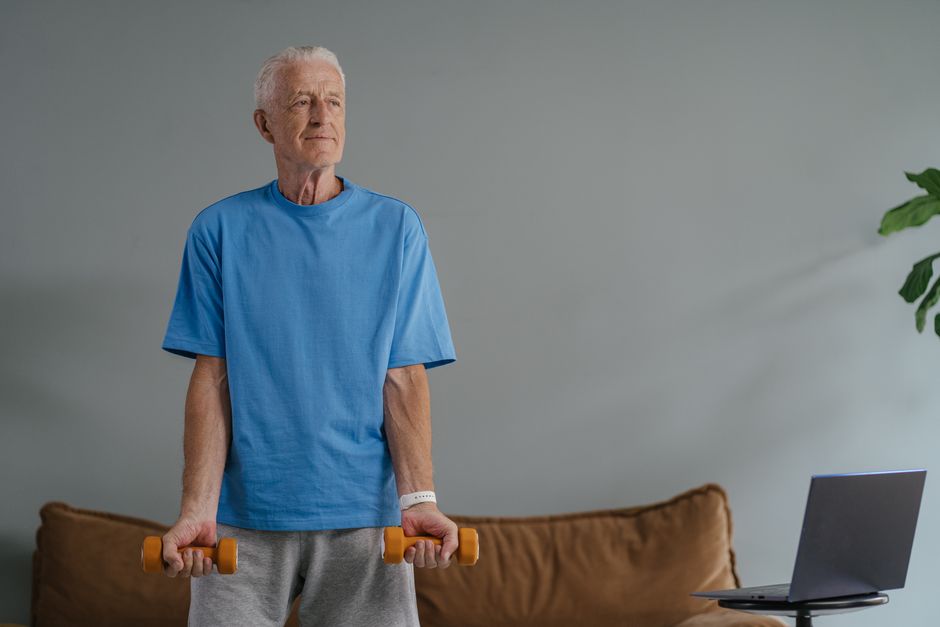
Load management. More resistance isn’t always better, even for building strength. The research on this has gotten more nuanced over the last several years. A 2022 paper in The Journal of Strength and Conditioning Research found that older adults made comparable strength gains training at 30-60% of their one-rep maximum compared to higher loads, with significantly less joint stress. The key variable was time under tension, meaning slower, more controlled repetitions, rather than the amount of weight.
For someone with knee or hip arthritis, this is genuinely good news. You don’t need to load the joint heavily to get stronger. You need to load it consistently, progressively, and in good position.
Alignment. This is where a mirror, a knowledgeable trainer, or at minimum a phone propped up to record yourself is worth more than almost any piece of equipment you can buy. Common misalignments I see:
- Knees caving inward during squats or step-downs (called valgus collapse), which multiplies shear force on the medial knee
- Forward trunk lean so severe during squats that most of the load transfers from the quadriceps to the lower back and hip flexors
- Heel rising during any squat pattern, which usually means ankle mobility is the hidden culprit
- Shoulder rolling forward during overhead movements, putting the rotator cuff in a compressed position
You don’t have to fix all of these overnight. But knowing they exist, and watching for them, changes everything.
Worked example: A 71-year-old client of mine, a retired electrician named Frank, came to me with persistent medial knee pain. He’d been told to stop doing squats. We didn’t stop squats. We widened his stance slightly, added a resistance band just above the knees to train his glutes to stop the valgus collapse, and dropped the weight to a goblet squat with a 15-pound kettlebell. Eight weeks in, his knee pain had dropped from a 6/10 to a 1-2/10 on most days, and his leg strength had measurably improved. Scenario: knee pain from squat-pattern valgus collapse → adjusted alignment, reduced load, targeted glute activation → pain reduced by approximately 70% over 8 weeks.
What to Do About High-Impact Exercise
Running, jumping, aerobic dance. Every time this comes up, someone in a group class gives me a look like I’m about to ban fun.
Here’s my actual stance: impact isn’t automatically harmful. Bone density research is consistent that some impact loading is protective against osteoporosis. A completely impact-free life accelerates bone loss. The question isn’t “impact or no impact” but “how much, what kind, and for which person.”
For someone with healthy cartilage and no joint symptoms, low-level impact like brisk walking on varied terrain or low-impact aerobics is well-supported. For someone with moderate to severe osteoarthritis, diagnosed cartilage damage, or a history of joint replacement, higher-impact loading needs to be approached very carefully and ideally with guidance from an orthopedic physical therapist.
As of July 2026, the general consensus from major physical therapy organizations still supports aquatic exercise, cycling, and elliptical training as high-value, lower-impact options for older adults with joint concerns. These aren’t consolation prizes. Done consistently and progressively, they build real cardiovascular fitness and muscular endurance. The pool especially is underrated: water provides natural resistance, cushions joints, and the temperature (if it’s a heated therapy pool) actually helps with stiffness.
Worked example: A 66-year-old woman I worked with, Lorraine, wanted to do a 5K walk/run for her granddaughter’s charity event. She had a left hip replacement two years prior. We built her a 12-week plan using 80% pool walking and cycling, with two days per week of land-based walking that gradually increased from 10 to 30 minutes. She completed the 5K, walking the whole thing, in 52 minutes. No hip pain during or after. Scenario: post-hip-replacement 5K goal → modified cross-training approach prioritizing low-impact work → goal completed without joint incident.
The Equipment Reality Check
Let me be direct: most joint-protection equipment marketed to seniors is either unnecessary or addressing the wrong problem.
Knee sleeves? The compression can help with proprioception and mild swelling management, but don’t expect them to stabilize a joint that has genuinely weak surrounding musculature. They’re a complement to strength training, not a substitute. A decent neoprene sleeve runs $15 to $30 at most sporting goods stores. You don’t need the $80 “orthopedic support” version unless your doctor has a specific reason for recommending it.
Supportive footwear, on the other hand, is genuinely worth money. Worn-out shoes are one of the most common and most overlooked contributors to knee and hip stress during exercise. If your walking shoes are more than a year old and you walk regularly, replace them. The midsole foam compresses over time in ways that aren’t always visible. A good pair from brands like ASICS, Brooks, or New Balance typically runs $90 to $130, and it’s one of the best joint-protection investments you can make.
Resistance bands are also worth keeping around. Inexpensive, versatile, and excellent for the kind of low-load, high-rep work that builds joint stability without heavy compressive force. A set of five bands with varying resistance levels costs under $20 on Amazon and will outlast most fancier equipment.
Sources
- Menant JC, et al. (2019). “Impaired proprioception and lower limb functional outcomes in older adults.” Age and Ageing (Oxford University Press): Documents the link between proprioceptive decline and joint injury risk in adults over 65.
- Borde R, et al. (2015). “Dose-Response Relationships of Resistance Training in Healthy Old Adults.” PLOS ONE: Summarizes evidence on optimal resistance training loads for older populations.
- Grgic J, et al. (2022). “Effects of resistance training intensity on muscle hypertrophy and strength in older adults.” Journal of Strength and Conditioning Research: Supports moderate-load, high-time-under-tension protocols for joint-protective strength gains.
- American College of Rheumatology: Clinical guidelines on exercise for osteoarthritis management (current guidelines available at rheumatology.org).
- American Physical Therapy Association (APTA): Resources on proprioception, joint health, and exercise prescription for older adults (apta.org).
Photo: Mikhail Nilov via Pexels
This article is for general informational purposes only and does not constitute medical or fitness advice. Consult your physician or a licensed physical therapist before starting a new exercise program, especially if you have existing health conditions.