 Linda Chen
Most people assume that stiff, weak legs in their 60s, 70s, and 80s are just what aging looks like. You lose range of motion, your stride gets shorter, stairs get harder, and that’s the deal. I believed that too, honestly, until I started watching what actually happened when older clients worked on mobility consistently and deliberately. What I saw contradicted almost everything the standard “stretch more” advice suggests.
The truth is more interesting. And more hopeful.
Why Leg Mobility Declines (and Why the Usual Explanation Is Incomplete)
Here’s the version you’ve probably heard: muscles shorten with age, connective tissue stiffens, and flexibility fades. All true, to some extent. But that explanation leaves out the biggest driver of mobility loss in older adults: movement poverty. Years of sitting in chairs designed for sustained sitting, driving instead of walking, and avoiding anything that felt unsteady has trained the nervous system to restrict range of motion as a protective strategy. The brain decides that if you never use 130 degrees of hip flexion, it’s safer to stop offering it.
That’s not a muscle problem. It’s a neurological adaptation. And it responds very differently to treatment.
What surprised me when I first started reading deeper into this was how much of what we call “stiffness” in elderly legs is really the body being cautious, not broken. Sarcopenia (age-related muscle loss) is real and starts accelerating after 60. So does a reduction in proprioception, which is your body’s ability to sense where its limbs are in space. When proprioception drops, the nervous system tightens things up further. It’s a feedback loop that makes standard static stretching almost completely ineffective on its own.
So if you’ve been dutifully stretching your hamstrings for three months and nothing has changed, it’s probably not because you’re not trying hard enough.
The Things That Actually Move the Needle
I’ll be honest: the research here is genuinely mixed when it comes to which specific protocol is best for improving leg mobility in older adults. What’s not mixed is which categories of intervention produce results. After years of working with clients in their 60s through mid-80s, and reading everything from physical therapy journals to applied biomechanics research, I’ve landed on a short list of things that actually work.
Controlled articular rotations (CARs). This is the piece most older adults have never heard of, and it’s the one I wish I’d introduced to clients ten years earlier. CARs involve moving a joint (hip, knee, ankle) through its full available range slowly and under muscular control, with the rest of the body as still as possible. A hip CAR done correctly takes about 30-45 seconds per leg. You’re not just moving through comfortable range. You’re deliberately pushing into the edges of your available range, which signals the nervous system that those outer ranges are safe territory.
The practical upside for older adults: CARs require no equipment, no floor work if that’s a concern (they can be done standing or holding a chair), and they produce noticeable improvements in hip range of motion within two to three weeks of daily practice. Not months. Weeks. A client of mine, 74 years old and a retired nurse who’d developed a pretty severe lateral hip shift when walking, regained enough hip extension range in six weeks of daily CARs that her gait normalized almost entirely. That still gets me.
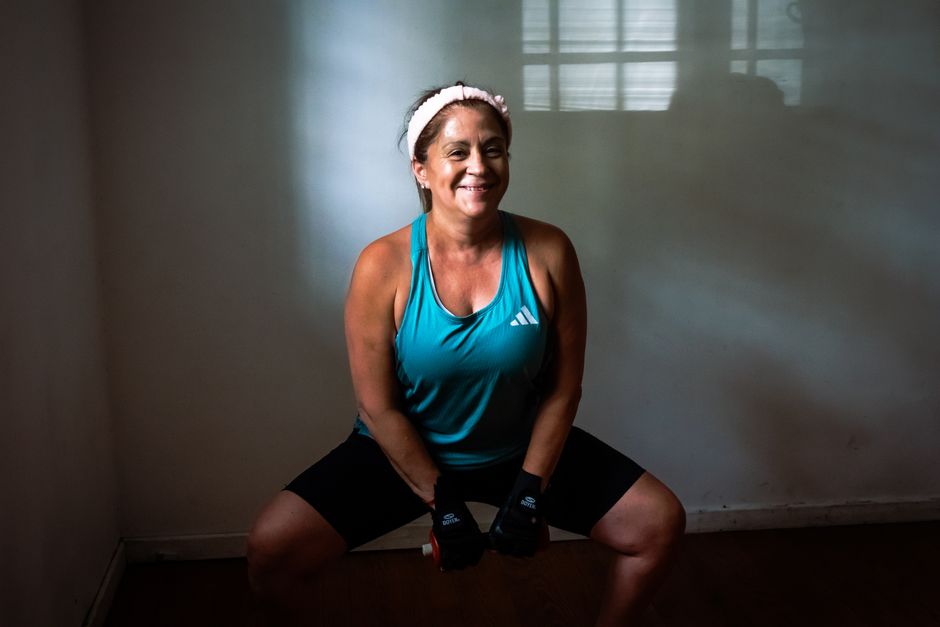
Strength training as a mobility tool. This is the contrarian take I’ll stand behind: for most older adults, strength training will do more for leg mobility than stretching will. People push back on this constantly, and I understand why. Lifting weights doesn’t feel like it should make you more flexible. But when you load a muscle through its full range of motion, specifically in hip hinges, deep step-downs, and slow bodyweight squats with full depth, you’re building both strength and mobility simultaneously. The research on resistance training and improved functional range of motion in adults over 65 is pretty consistent. A 2022 review published in the Journal of Aging and Physical Activity found that progressive resistance training produced greater improvements in functional mobility scores than stretching-only protocols in older adults. That finding aligns with what I’ve seen in practice.
The key word is “progressive.” Starting with a resistance band or just bodyweight, adding load or difficulty over time. Not the same 12 reps of the same thing forever.
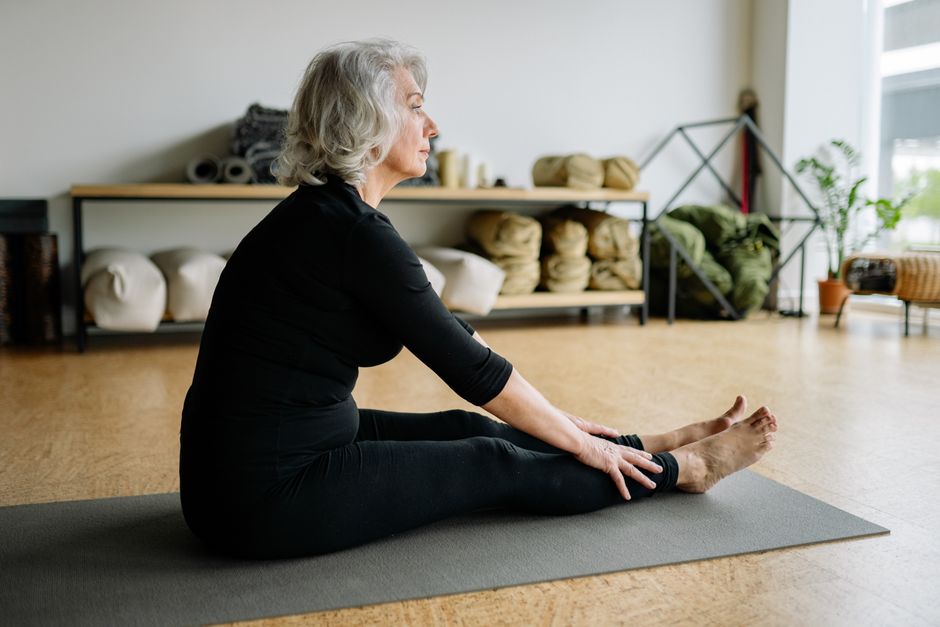
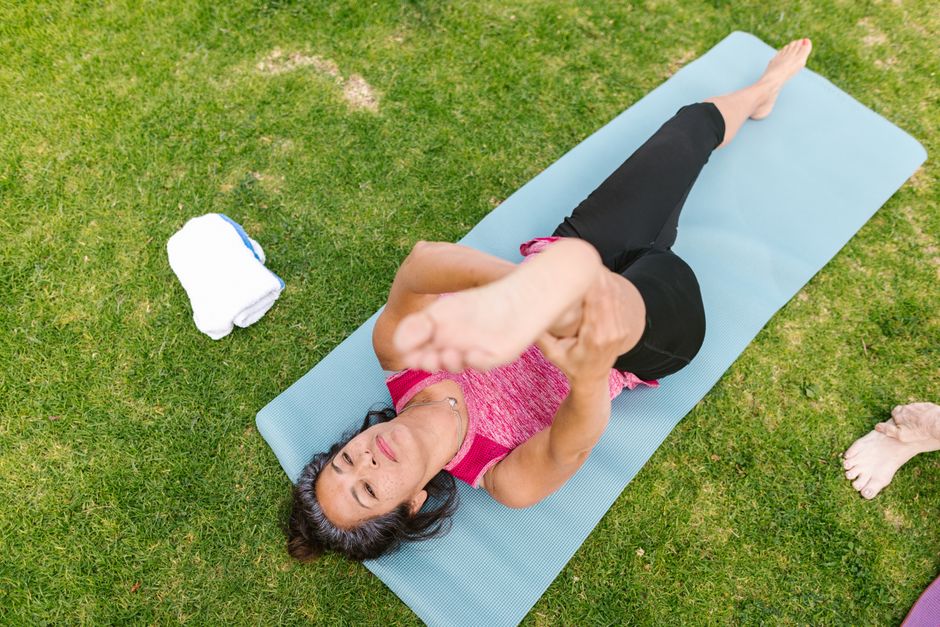
Active stretching over passive stretching. Sitting on a mat and pulling your foot toward your glute for 30 seconds has limited value for functional mobility. Contract-relax stretching (sometimes called PNF, proprioceptive neuromuscular facilitation) works significantly better for older adults. The idea is simple: you stretch to a mild point of tension, contract the muscle you’re stretching against resistance for about 5-8 seconds, relax, then move deeper into the stretch. Repeat 2-3 times. It leverages the nervous system rather than fighting it. The total time is similar to passive stretching; the results aren’t.
The Four Leg Areas Worth Prioritizing
How to Improve Balance | Senior Exercises for Balance · Yes2Next on YouTube
Not everything needs equal attention. Most mobility deficits I see in older adults cluster around four areas, and working on all four creates compounding benefits.
Hip flexors are usually the most restricted and the most consequential. Tight hip flexors from years of sitting pull the pelvis forward, compress the lower back, and shorten stride length. They also make the glutes less effective, which then affects knee stability. Five minutes a day on hip flexor mobility pays off in ways that ripple through everything else.
Hip external rotators (the muscles that let you sit cross-legged) are the next priority. Loss of hip external rotation is a major contributor to falls because it reduces your ability to recover your balance when your foot lands in an unexpected position. A simple 90/90 stretch done actively, not passively, is one of the better tools here.
Ankle dorsiflexion is the underrated one. Most people never think about their ankle mobility until they can’t do it. But limited ankle dorsiflexion changes how you walk, how you absorb impact, and your risk of falling on uneven ground. Calf stretching helps, but the exercise that produces the most consistent improvement is the knee-over-toe ankle stretch: standing facing a wall, placing one foot about six inches away, and pushing the knee forward toward the wall while keeping the heel flat. That’s a loaded stretch, and it works.
Knee mobility is mostly downstream of hip and ankle function, which is why I listed it last. But if you have specific knee stiffness (separate from pain, which is a different conversation), gentle terminal knee extensions with a light resistance band can restore the last few degrees of extension that many older adults are missing.
What to Skip (or at Least Deprioritize)
Foam rolling. I know. It’s everywhere, every gym has a bin of them, and plenty of trainers swear by it. The honest assessment: foam rolling probably provides temporary relief and may help with perceived stiffness, but the evidence that it produces lasting changes in actual range of motion is weak at best. For someone with osteoporosis or significant tissue fragility, aggressive foam rolling on the IT band or over bony prominences carries real risk. If it feels good, fine. But don’t let it crowd out the things that actually produce lasting change.
Static stretching as a primary mobility tool. I’m not saying never stretch. I’m saying that 20 minutes of static stretching three times a week, the standard recommendation you’ll find everywhere, is about the least efficient use of mobility training time available. If someone is choosing between 15 minutes of CARs and active hip work versus 15 minutes of holding static stretches, the first option will produce better results almost every time.
Practical Starting Point
Sources
- ROMAN ODINTSOV
- here is genuinely mixed when it comes to which specific protocol is best for imp
- on resistance training and improved functional range of motion in adults over 65
- suggests that meaningful improvements in functional mobility are achievable in 8
If you’re starting from scratch, or starting over, I’d suggest not trying to implement everything at once.
Pick one thing. Hip CARs done standing while holding the back of a chair are the highest-value entry point. One set per leg, once daily, moving slowly and deliberately through whatever range you have. Five minutes total. Do that for two weeks before adding anything else.
When you add a second element, make it a strength-based one: slow bodyweight squats to a chair (sit, stand, no momentum), with an emphasis on controlled descent. Three sets of 8-10, three times a week. That’s a real program. Don’t underestimate it.
The research suggests that meaningful improvements in functional mobility are achievable in 8-12 weeks with consistent practice. I’ve seen it happen faster. I’ve also seen people give up in week three because they expected more. The expectation management piece matters as much as the programming.
One last thing: if there is pain with any of these movements, that’s a conversation for your doctor or a physical therapist before continuing. Mobility work and pain are different problems, and treating one as the other is how people get hurt.
The hardest part of this isn’t the exercises. It’s accepting that the payoff is real but not immediate, and that consistency over weeks matters far more than any single session. I’ve watched 78-year-olds get back ranges of motion they’d given up on years ago. The biology allows for it. The nervous system is more adaptable than most people assume, well into old age. That part never stops surprising me.
Photo: ROMAN ODINTSOV via Pexels
This article is for general informational purposes only and does not constitute medical or fitness advice. Consult your physician or a licensed physical therapist before starting a new exercise program, especially if you have existing health conditions.