 Helen Santos
Falls are the leading cause of injury-related death among adults 65 and older in the United States. Not car accidents. Not heart attacks. Falls. And yet most of the balance advice floating around out there is either too vague to act on (“just try yoga!”) or too intimidating to start (“here’s a 45-minute balance training protocol”).
You might be wondering if your balance is just… declining. Like it’s something that happens to you, not something you can change. I hear that from people constantly, and I want to be direct with you: that belief is wrong, and it’s one of the more harmful things going around.
Here’s what I tell people in their first session with me: balance is a skill, not a fixed trait. It’s trainable at 62, at 74, at 83. The research on this is genuinely encouraging, not the lukewarm “some improvement is possible” kind. A 2020 Cochrane review analyzing 108 trials found that exercise programs specifically targeting balance reduced fall rates in older adults by roughly 23%. That’s not a rounding error. That’s a meaningful, life-changing number.
But the how matters enormously. Because I’ve also seen people make their balance worse by following well-meaning but misguided advice. Let me walk you through what actually works.
Why Your Balance Gets Harder With Age (And What That Actually Means)
Your body maintains balance through three systems working together: your vision, your vestibular system (the inner ear), and your proprioception, which is the sense your muscles and joints have of where your body is in space. After about age 60, all three start to change. Vision sharpens less quickly in low light. The vestibular system becomes less sensitive. And proprioception, honestly, takes the biggest hit, especially if you’ve been sedentary for a while.
I thought for years that the inner ear was the main culprit in most older adult falls. It made intuitive sense. But when I started working closely with a physical therapist colleague who specialized in vestibular rehab, she pointed me toward the proprioception research, and it genuinely shifted how I approach this work. Weakness in the ankles and hips, combined with reduced sensation in the feet, accounts for a much larger share of falls than most people realize.
That matters because it changes what you train. Vestibular issues need a different intervention than proprioceptive ones. If your doctor has never asked which situations make you feel most unsteady (turning quickly? walking in the dark? stepping off a curb?), that’s worth raising.
One more thing: medications. This doesn’t get said loudly enough. As of July 2026, the American Geriatrics Society’s Beers Criteria still flags dozens of commonly prescribed medications as fall risks for older adults, including certain blood pressure medications, sleep aids, antidepressants, and antihistamines. If your balance changed around the same time a new prescription started, please mention it to your doctor before assuming your body is just “getting worse.”
The Exercises That Actually Move the Needle
Let me skip the generic list and tell you what I’ve seen work reliably, and what the evidence backs.
Single-leg stance. Sounds boring. It’s not. Stand near a counter or wall, lift one foot just an inch off the floor, and hold for up to 30 seconds. That’s it. Research published in the Journal of Physical Therapy Science found that older adults who practiced single-leg stance for 12 weeks showed significant improvements in functional balance scores on the Berg Balance Scale. Start with holding for 5-10 seconds and build from there. When that feels manageable, try closing your eyes for 2-3 seconds at a time. The difference in difficulty is immediately humbling.
Tandem walking. Walk heel-to-toe along a straight line (a piece of tape on the floor works well) for about 20 feet. This one looks easy until you actually try it. I’ve watched people with no apparent mobility issues immediately grab for a wall when they attempt it. That’s information, not failure.
Sit-to-stand without hands. From a standard chair height, stand up without pushing off with your hands. Then sit back down slowly, taking at least 3-4 seconds on the way down. That slow lowering phase is where the real work happens, the eccentric muscle control that your body loses first and needs most. Do 8-10 repetitions. If you need to use your hands right now, use them, and just work toward needing them less over time.
Step-ups with intention. Using a low, sturdy step (4-6 inches), step up and bring the trailing leg up slowly before stepping back down. The emphasis here is the hip flexor lift and the control on descent. A regular stair works fine.
Here’s a concrete example of how this plays out in practice: Margaret, a 71-year-old I worked with in late 2024, came to me after two near-falls in her kitchen. She had no major health conditions, but she’d been largely sedentary for three years. We started with daily single-leg stance (10 seconds per side, three times a day) and sit-to-stand exercises five days a week. After eight weeks, her time on a 30-second chair stand test went from 8 repetitions to 14, and she hadn’t had another near-fall incident. Not a cure, but a real, measurable shift.
The One Thing Most People Skip (And Shouldn’t)
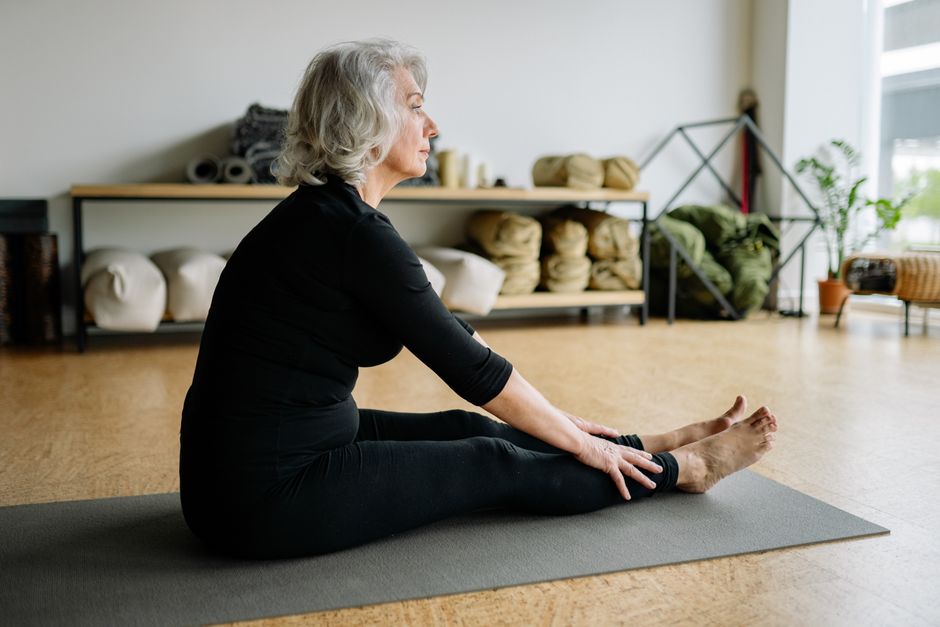
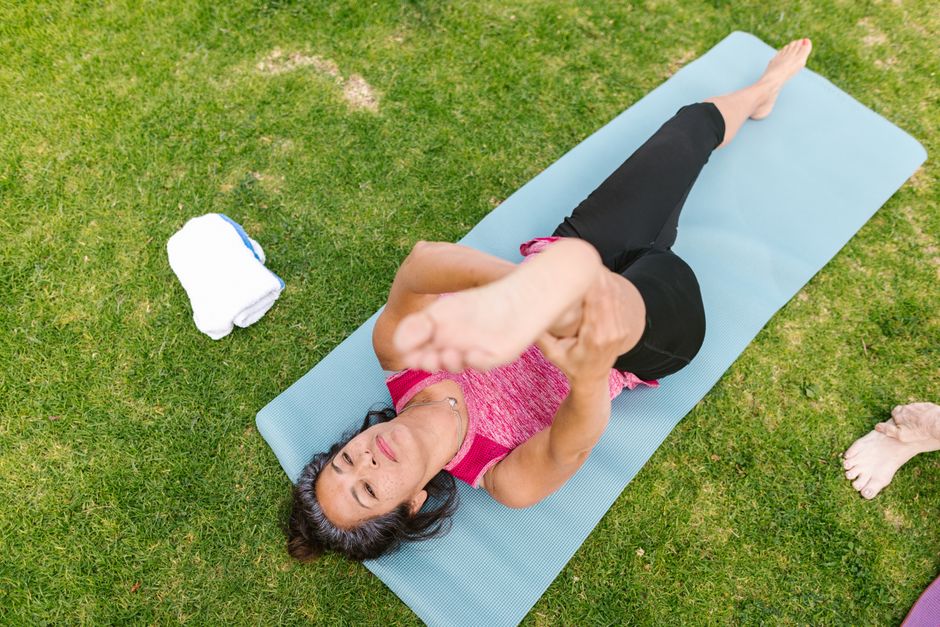
7 Stretches to Ease Stiffness and Boost Your Balance | Day 14 Better Balance Program · Yes2Next on YouTube
Ankle strength. Specifically, calf raises and ankle circles.
I can’t tell you how many balance programs I’ve reviewed over the years that completely ignore the ankles. It’s a real gap. Your ankles are the first responders in balance correction. When you step on an uneven surface, before your brain consciously registers the instability, your ankles are already making micro-adjustments. If the muscles around them are weak, those adjustments don’t happen fast enough or with enough force.
The fix is simple: stand at a counter, rise up on your toes slowly, hold for 2 seconds, lower slowly. Repeat 15-20 times. Daily. It’s not glamorous. Neither is a hip fracture.
Foot sensation is part of this too. If you’ve been wearing thick-soled, heavily cushioned shoes for years, you might actually be reducing the sensory feedback your feet send upward. I’m not saying ditch your support, especially if you have foot conditions. But there’s legitimate research suggesting that overly cushioned footwear can reduce proprioceptive input in older adults. This is an area where I’d genuinely recommend talking to a podiatrist rather than making a change on your own.
What to Avoid (Or at Least Approach Carefully)
Bosu balls and unstable surfaces. I know, they’re everywhere in gyms, and trainers love them. But the research specifically in older adults is mixed at best. A paper in Gait & Posture found that while unstable surface training can benefit younger populations, it may not transfer well to real-world fall prevention in older adults and carries a higher injury risk during the training itself. Flat-ground balance work, done consistently, is safer and probably more effective for most people.
Working through pain. I want to be careful here because I know some discomfort is part of building strength. But joint pain, sharp pain, or pain that gets worse session to session is not something to push through. It’s information your body is giving you, and ignoring it has ended more fitness programs than laziness ever has.
And please: don’t start any new exercise program without at least a conversation with your doctor, especially if you have osteoporosis, recent surgery, vertigo, or any neurological conditions. I mean that genuinely, not as a liability disclaimer.
Worked Examples
Scenario 1: 68-year-old man, retired teacher, noticed unsteadiness while hiking on uneven terrain. → Added daily single-leg stance (eyes open, then eyes closed), tandem walking, and ankle calf raises three times per week. → After 10 weeks, reported hiking confidently on moderate trails with no near-falls. Sit-to-stand score improved from 11 to 16 reps in 30 seconds.
Scenario 2: 76-year-old woman, history of one fall resulting in a wrist fracture two years prior, significant fear of falling developed afterward. → Started with supported single-leg stance at kitchen counter for 5 seconds per side, plus chair yoga for hip mobility twice weekly. Fear of falling (measured by Falls Efficacy Scale) dropped meaningfully over 12 weeks, and she returned to taking walks around her neighborhood. → Gradual exposure to movement, not just physical training, restored her confidence.
Scenario 3: 82-year-old man, mild balance impairment noted by his physician, referred to a physical therapist for formal gait assessment. → PT identified significant ankle weakness and recommended a targeted 6-week program. → Timed Up and Go test improved from 14.2 seconds to 10.8 seconds, which moved him from “moderate fall risk” to “low fall risk” on that assessment.
Sources
- Sherrington C, et al. (2020). Exercise for preventing falls in older people living in the community (Cochrane Review): Comprehensive meta-analysis of 108 trials showing fall rate reductions with balance-focused exercise.
- American Geriatrics Society. Beers Criteria for Potentially Inappropriate Medication Use in Older Adults (2023 update): Authoritative list of medications associated with elevated fall risk in older adults.
- Lesinski M, et al. (2015). Effects of balance training on balance performance in healthy older adults: A systematic meta-analysis. Sports Medicine: Examined training variables including frequency, duration, and surface type.
- Lord SR, et al. Falls in Older People: Risk Factors and Strategies for Prevention (Cambridge University Press): Foundational text covering proprioceptive decline, ankle strength, and multi-system balance assessment.
- Maki BE, McIlroy WE. The role of limb movements in maintaining upright stance: The “change-in-support” strategy. Physical Therapy (1997): Classic research on how older adults compensate for balance perturbations differently than younger adults.
Photo: Vlada Karpovich via Pexels
This article is for general informational purposes only and does not constitute medical or fitness advice. Consult your physician or a licensed physical therapist before starting a new exercise program, especially if you have existing health conditions.