 James Cooper
Three falls. That’s what it took before Patricia finally agreed to come see me. She was 67, fiercely independent, and absolutely certain her two previous stumbles on the back porch steps were just bad luck. The third one sent her to the ER with a bruised hip and a badly shaken confidence. By the time she sat down across from me, she wasn’t asking about strength or cardio anymore. She just wanted to feel safe in her own house again.
I mention Patricia because her story is almost universal. Balance doesn’t usually fail dramatically or all at once. It erodes quietly, over years, and most people don’t notice until something goes wrong. The genuinely good news is that balance responds to training faster than almost any other physical quality I work with in older adults. Patricia was walking her dog without fear again in about six weeks. Not because I did anything miraculous, but because we finally started working on the right things.
Why Balance Gets Worse After 60 (And It’s Not Just “Getting Old”)
Here’s what most people don’t realize: declining balance is rarely one problem. It’s usually three or four problems stacking up, which is why the generic advice (“just do some standing stretches!”) so often fails.
Your balance system has three main inputs: your vision, your inner ear (the vestibular system), and your proprioception, basically your body’s internal GPS. Sensors in your feet, ankles, and joints constantly send position signals to your brain. After 60, all three systems start losing precision. Vision might degrade slightly. Inner ear function changes with age. And proprioception, especially in the feet and ankles, quietly diminishes, particularly if you’ve spent decades in supportive shoes that have been doing a lot of that sensing work for you.
Muscle weakness is the other major piece. Specifically, weakness in the hips and ankles. The gluteus medius, which runs along the side of your hip, keeps your pelvis level when you’re standing on one leg. Every step you take is technically a one-legged moment. If that muscle is weak, you’ll sway and compensate with every stride. Ankle muscles matter just as much. They’re your first line of defense on uneven ground, and they atrophy fast if you’re not actively loading them.
Then there’s reaction time. A 2014 study in the journal Age and Ageing found that older adults have significantly slower protective stepping responses than younger adults, meaning when something does throw you off balance, you have less time to catch yourself. This is trainable, but it requires a specific type of exercise that most balance programs skip entirely.
Medications deserve a mention too. If you’re on blood pressure medication, diuretics, sleep aids, or certain antihistamines, they’re probably affecting your balance, especially first thing in the morning or when you stand up quickly. If you’ve noticed dizziness or unsteadiness and haven’t talked to your doctor about your medication list, do that before attributing everything to age.
What Actually Works: The Four Pillars
I’m not going to give you a list of 30 exercises and tell you to pick a few. That approach fails. People either get overwhelmed and do nothing, or they pick the easiest ones and wonder why nothing changes. What actually works, based on my experience with clients and a solid body of research, comes down to four categories.
Single-leg standing work. This sounds almost insultingly simple. It’s not. Stand near a counter or sturdy chair. Lift one foot just an inch off the floor. Hold for 10 seconds. Switch sides. Do this daily. That’s the entry point. The progression is what matters: closing your eyes (which forces your proprioceptive system to work harder), standing on a folded towel or a balance disc, and eventually adding arm movements while you hold the position. I had a client who could barely hold a single-leg stance for 3 seconds in week one. By week eight, she was doing it on a foam pad with her eyes closed for 20 seconds. That’s a real, meaningful shift in how her nervous system processes balance information.
Gait and stepping practice. This is the category most home programs completely ignore. Walking in a straight line, heel to toe, like a sobriety test. Stepping over objects on the floor. Stepping sideways, then diagonally. Turning around quickly (safely, near support). These movements train your brain to handle the actual situations where falls happen: doorway thresholds, uneven sidewalks, stepping off a curb. Static balance exercises help, but they don’t fully transfer to real-world movement unless you also train the dynamic version.
Hip and ankle strengthening. Clamshells, side-lying leg raises, and single-leg glute bridges for the hips. Heel raises and toe raises, both seated and standing, for the ankles. These aren’t glamorous, but they address the muscular deficits that are driving most balance problems I see in this age group. Two to three sets, three times a week, with enough resistance or repetitions that you feel genuine fatigue by the end. If clamshells feel easy after three weeks, you need a resistance band.
Reactive training. This is the one most people skip, and I think it’s a mistake. Train your body to respond quickly when balance is challenged. Toss and catch a ball while standing (or on one leg). Step quickly in response to a tap on the shoulder. Even stand with your feet close together and have a family member lightly push your shoulder, with you reacting to recover. These feel almost like games. They’re not. They’re directly training the protective stepping response that prevents a stumble from becoming a fall.
The Tai Chi Question
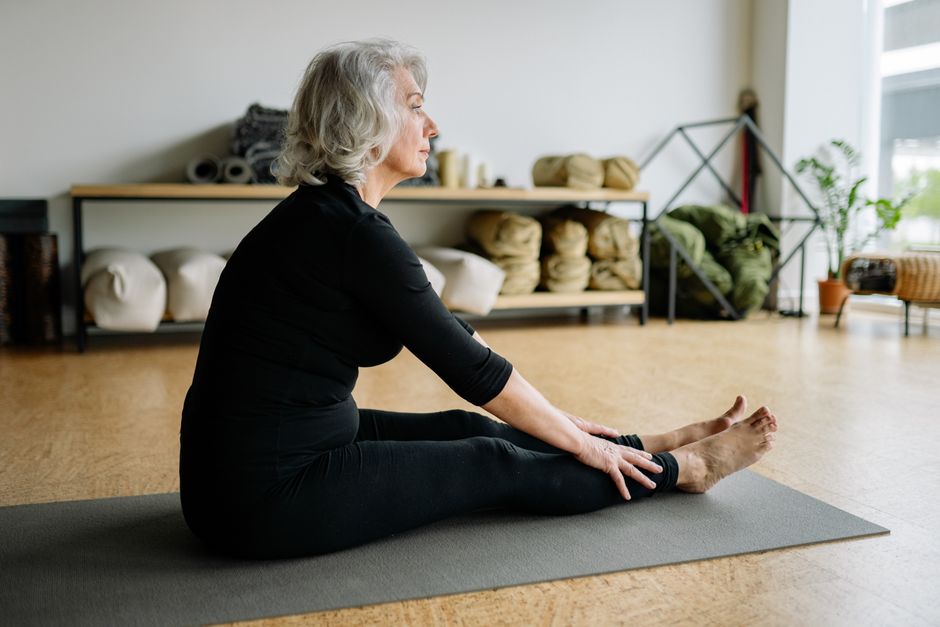
7 Stretches to Ease Stiffness and Boost Your Balance | Day 14 Better Balance Program · Yes2Next on YouTube
I’m going to say something a little unpopular here: Tai Chi is genuinely one of the best-studied interventions for fall prevention in older adults. The research isn’t mixed on this. A 2019 Cochrane review that looked at 108 trials and over 23,000 participants found that exercise programs including Tai Chi significantly reduced both the rate of falls and the number of people who fell. That’s serious evidence.
I still sometimes recommend that clients start with targeted strengthening work first, because Tai Chi requires learning a sequence of movements, and if your baseline strength is very low, you’ll spend the first several weeks just trying not to tip over instead of getting the neural benefits. But if you have even moderate baseline fitness and you can find a good in-person class (and in-person classes are far better than YouTube videos for beginners), Tai Chi is worth your time and the typical $12-$20 per class fee.
Many YMCAs and senior centers offer it free or reduced-cost with membership. It’s worth calling around.
The Footwear Problem Nobody Talks About
I’ve spent years watching people do all the right exercises and then undo their progress the moment they put on the wrong shoes. Here’s my position: thick, cushioned soles that were designed for walking on a treadmill are actively bad for proprioception. They muffle the sensory signals your feet are trying to send to your brain. You want a shoe with a thin, firm sole and a wide toe box for everyday balance training. Brands like Altra, Lems, or New Balance Minimus are all reasonable options, though they vary in how minimal they are.
Going barefoot on carpet or grass, if your foot health allows it, is genuinely good practice. Physical therapists use this all the time. If you have peripheral neuropathy, plantar fasciitis, or other foot conditions, talk to a podiatrist before changing your footwear dramatically. This isn’t an area to experiment recklessly.
And please, if you’re still wearing backless slippers around the house, that’s the first thing to change. I’ve seen more near-falls caused by slippers than by any single exercise deficit.
How Fast Can You Actually Expect Progress?
Faster than most people expect. Balance responds well to consistent training because a lot of what’s improving in the early weeks isn’t muscle size, it’s neural adaptation: your brain getting better at processing the information it’s already receiving. I typically see clients notice real changes in about 4-6 weeks of consistent work (meaning at least 3-4 sessions per week, even if those sessions are only 15-20 minutes).
Sustained improvement, the kind that actually changes your fall risk long-term, takes several months of maintenance. This isn’t a six-week program you do and then stop. But the daily maintenance dose is genuinely modest. Ten minutes of balance-specific work a day, plus whatever strength training you’re doing, is enough to maintain and continue improving most of what you’ve built.
FAQ
Sources
- Kampus Production
- in the journal Age and Ageing found that older adults have significantly slowe
- isn’t mixed on this
- base for Tai Chi in fall prevention is significantly stronger and more specific
How do I know if my balance is bad enough to see a doctor before starting exercises?
If you’ve had two or more falls in the past year, feel unsteady on a regular basis, or experience dizziness when standing up, see your doctor first. Your primary care physician can refer you to a physical therapist for a formal balance assessment and rule out any medical causes. Starting an exercise program isn’t risky for most people, but a PT evaluation gives you a much clearer baseline and a safer starting point.
Is yoga as good as Tai Chi for balance?
Some yoga styles, particularly slower Hatha or Iyengar classes that emphasize alignment, can be helpful for balance. But the research base for Tai Chi in fall prevention is significantly stronger and more specific. Yoga has its own real benefits. If you already love yoga and you’re practicing consistently, keep going and add the targeted strengthening work. If you’re starting from scratch and fall prevention is the goal, Tai Chi has the edge.
Can I improve my balance if I’ve had a hip or knee replacement?
Yes, and you absolutely should work on it, but with proper guidance. Balance and proprioception are often affected by joint replacement surgery because the original joint contained sensory receptors that were removed along with the damaged tissue. A physical therapist who works with post-surgical patients can design a program that accounts for your specific hardware and recovery stage. Don’t assume that because you’ve been cleared to walk normally, you’ve been cleared for all balance training.
Should I use a walker or cane while I’m working on balance, or does that make it worse?
Using an assistive device while you need it doesn’t make your balance worse. It keeps you safe while you’re building the strength and coordination to need it less. The mistake is using it as a substitute for doing the work, not as a support while you’re doing it. Many people gradually transition to lighter support over weeks as their balance improves.
What time of day is best for balance training?
For most people, mid-morning is ideal, after the early stiffness of waking has worn off but before fatigue sets in later in the day. Avoid training immediately after taking medications that cause dizziness, and never train balance when you’re tired enough that your attention is impaired. Balance training requires focus. A distracted 20-minute session near a sturdy surface beats an exhausted one any day of the week.
Photo: Kampus Production via Pexels
This article is for general informational purposes only and does not constitute medical or fitness advice. Consult your physician or a licensed physical therapist before starting a new exercise program, especially if you have existing health conditions.