 Helen Santos
Most advice about exercising with osteoporosis is either so cautious it’s useless, or so generic it might actually hurt you. “Stay active and do weight-bearing exercise” gets repeated endlessly without anyone explaining which exercises are actively dangerous for thinning bones, why the wrong yoga class can fracture a vertebra, or how to actually build the strength that makes the difference between a fall that’s embarrassing and a fall that ends independence.
Let me fix that.
I’ve worked with hundreds of adults who have osteoporosis or osteopenia, and the biggest mistake I see isn’t doing too much. It’s doing the wrong things with total confidence, because someone with good intentions gave them a pamphlet from 2009.
What Osteoporosis Actually Does to Your Risk Profile
Bone mineral density (BMD) doesn’t just determine whether something breaks. It determines how something breaks, and which movements create enough compressive or shear force to cause a fracture even without a fall.
The spine is the big one most people underestimate. Vertebral compression fractures, which can happen from something as minor as bending forward sharply to pick something up, are the most common osteoporotic fracture and frequently go undiagnosed for months. The hip gets all the cultural attention, but the spine is where I’ve seen the sneaky injuries.
Here’s the part that surprises people: your bones aren’t uniformly weak. Osteoporosis tends to concentrate at the lumbar spine (L1-L4), the femoral neck (top of the thigh bone), and the wrist. That means some parts of your skeleton are fine while others are significantly compromised. Your exercise program needs to reflect that specific distribution, which is exactly why a DEXA scan with T-scores at multiple sites is more useful than a single whole-body BMD number. If your doctor only told you “you have osteoporosis” without specifying where, it’s worth asking for the site-specific T-scores at your next appointment.
The Exercises That Are Actually Dangerous
This is the section that never makes it into the cheerful fitness pamphlets.
Forward spinal flexion under load is the one I’m most vigilant about. Crunches, sit-ups, toe touches, the “roll down” in Pilates, the forward fold in yoga where an instructor pushes on your back, rowing with poor form, picking up a grandchild with a rounded spine. All of these place compressive force on the anterior vertebral bodies, which are the exact structures that fail in osteoporotic fractures. A 2015 study in Osteoporosis International found that common Pilates exercises that involve trunk flexion produced spinal loads high enough to be concerning for women with low BMD. That finding hasn’t gotten nearly enough attention in the fitness world.
High-impact activities without bone density to support them are another real risk. Running on a treadmill might be listed as “weight-bearing” and it is, but landing forces at 3x body weight per stride are a different animal than walking at 1.1x body weight. If your T-score is below -2.5, I’d have a frank conversation with your physician before jogging.
Twisting under load. A golf swing with a driver, heavy cable rotations, even some dance moves that combine rotation with a weighted lower body. Torsional forces on already-compromised vertebrae are underappreciated.
Vinyasa yoga and hot yoga at general fitness studios. I know this one stings. But unless the instructor has specific osteoporosis training (not just “senior experience”), the spinal flexion, deep forward folds, and cues to “round through the spine” are genuinely risky. There are excellent yoga programs designed specifically for osteoporosis, including Dr. Loren Fishman’s protocol that has actual RCT data behind it (published in Topics in Geriatric Rehabilitation, 2016). That’s a completely different category from a standard Tuesday morning yoga class.
What Actually Works
Start doing this to Prevent Falls (Ages 60+) · Yes2Next on YouTube
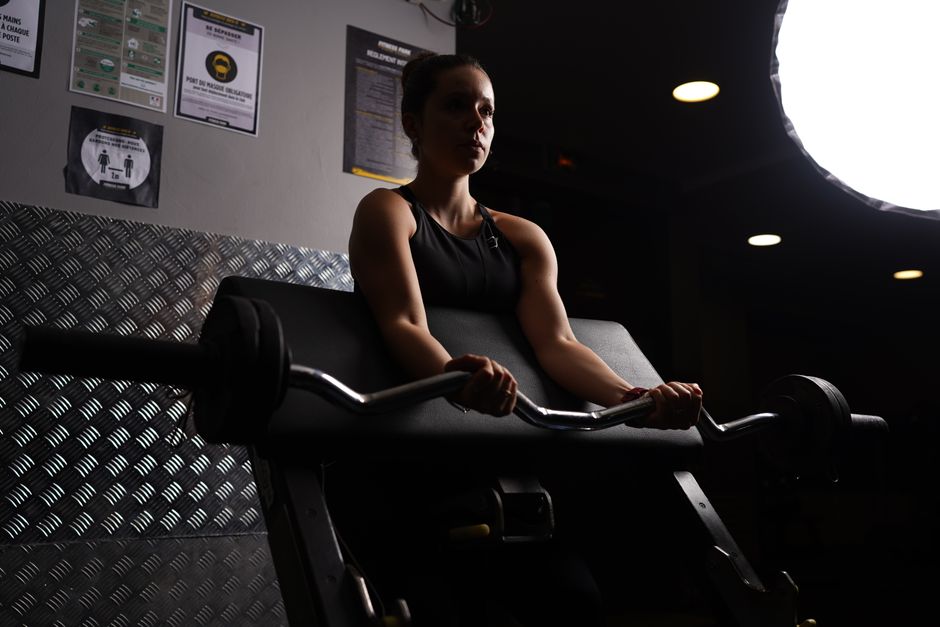
Resistance training is the headline. Specifically, progressive resistance training that loads the skeleton in ways that stimulate bone remodeling. The LIFTMOR trial out of the University of Queensland, published in the Journal of Bone and Mineral Research in 2017, showed that high-intensity resistance and impact training (supervised deadlifts, overhead press, back squats, drop landings) in postmenopausal women with low bone mass produced significant improvements in lumbar spine and femoral neck BMD, along with improvements in functional performance, and no adverse events. That finding runs completely counter to the “be gentle, avoid loading” messaging most women with osteoporosis receive.
The key word is supervised, and the key element is progressive. Lifting the same 3-pound dumbbells for two years won’t do anything for your bones. The stimulus has to increase.
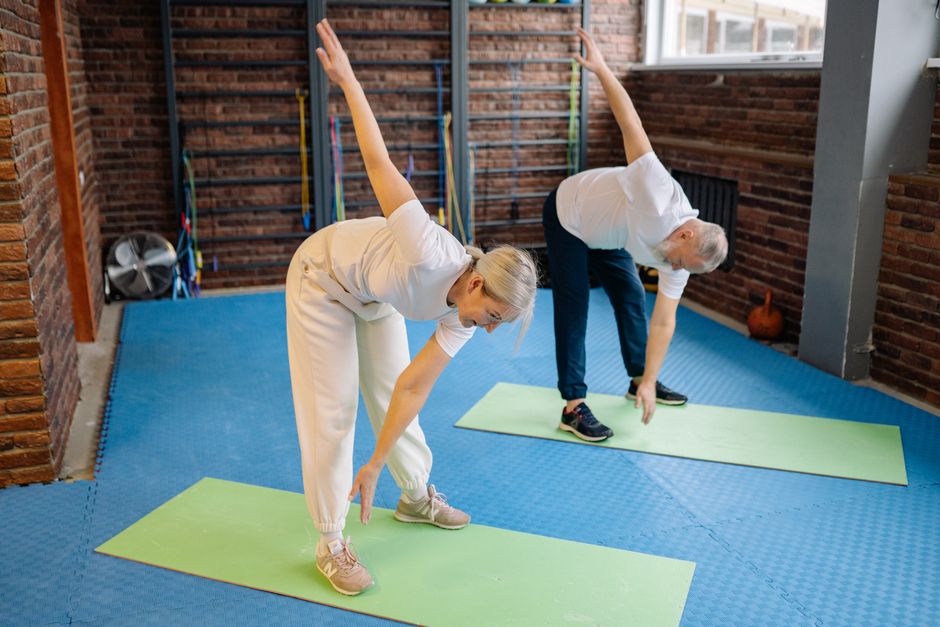
For hip protection specifically, single-leg work matters more than bilateral squats: step-ups, single-leg balance with slight knee bend, lateral step-downs. These load the femoral neck directly, which is what you want.
Balance training cuts fracture risk not by changing your bones but by reducing falls. That’s not a consolation prize. According to a 2019 Cochrane Review, exercise interventions that include balance training reduce fall rates in older adults by 23% on average. For someone with osteoporosis, that’s enormous.
Here’s a practical breakdown of exercise categories and how they rank for both safety and benefit when you have osteoporosis:
| Exercise Type | Bone Benefit | Fall Risk Reduction | Risk Level (with poor form) | Notes |
|---|---|---|---|---|
| Progressive resistance training (hip hinge, squat, press) | High | Moderate | Low-Moderate | Requires technique coaching; supervised strongly preferred |
| Walking | Low-Moderate | Moderate | Low | Excellent starting point; insufficient alone for BMD |
| Balance/proprioception training | None direct | High | Low | Tai chi, single-leg stands; often underutilized |
| Swimming/cycling | None | Low | Very Low | Cardiovascular value; no bone stimulus |
| Yoga (osteoporosis-specific) | Low-Moderate | Moderate | Low (modified) | Must avoid spinal flexion cues; Fishman protocol has evidence |
| High-impact (jogging, jumping) | High | Low-Moderate | High (T-score < -2.5) | LIFTMOR protocol showed benefit; needs physician clearance |
| Spinal flexion exercises (crunches, toe touches) | None | None | High | Avoid outright; no benefit justifies the risk |
How to Actually Build a Safe Routine
Start with an honest assessment of where you are. Not where you think you should be, and not where you were at 50.
If you have a T-score of -1.0 to -2.4 (osteopenia range), you have more flexibility. A well-run group fitness class with a trainer who knows your situation is reasonable. You can walk, bike, hike on flat terrain, do most resistance exercises with good form, and begin progressing load.
If your T-score is -2.5 or below (osteoporosis range), I’d argue that working with a physical therapist or certified personal trainer who has specific osteoporosis experience isn’t optional, it’s the move. At least for the first 8-12 weeks while you establish safe movement patterns. The cost of 6-10 PT sessions (typically $75 to $175 per session depending on your location and insurance, as of 2026) is a fraction of the cost, financially and otherwise, of a vertebral fracture.
The hip hinge is the single most important movement pattern to master. Every time you bend to pick something up, you’re doing a hip hinge. Getting that pattern right, weight back, spine neutral, movement from the hips not the waist, protects your lumbar spine on every single repetitive daily task.
Three worked examples from my practice:
Margaret, 68, T-score -2.7 at lumbar spine, had been doing a twice-weekly yoga class for three years → Switched to Fishman-protocol yoga DVD and added twice-weekly resistance training (goblet squats, banded hip abduction, wall-supported overhead press) with a trainer for 10 weeks → Follow-up DEXA at 12 months showed +2.3% BMD at lumbar spine; she reported three fewer “near-fall” moments in six months.
David, 71, femoral neck T-score -2.1, former runner who was told to stop all running → Cleared by physician for supervised LIFTMOR-style protocol, started with bodyweight deadlifts and progressed to 95 lbs over 16 weeks → No adverse events; reported significantly reduced fear of falling and returned to 20-minute walks three times weekly.
Carol, 74, multiple vertebral fractures, extremely conservative starting point → Began with seated resistance band work, progressed to standing with wall support, focused heavily on hip extension and balance → After 6 months, able to walk 30 minutes daily without pain flare; no new fractures over 18-month follow-up.
Medications, Supplements, and the Exercise Equation
Exercise doesn’t work in isolation, and I’d be doing you a disservice to pretend otherwise.
If your physician has recommended bisphosphonates (alendronate/Fosamax, risedronate/Actonel) or other bone medications, those work on a completely different mechanism than exercise. They’re not either/or. The research suggests the combination of medication and resistance exercise produces better outcomes than either alone, though I’ll be honest that the long-term data on exactly how much better is still being refined.
Calcium and vitamin D matter, but the dosing question is more complicated than “take 1200mg of calcium.” The research on calcium supplementation specifically has gotten murkier over the past decade, with some studies raising questions about cardiovascular effects from high-dose supplements. Current guidance from the National Osteoporosis Foundation (as of 2026) generally favors getting calcium from food sources first, supplementing only to close the gap, and ensuring vitamin D is in an adequate range (typically 800-1000 IU/day for most older adults, though your physician should check your serum 25(OH)D level before recommending a specific dose).
That conversation belongs with your doctor and potentially a registered dietitian. I don’t have enough information about your specific situation to go further than that here, and anyone who gives you a confident universal dose without knowing your bloodwork is guessing.
Sources
- Giangregorio LM et al. (2014): “Too Fit To Fracture: exercise recommendations for individuals with osteoporosis or osteoporotic vertebral fracture.” Osteoporosis International. Evidence-based exercise guidelines specifically for this population.
- Watson SL et al. (2017): “High-Intensity Resistance and Impact Training Improves Bone Mineral Density and Physical Function in Postmenopausal Women With Osteopenia and Osteoporosis.” Journal of Bone and Mineral Research. The LIFTMOR trial.
- Sherrington C et al. (2019): “Exercise for preventing falls in older people living in the community.” Cochrane Database of Systematic Reviews. Meta-analysis showing 23% reduction in fall rates with balance training.
- Fishman LM et al. (2016): “Yoga and Bone Health.” Topics in Geriatric Rehabilitation. Evidence for modified yoga in improving BMD.
- National Osteoporosis Foundation: Clinician’s Guide to Prevention and Treatment of Osteoporosis (current as of 2026). Authoritative U.S. clinical reference.
Photo: Patricia Bozan via Pexels
This article is for general informational purposes only and does not constitute medical or fitness advice. Consult your physician or a licensed physical therapist before starting a new exercise program, especially if you have existing health conditions.