 Robert Davis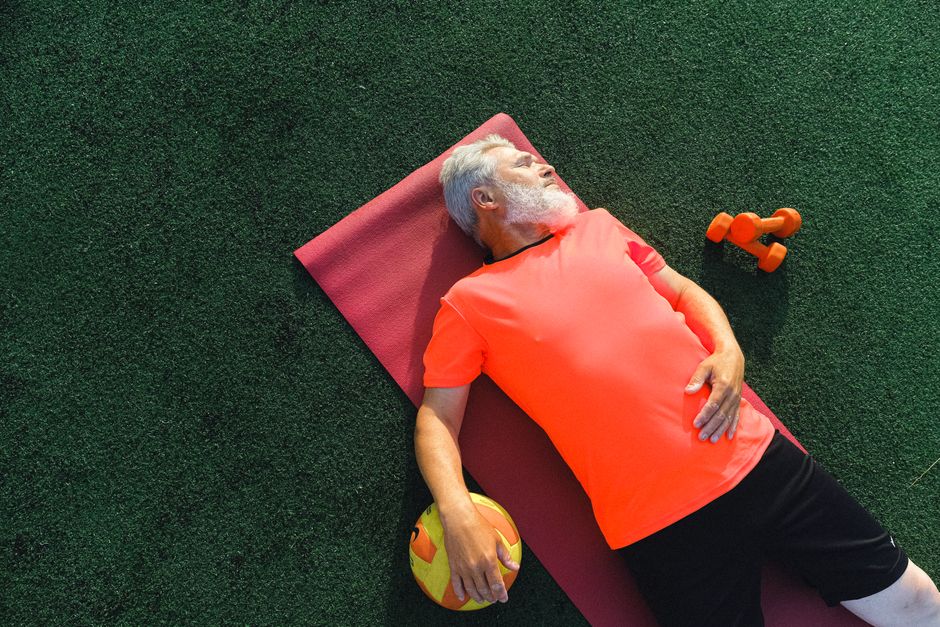
Most people over 60 are told to “be careful” with strength training. What they actually need is to do more of it.
I’ll be honest: when I first started working extensively with older adults about twelve years ago, I was guilty of the same overcautious thinking. Lighter weights. Fewer sets. Lots of stretching. The rationale felt sound at the time. But watching clients plateau, lose confidence, and gradually shrink, I started questioning everything I thought I knew about muscle building after 60.
What I found changed how I train every single client in that age group.
The science is less discouraging than most people assume. Yes, sarcopenia (the age-related loss of muscle mass) is real. After 50, the average person loses somewhere between 1-2% of muscle mass per year if they do nothing about it. That number accelerates after 70. But “if they do nothing” is doing a lot of work in that sentence. The research on older adults who actually train consistently is striking. A 2019 study published in the Journal of Strength and Conditioning Research found that adults over 60 who followed a progressive resistance training program for 12 weeks gained muscle mass and strength at rates comparable to younger adults, when training volume was matched. Comparable. That’s not what the “be careful” crowd is telling you.
So let’s get into what actually works.
The Protein Problem Nobody Talks About Enough
| Aspect | Younger Adults | Older Adults (60+) |
|---|---|---|
| Protein per meal for muscle synthesis trigger | ~20 grams | 35-40 grams |
| Muscle protein synthesis recovery window | 36-48 hours | 48-72 hours |
| Annual muscle loss (sedentary) | Slower rate | 1-2% per year (accelerates after 70) |
Here’s where I see older adults get quietly sabotaged, even when they’re doing everything else right.
They’re not eating enough protein.
The general population guideline of 0.8 grams of protein per kilogram of bodyweight was never designed with active older adults in mind. For someone over 60 trying to build or preserve muscle, most sports nutrition researchers now suggest something closer to 1.6 to 2.2 grams per kilogram of bodyweight per day. For a 170-pound person, that’s roughly 123 to 170 grams of protein daily. That’s a significant difference.
What surprised me was learning about anabolic resistance, the phenomenon where older muscle tissue doesn’t respond as readily to small protein doses as younger muscle does. Younger adults can trigger meaningful muscle protein synthesis with about 20 grams of protein in one sitting. Older adults appear to need closer to 35-40 grams per meal to get the same signal. This isn’t speculation anymore. Research from Dr. Stuart Phillips’ lab at McMaster University has been pretty consistent on this point over the last decade.
What this means practically: spreading protein across three or four meals rather than eating very little at breakfast and lunch and then loading up at dinner. The distribution matters. I’ve had clients who were already eating adequate total protein but front-loading it differently and seeing much better results from that single change.
On the question of supplements: protein powder is not magic, but it’s genuinely useful as a tool when whole food intake is difficult. Whey protein has the most evidence behind it for muscle protein synthesis. Leucine content, specifically, appears to be the key trigger, and whey is high in leucine. If you’re dairy-free, a blend of pea and rice protein is a reasonable alternative. I wouldn’t spend more than you need to. A 5-pound bag of Optimum Nutrition Gold Standard Whey typically runs around $55-65 and does the job. Skip the $120 “advanced senior formula” products unless there’s something genuinely different in the label, which there usually isn’t.
Progressive Overload Is Non-Negotiable (and Completely Doable)
This is the part most beginner programs for older adults get wrong.
They treat resistance training like a permanent maintenance job: do the same 12 reps with the same 10-pound dumbbells forever, and feel good about it. But muscles don’t grow without a reason to grow. The stimulus has to increase over time.
Progressive overload just means you’re consistently challenging the muscle more than it’s already adapted to. You don’t have to go heavier every single session. You can add reps, add sets, reduce rest time, slow down the tempo of each rep, or work through a slightly greater range of motion. But something has to change or you stop making progress. This is true at 30. It’s true at 70.
A practical starting point for someone new to resistance training after 60:
Start with two to three sessions per week, not five. Recovery takes longer as we age, and this is not a weakness, it’s physiology. The muscle protein synthesis response to a training session peaks around 24 hours post-workout and takes roughly 48-72 hours to resolve in older adults, compared to 36-48 hours in younger adults. This actually means rest days aren’t optional. They’re where the adaptation happens.
Pick 5-6 movements that cover the major patterns: a squat variation, a hip hinge (like a Romanian deadlift), a horizontal push (like a dumbbell chest press), a horizontal pull (like a seated cable row or dumbbell row), and a vertical pull (like a lat pulldown). That’s it. You don’t need 20 exercises. You need to get good at a few movements and then load them progressively.
For rep ranges, the research here is actually reassuring. Moderate weights done for higher reps (say, 3 sets of 12-15 with a weight that genuinely challenges the last few reps) build muscle just as well as heavier weights in the lower rep ranges, and with less joint stress. This matters enormously when people have existing knee, shoulder, or hip issues, which, honestly, most clients over 60 do. Working to within 2-3 reps of failure on each set seems to be the key variable, not how heavy the weight is in absolute terms.
One thing I feel strongly about: machine-based exercises are not inferior for older adults. I’ve seen trainers sneer at machines as if only free weights count. Machines reduce the stability demand, which means more force goes through the target muscle, and they keep you in a controlled path that’s easier to load progressively and harder to do dangerously wrong. For someone starting out, or returning after a gap, machines are not a compromise. They’re often the smarter choice.
Balance and Bone: The Reasons Strength Training Matters Beyond the Mirror
To Build Muscle After 60, You Must Do THIS · Dr. Dave Candy - Physical Therapist on YouTube
Building muscle after 60 isn’t primarily about aesthetics. (Though if that motivates you, use it, there’s nothing wrong with wanting to look good.) The stakes are much higher.
Falls are the leading cause of injury-related death in adults over 65 in the United States. The CDC reports roughly 36 million falls per year in that age group, leading to about 3 million emergency room visits. Hip fractures specifically carry alarming mortality rates: somewhere between 20-30% of older adults who suffer a hip fracture die within a year, often not from the fracture itself but from the complications of prolonged immobility. That’s the context. Every person over 60 who can resistance train probably should be resistance training.
Strength training improves bone density directly through the mechanical loading of bone tissue. A 2017 meta-analysis in the British Journal of Sports Medicine looked at resistance training’s effect on bone mineral density in postmenopausal women and found consistent, significant improvements, particularly at the spine and hip. The effect sizes were modest but the direction was clear.
Balance is a separate quality from strength but they’re related. Unilateral exercises (things like single-leg deadlifts, split squats, step-ups, single-leg calf raises) train the neuromuscular coordination that actually catches you before a stumble becomes a fall. I always include some unilateral work in programs for older clients, even when the weights feel embarrassingly light to them. The point isn’t the load. It’s the coordination pattern.
The Stuff That Gets in the Way
Sources
- Anna Shvets
- on older adults who actually train consistently is striking
- published in the Journal of Strength and Conditioning Research found that adults
- here is actually reassuring
- in the British Journal of Sports Medicine looked at resistance training’s effect
Medications matter here and I don’t see this discussed enough in fitness circles. Several common medications can affect training outcomes in older adults. Statins (cholesterol-lowering drugs like atorvastatin or simvastatin) are associated with muscle pain and weakness in some people, and if you’re experiencing unusual soreness or fatigue during training, it’s worth raising with your doctor. Beta-blockers will limit your maximum heart rate, which affects how you gauge cardiovascular effort. Corticosteroids affect muscle protein metabolism. None of this means you can’t train. It means you should know about it.
Sleep is another overlooked factor. Growth hormone release, which plays a role in muscle repair and synthesis, happens predominantly during deep sleep. Older adults often sleep less deeply and for fewer hours. Chronic sleep deprivation measurably impairs muscle protein synthesis. There’s no supplement that fixes this.
And the psychological piece is real. A lot of clients over 60 come in with years of being told their bodies are fragile. That belief is often more limiting than any physical constraint. Rebuilding confidence in what the body can do, loading gradually and successfully, that process matters. I’ve seen it change people’s lives in ways that are hard to quantify.
The honest truth is that most of what holds older adults back from building real muscle isn’t biological. It’s the accumulated weight of bad advice, excessive caution, and the soft bigotry of low expectations. Your muscles respond to challenge at 65 or 72 in more similar ways to your 35-year-old self than almost anyone will tell you. The adaptations take a little longer. The recovery needs more respect. But the capacity is there.
Use it.
Photo: Anna Shvets via Pexels
This article is for general informational purposes only and does not constitute medical or fitness advice. Consult your physician or a licensed physical therapist before starting a new exercise program, especially if you have existing health conditions.