 Robert Davis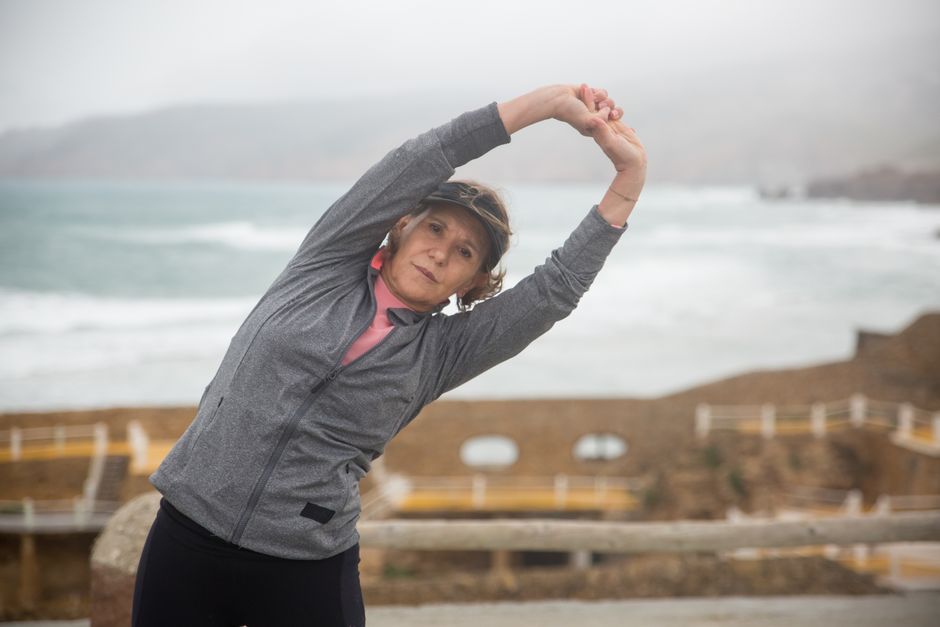
Most of the injuries I’ve seen in my career didn’t happen during exercise. They happened because of it. Specifically, because someone came back to movement after a long break, felt okay on day one, felt great on day two, and pushed hard on day three. Then they were on the couch for six weeks. I’ve watched that pattern repeat itself so many times that I now have a whole speech I give at the first appointment. The gist of it: your enthusiasm is an asset, but your body needs time to catch up to it.
If you’re reading this, you might be wondering where the line is between pushing yourself enough to make progress and pushing so hard you set yourself back. That’s the right question. And here’s what I tell people: there’s no single answer, but there are principles that hold up across thousands of clients and decades of research. The goal of this article is to walk you through those principles in plain language, without the kind of hand-wringing caution that treats every older adult like they’re made of glass.
You’re not fragile. But you are operating with a body that responds differently to stress than it did at 35. That distinction matters a lot.
- Warm up for at least 8-10 minutes before any workout, cold muscles tear more easily and recover slower after 60.
- Progress slowly: add no more than 10% volume or intensity per week to avoid overuse injuries.
- Balance training reduces fall-related injury risk by up to 37% according to a 2019 Cochrane review.
- Pain during exercise is a stop sign, not a suggestion, distinguish it from normal muscle fatigue.
- Most senior exercise injuries are preventable and happen in the first 4-6 weeks of a new routine.
The Warm-Up Is Not Optional
I’ll be honest: for years, I underestimated how much the warm-up mattered for older adults specifically. I thought five minutes of light walking was sufficient for anyone. I was wrong. Here’s what changed my mind.
A client, Margaret, a 68-year-old retired teacher from Tucson, came in after tearing a calf muscle during a water aerobics class. She wasn’t doing anything aggressive. She just pushed off the pool wall at the start of class before her muscles had time to adjust to the water temperature and the activity. Her instructor had jumped straight into the routine. That injury kept her out of the pool for eleven weeks.
The physiology here is straightforward. As we age, muscle tissue loses some of its elasticity. Tendons become less pliable. The synovial fluid in your joints takes longer to distribute evenly when you start moving. A proper warm-up addresses all three of those things. Eight to ten minutes of gentle, progressive movement isn’t just ritual. It’s preparation on a cellular level.
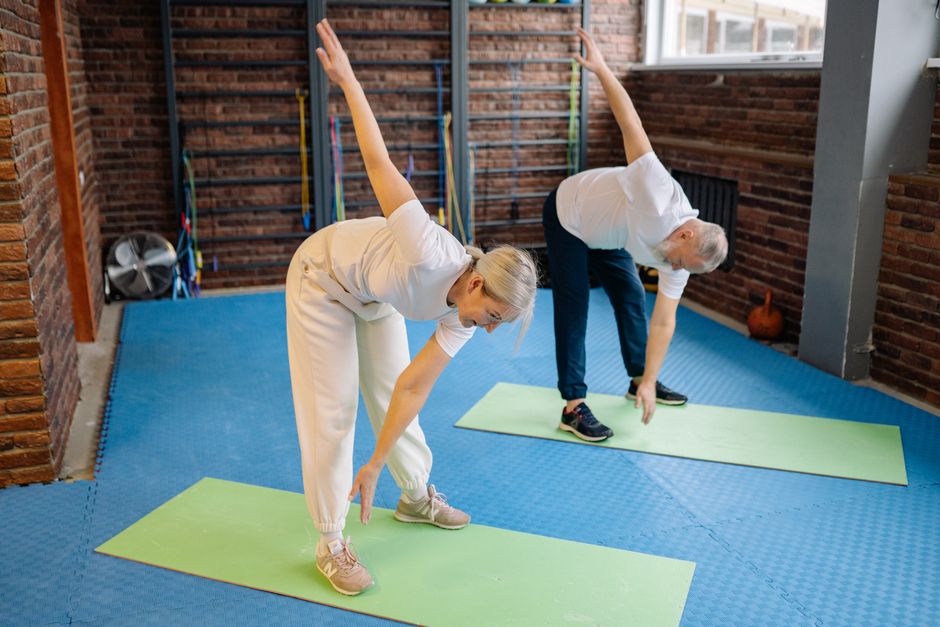
What does a good warm-up look like for someone over 60? Start with five minutes of slow walking or marching in place. Then move through your joints with controlled range-of-motion exercises: gentle arm circles, ankle rotations, slow hip circles, a few shallow bodyweight squats. By the time you’re ready to do the actual workout, you should feel warm, slightly loose, and just a little bit like you want to stop dawdling and get going. That last part means it’s working.
Understanding the “10% Rule” and Why Your Body Needs Ramp-Up Time
Here’s what I tell people who are coming back to exercise after months or years away: your cardiovascular system will adapt faster than your connective tissue. Every single time. You’ll feel like you can do more because your heart rate recovers quickly and you’re not out of breath. But your tendons and ligaments are on a completely different timeline.
The 10% rule is a rough but useful guideline. Don’t increase the total volume or intensity of your workouts by more than 10% in any given week. If you’re walking 20 minutes three times a week, don’t jump to 45 minutes three times a week next week. That’s a 125% jump. Your tendons don’t care that your heart can handle it.
This isn’t overly conservative. A 2018 review in the British Journal of Sports Medicine found that rapid load increases were among the strongest predictors of soft tissue injury in adults across all age groups. After 60, the recovery window between stimulus and adaptation is simply longer. Bone density, collagen synthesis, muscle protein synthesis all slow down. That’s not a reason to stop. It’s a reason to pace yourself sensibly.
One worked example from my practice: a 71-year-old retired firefighter named Gerald started a resistance training program after being sedentary for four years. We started with two sets of ten repetitions on eight exercises, twice a week, at very light resistance.
Gerald: started with 2x/week, 2 sets, light resistance → progressed 10% per week for 12 weeks → reached 3x/week, 3 sets, moderate resistance with zero injuries. He’d tried jumping back in on his own six months earlier and strained his rotator cuff within three weeks.
Slow is fast. That’s not a paradox. It’s just how tissue remodeling works.
The Difference Between Good Pain and Bad Pain
This is probably the conversation I have more than any other. People are understandably confused, and some of the confusion comes from decades of “no pain, no gain” messaging that was never accurate and is particularly unhelpful after 60.
Muscle fatigue during exercise: normal. The burning sensation during the last few reps of a squat or a wall push-up: expected, productive, fine. General soreness 24-48 hours after a workout you haven’t done in a while (delayed onset muscle soreness, or DOMS): normal, though often more pronounced in older adults and lasting slightly longer.
Sharp pain during movement: stop. Joint pain (not muscle fatigue, specifically the joint): stop. Pain that’s localized to a tendon or the area just around a joint: stop. Chest pain, dizziness, unusual shortness of breath: stop and seek medical attention immediately.
The nuance that trips people up is that dull aching can go either way. A deep ache in a muscle belly is usually fine. A deep ache in or around a joint, especially if it persists after you’ve warmed up, is not something to push through. Here’s a rule of thumb I give clients: on a scale of 1-10, mild discomfort (1-3) is often fine during exercise. Anything at a 4 or above that feels joint-related deserves your full attention, not toughness.
One important caveat: I’m speaking in general terms here. If you have a history of joint replacement, osteoporosis, heart disease, or any significant musculoskeletal condition, please work with your physician and a qualified fitness professional to understand your specific boundaries. The general advice here won’t always apply.
Balance Training: The Most Underrated Injury Prevention Tool
Falls are the leading cause of injury-related death among adults 65 and older, according to the CDC. But here’s what most people miss: falls rarely “just happen.” They happen because balance and proprioception (your body’s sense of its own position in space) decline gradually over years, and most people don’t notice until something goes wrong.
A 2019 Cochrane systematic review of 108 studies found that balance and functional exercise programs reduced fall rates in older adults by approximately 37%. That’s a meaningful number. And the interventions in those studies weren’t complicated or expensive. Standing on one foot. Heel-to-toe walking. Tai chi. Side-stepping. Things you can do in your kitchen.
I recommend to virtually every client over 65 that they spend five minutes of every workout doing balance-specific work. Not instead of strength training or cardio, in addition to it. The two most accessible starting points: single-leg stance (stand near a counter for safety, lift one foot slightly, hold 10-30 seconds) and tandem walking (walk heel-to-toe along a straight line, like a sobriety test). Both feel silly at first. Both are quietly doing important work.
Common Exercises That Carry Higher Risk (and What to Do Instead)
Not all exercises are equal risk for older adults, and I’d rather be direct about this than vague.
| Exercise | Primary Risk for Seniors | Lower-Risk Alternative |
|---|---|---|
| High-impact jumping (burpees, jump squats) | Joint stress, fracture risk with low bone density | Squat-to-stand from chair, step-ups |
| Behind-the-neck lat pulldown | Cervical spine strain | Front-of-face lat pulldown or seated row |
| Deep barbell back squat (unsupported) | Lumbar compression, balance challenge | Goblet squat, leg press, or chair squat |
| Sit-ups / crunches | Lumbar flexion load, disc pressure | Dead bug, bird dog, plank variations |
| Upright row (barbell or dumbbell) | Shoulder impingement | Cable face pull, band pull-apart |
| Running on concrete (new runners) | Shin splints, knee stress | Running on tracks, treadmills, or grass |
This table isn’t a list of things you can never do. Someone who’s been squatting under a bar for 20 years can probably keep squatting under a bar. Context matters enormously. But if you’re new or returning after a long break, the alternatives in that right column give you similar training benefits with a friendlier entry point.
As of July 2026, a certified personal trainer specializing in senior fitness typically charges between $65 and $110 per session in most U.S. markets, with some group training options available for $20-35 per session. If budget is a concern, even two or three sessions to establish proper form can be worth far more than treating an injury later.
The Equipment Factor
You don’t need much. But a few things matter.
Footwear is the one I push hardest on. Exercising in flat, worn-out shoes is a genuinely avoidable risk. You want a shoe with adequate cushioning, a slightly elevated heel-to-toe drop (between 8mm and 12mm works well for most seniors), and a firm heel counter. The Brooks Ghost 16 (around $140) and the New Balance Fresh Foam 1080v14 (around $165) are both solid options I’ve recommended regularly. Avoid fashion sneakers. Those flat soles that look like running shoes but have zero cushioning do nothing for you.
For resistance training at home, a set of resistance bands (a quality set from TheraBand or Perform Better runs about $20-45) is a genuinely useful investment. The tension is predictable, the failure mode is benign (a snapped band is annoying, not dangerous), and they travel easily.
One small thing only people who’ve actually used resistance bands regularly know: they degrade in direct sunlight and near heat sources faster than you’d expect. Check yours every few months for small nicks or discoloration near the handles. A band that’s about to snap will often show you before it does.
Sources
- Sherrington C, et al. (2019): Cochrane systematic review, “Exercise for preventing falls in older people living in the community” – 108 RCTs, ~23,000 participants, 37% fall rate reduction from balance/functional exercise.
- Gabbett TJ. (2016): “The training-injury prevention paradox,” British Journal of Sports Medicine, evidence base for the 10% load progression rule and acute:chronic workload ratio.
- Centers for Disease Control and Prevention (CDC): “STEADI, Stopping Elderly Accidents, Deaths, and Injuries” toolkit and fall statistics for adults 65+. Available at cdc.gov.
- American College of Sports Medicine (ACSM): Position Stand on Exercise and Physical Activity for Older Adults, updated guidelines on resistance, aerobic, and balance training recommendations.
- Fragala MS, et al. (2019): “Resistance Training for Older Adults,” Journal of Strength and Conditioning Research, comprehensive evidence review on programming parameters, safety, and outcomes for adults 60+.
Photo: Kampus Production via Pexels
This article is for general informational purposes only and does not constitute medical or fitness advice. Consult your physician or a licensed physical therapist before starting a new exercise program, especially if you have existing health conditions.