 Helen Santos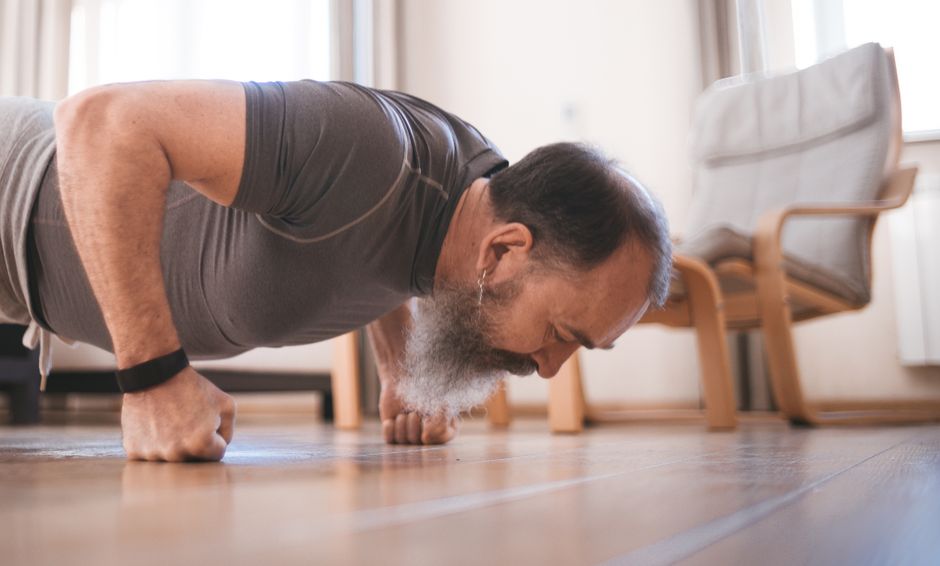
Most home fitness advice for older adults is either condescendingly simple or quietly dangerous. You’ll find articles recommending chair sits and wall push-ups alongside breathless enthusiasm for “senior-friendly” routines that, in practice, do almost nothing to build the strength and balance that actually keep you upright and independent. The gap between feel-good content and genuinely effective training is wide, and most people land in it.
Here’s what actually matters: progressive overload, balance training that challenges you (not just lets you wobble gently), and consistency across all three pillars of functional fitness: strength, mobility, and cardiovascular capacity. You don’t need a gym. You need a plan that respects your intelligence and treats your body as something worth developing.
The Equipment Worth Buying (And What to Skip)
| Equipment | Cost Range | Priority | Notes |
|---|---|---|---|
| Resistance bands with handles | $20-35 | Essential | Fit Simplify and TheraBand are reliable options |
| Adjustable dumbbells or fixed pairs (5-15 lb) | Included in $200 budget | Essential | Choose based on current strength level |
| Sturdy chair (no armrests) | Often already owned | Essential | Household item, no additional cost |
| Yoga mat | ~$25 | Recommended | Useful but not required |
| Foam roller | ~$15 | Recommended | Effective for hip flexors and thoracic spine |
| Stability ball | Included in $200 budget | Optional | Useful if space available and no balance concerns |
| Balance boards (senior marketed) | ~$300 | Not recommended | Unnecessary marketing expense |
You can build a surprisingly complete home setup for under $200 total. What you actually need: a set of resistance bands with handles (Fit Simplify and TheraBand both make reliable sets around $20-35), a pair of adjustable dumbbells or two fixed pairs in the 5-15 lb range depending on your current strength, and a sturdy chair with no armrests. That’s the core kit.
A stability ball is useful if you have space and no significant balance concerns. A yoga mat is worth $25. A foam roller costs about $15 and will do more for your hip flexors and thoracic spine than most stretching routines combined.
What you don’t need: the $300 balance boards marketed specifically to seniors, any piece of equipment that requires you to sit down to use it while claiming to “engage your core,” or anything with the word “gentle” in the brand name. Gentle is not a training philosophy. It’s a marketing category.
One honest caveat: if you have significant joint replacements, osteoporosis, or a recent cardiac event, run your program past a physical therapist or your physician before you start. Not because you can’t train, but because the specifics matter and a 30-minute consultation can save you months of going the wrong direction.
Strength Training at Home: What Actually Produces Results
The single biggest mistake I see in home-based senior fitness programs is the failure to progress. Week one, you do 10 bodyweight squats. Week six, you’re still doing 10 bodyweight squats. Nothing has changed and nothing will change. Your muscles adapt to a stimulus in roughly two to four weeks. After that, you need to add difficulty or you’re just maintaining, not building.
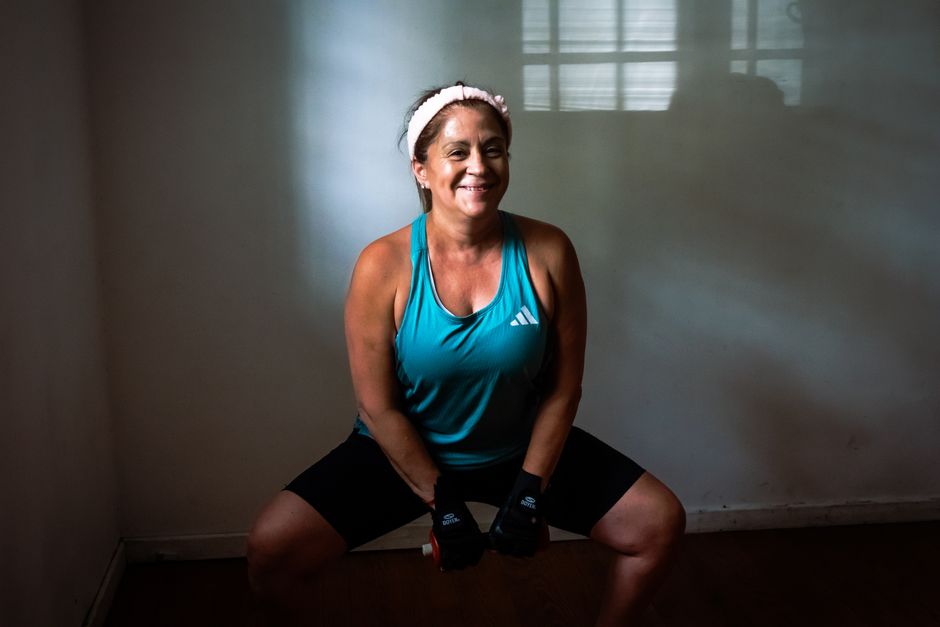
Progressive overload at home looks like this: you start with a bodyweight squat, then a squat holding a light dumbbell, then a heavier one, then a goblet squat with a full range of motion, then a split squat. That’s a progression you could work through over three to six months and still be making real gains. The principle is identical to what younger lifters use. Your physiology responds to the same inputs.
The four movement patterns worth training, in priority order: hip hinge (deadlift variations), squat pattern, pushing (wall push-ups progressing to incline, then floor), and pulling (resistance bands anchored to a door handle are your best friend here). Every other exercise is secondary. A 60-year-old who can hinge well, squat below parallel with load, do ten real push-ups, and row a band with full scapular retraction is far stronger than average and far less likely to fall, get injured, or need help with daily tasks.
Two days a week of resistance training produces real results. Three is better. More than four, for most people over 60, starts competing with recovery. I’ve seen more overtraining injuries in enthusiastic beginners than in people who started conservatively, and overtraining injuries at 68 take considerably longer to resolve than they do at 35.
Balance Work That’s Actually Hard Enough to Help
Fitness Expert: How to BUILD MUSCLE After 60 (Complete Guide) | Sal Di Stefano · Jesse Chappus on YouTube
Single-leg standing is the entry point, not the destination. If you can stand on one leg for 30 seconds with your eyes open, congratulations, that’s baseline. Now try it with your eyes closed. Now try it on a folded towel. Now try it while turning your head side to side slowly. Each of those progressions dramatically increases the demand on your vestibular and proprioceptive systems, which is exactly what you need to train to prevent falls.
The research here is unambiguous. A 2020 Cochrane review covering data from over 55,000 participants found that exercise programs with a strong balance training component reduced fall rates in older adults by around 23%. Not prevented all falls. Reduced the rate meaningfully. That’s real, especially given that a fall resulting in a hip fracture carries a one-year mortality rate around 20-30% for adults over 65.
Tandem walking (heel-to-toe in a straight line) is underrated. So is standing on one foot while doing a task with your hands, like folding laundry. Your brain integrates balance with divided attention, and that’s exactly the real-world condition that causes most falls. Standing still on one leg in a controlled environment is practice. Standing on one leg while reaching for something on a high shelf is the test.
Ten minutes of dedicated balance work three times a week is enough to see improvement within four to six weeks. You’ll feel it.
Cardiovascular Fitness: The Options, Ranked
Walking is first, and it’s not even close. It loads the skeleton, it’s free, it requires no equipment, it can be dosed accurately (pace, incline, duration), and the research on its benefits for cardiovascular health, mood, and cognitive function in older adults is more consistent than almost any other single intervention. Thirty minutes, most days. If that’s not possible yet, ten minutes is still worth doing. Start where you are.
Marching in place is a legitimate alternative when weather or mobility limits outdoor walking. It’s not glamorous, but done with intention (arms swinging, knees lifting to hip height, pace increasing in intervals) it gets your heart rate up and keeps joints moving. I’d estimate 80% of people skip this option because it feels too simple. That’s a mistake.
Stationary cycling is excellent for people with knee pain who find walking aggravating. Recumbent bikes are easier to get on and off if hip mobility is limited. A decent recumbent bike runs $300-600 new, less used. Swimming is ideal, full-stop, if you have access. The buoyancy unloads every joint simultaneously while still providing cardiovascular demand and mild resistance.
The one I’d argue against for most beginners: high-intensity interval training, specifically the version marketed as “HIIT for seniors.” Short work intervals followed by rest periods do have good evidence behind them, but the implementations I see in online programs push intensity too high too fast. The risk-benefit calculus is fine for someone already fit who’s used to training. For someone returning after years of inactivity, start with steady-state work, build a base, then add intensity variation after three months.
Mobility: The Part Everyone Skips Until They Can’t
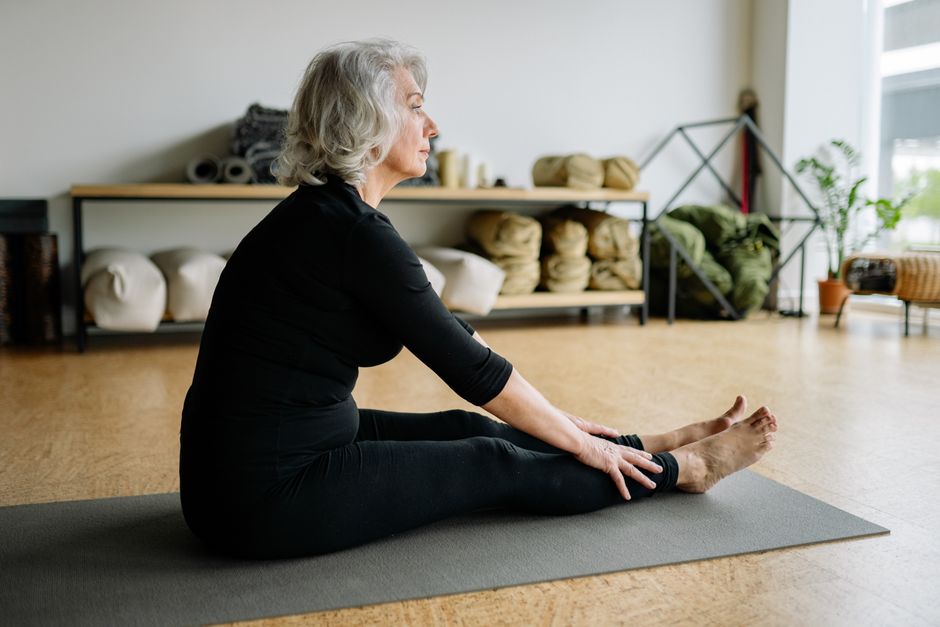
Flexibility and joint mobility aren’t the same thing. Flexibility is passive range of motion (how far your hamstring stretches when someone lifts your leg). Mobility is active control through a range (whether you can actually use that range while your muscles are working). Mobility is what matters for daily life, and it’s trainable at any age.
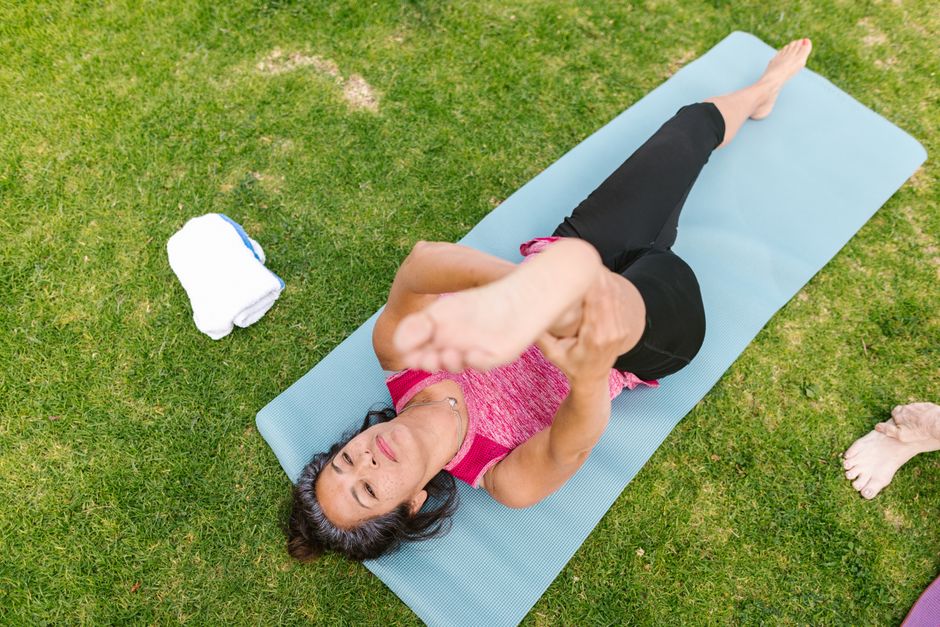
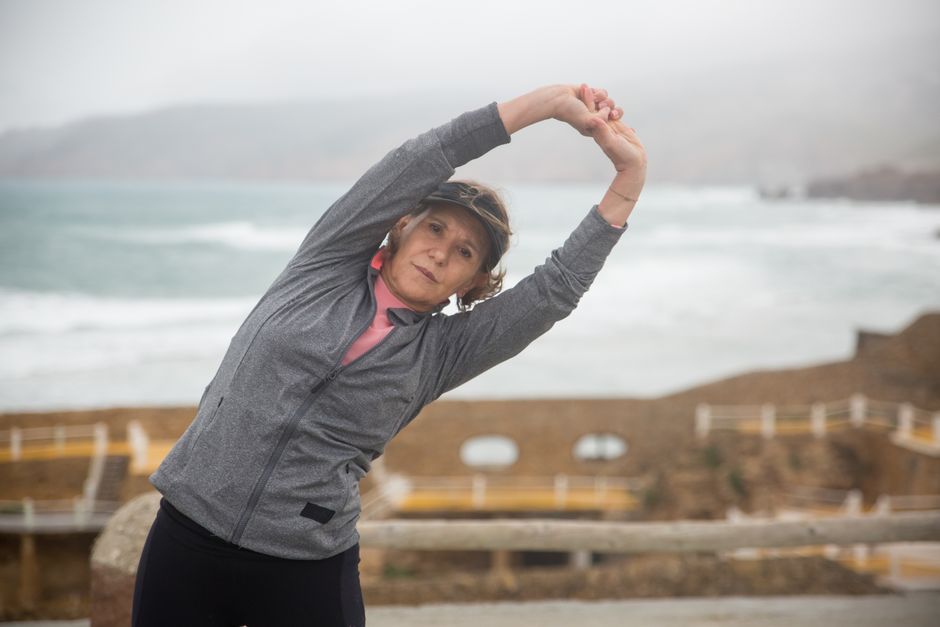
Hip mobility work is the highest-return investment in this category. Tight hip flexors from years of sitting contribute to lower back pain, reduced stride length, and altered gait that affects balance. A simple daily routine: 90/90 hip stretches on the floor (or on a firm bed if getting to the floor and back is currently difficult), world’s greatest stretch progression, and hip circles in a standing position holding a chair for support. Five to eight minutes, every morning. Not optional if you want to move well.
Thoracic (mid-back) mobility is the second priority. Most adults over 60 have lost significant thoracic rotation and extension. This matters for shoulder function, neck pain, and even breathing mechanics. Foam rolling the thoracic spine for two minutes before any upper body training session makes an immediate, noticeable difference.
Ankle mobility is consistently overlooked and consistently implicated in falls. If your ankles don’t dorsiflex well (heel on floor, knee traveling forward over toes), your squat mechanics break down, your gait shortens, and your balance suffers. Calf stretching is part of it, but actual joint mobility work (calf raises through full range, ankle circles with weight-bearing) is more effective.
The home-based fitness program that actually works long-term isn’t the one with the most variety or the most sophisticated equipment. It’s the one you can repeat consistently, progress over time, and still be doing a year from now. Simple, hard enough to matter, and built around the movements your daily life actually demands.
Photo: Mikhail Nilov via Pexels
This article is for general informational purposes only and does not constitute medical or fitness advice. Consult your physician or a licensed physical therapist before starting a new exercise program, especially if you have existing health conditions.
Sources
- Mikhail Nilov
- Nutramax Cosequin Senior Dog Soft Chews (60ct)
- Nutramax Cosequin DS Joint Supplement for Dogs (132ct)
- here is unambiguous
- from over 55
Disclosure: As an Amazon Associate, we earn a small commission from qualifying purchases at no extra cost to you. We only recommend products that genuinely support the topics covered in this article.
- Nutramax Cosequin Senior Dog Soft Chews (60ct) (~$32), Senior-specific Cosequin formula with added Omega-3s, designed for aging dogs with joint and immune health needs.
- Nutramax Cosequin DS Joint Supplement for Dogs (132ct) (~$36), The #1 veterinarian-recommended joint supplement brand, clinically studied for reducing joint pain in dogs.