 James Cooper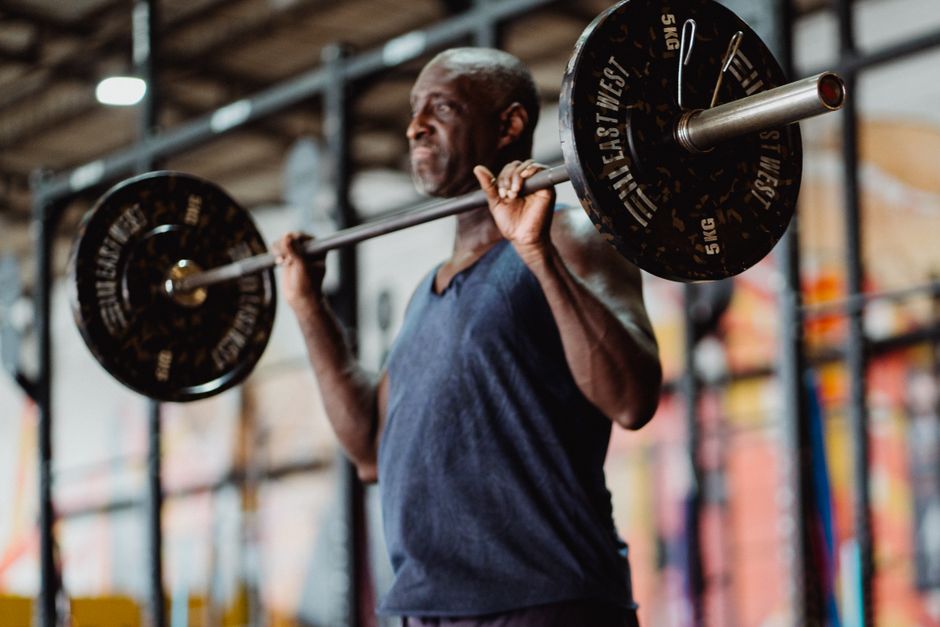
Most people don’t realize they’ve already lost a significant amount of muscle by the time they notice anything’s wrong.
Not because they’ve been sedentary or careless, but because sarcopenia, the age-related loss of skeletal muscle, is quiet. It happens at roughly 1-3% per year after age 60, and it doesn’t announce itself with pain or obvious stiffness. It announces itself when you can’t get out of a low chair without pushing off the armrests, or when a flight of stairs that used to be nothing suddenly requires a handrail and some willpower.
I’ve seen this pattern hundreds of times. Someone comes in convinced they just need to “stretch more” or that they’re “just getting older.” And they’re not wrong that aging is involved, but what they’re missing is that muscle loss isn’t a sentence. It’s a process you can actually reverse, at any age.
That last part is what most people don’t realize, and it’s the part that matters most.
The Science Is More Encouraging Than You’ve Heard
| Age Group | Duration | Muscle Strength Improvement | Notes |
|---|---|---|---|
| 72-98 years | 10 weeks | +113% (leg strength) | Nursing home residents, some using walkers; Fiatarone et al., 1994 |
| 65+ years | Varies | Measurable gains | Progressive resistance training; meta-analysis, British Journal of Sports Medicine, 2019 |
| Case example: 71 years | 14 weeks | Grip +22%, chair-stand +62.5% | Resistance training + protein optimization |
Here’s the thing that changed my thinking on this years ago: I used to believe, like a lot of people in fitness, that after a certain age the window for meaningful muscle rebuilding was mostly closed. Then I read a 1994 study out of Tufts University by Maria Fiatarone and colleagues, published in the New England Journal of Medicine, that showed nursing home residents aged 72 to 98 increased their leg muscle strength by an average of 113% after just 10 weeks of resistance training. Some of them had been using walkers. Some improved enough to walk without one.
That study rearranged my thinking completely.
More recently, a 2019 meta-analysis in the British Journal of Sports Medicine confirmed that progressive resistance training produces measurable muscle mass gains in adults over 60, with the biggest relative improvements often seen in people who had the most atrophy to begin with. You don’t start from zero, but your body still responds to the right stimulus.
The key word there is “progressive.” That’s not just jargon. It means the load has to increase over time, gradually and deliberately, for your muscles to keep adapting. A lot of well-meaning senior fitness programs get this wrong because they prioritize safety so heavily that they never actually challenge the muscle. I understand the instinct. Falls are a real danger. But a workout that never gets harder is, biologically speaking, a walk rather than a training stimulus.
What Actually Rebuilds Muscle (And What Doesn’t)
Protein first, because this is where I see the biggest gap.
The current dietary guidelines for protein, 0.8 grams per kilogram of body weight per day, were set as a minimum to prevent deficiency. Not to build muscle. Not even to maintain it effectively in older adults. Research from Stuart Phillips’ lab at McMaster University suggests that adults over 65 likely need closer to 1.2 to 1.6 grams per kilogram per day to support muscle protein synthesis, especially when training. For a 165-pound person, that’s a difference between about 60 grams and 110-120 grams of protein daily. That’s substantial.
And timing matters more than most people expect. Muscle protein synthesis is maximally stimulated by a dose of roughly 30-40 grams of high-quality protein per meal, according to work published in the Journal of the American Geriatrics Society. Spreading your protein across three meals rather than backloading it at dinner is genuinely important. I’ve had clients who were technically hitting their protein numbers for the day but eating almost none of it at breakfast and lunch. Once they redistributed those same grams more evenly, they started recovering from sessions better within three weeks.
Now, resistance training. Not walking, not yoga (though both have real value for other reasons). Actual resistance training: weights, resistance bands, bodyweight exercises with progressive difficulty, or machines. Specifically compound movements that work multiple large muscle groups: squats, rows, step-ups, hip hinges, chest presses. These recruit more muscle fiber, trigger more anabolic hormone response, and give you a bigger return on the time you put in.
Here’s where I’d push back on some conventional senior fitness advice: starting with very light resistance and staying there for months is not “building a foundation.” It’s just moving. You need to reach something close to muscular fatigue within the last 2-3 reps of a set. If you’re finishing 12 reps and feel like you could do 20 more, the weight isn’t doing anything for muscle building.
A worked example from my own practice:
Margaret, 71, retired teacher from Portland, Oregon, came in after her doctor flagged low grip strength and poor balance scores. She’d been doing chair yoga three times a week for a year with no measurable change in strength. → We shifted to twice-weekly resistance sessions (goblet squats, seated cable rows, step-ups with a 4-inch riser, assisted hip hinges) with protein targets set at 1.3g/kg/day, front-loaded toward breakfast. → After 14 weeks, her grip strength improved 22%, her chair-stand test went from 8 reps in 30 seconds to 13, and she reported the stairs in her house felt “like a different building.”
That’s not unusual. That’s what the research predicts and what I see regularly.
The Testosterone and Hormone Conversation Nobody Finishes
To Build Muscle After 60, You Must Do THIS · Dr. Dave Candy - Physical Therapist on YouTube
Hormonal changes, particularly the decline in testosterone (in men and women), estrogen, and growth hormone, do reduce your body’s anabolic capacity as you age. This is real. I won’t pretend otherwise.
But the reflex conclusion, that therefore seniors can’t build muscle the same way, misses something important. The relative response to training stimulus is still significant. Your ceiling may be lower than at 35, but the floor has dropped a lot too, which means the available range is still meaningful. And resistance training itself, done consistently, raises testosterone and growth hormone levels modestly but measurably, particularly high-intensity compound movements.
Should you talk to your doctor about hormone levels if you’re struggling? Yes. Genuinely. If your testosterone is clinically low and you’re working hard with good nutrition and still not responding, that’s a medical conversation worth having. But I’ve seen too many people decide the hormone situation makes effort pointless before they’ve actually tried a real training program for 12 consistent weeks. Most of the time, the program was the problem, not the hormones.
Sleep and Recovery: The Part People Skip
Muscle isn’t built in the gym. It’s built in the 48-72 hours after you train, when your body repairs the micro-damage caused by resistance exercise. And as of 2026, the research on sleep’s role in that recovery is pretty unambiguous: less than 7 hours per night meaningfully impairs muscle protein synthesis, regardless of how well you trained or ate.
For older adults, sleep quality often deteriorates for reasons that have nothing to do with effort: sleep apnea (which is underdiagnosed in people over 60, particularly women), pain, medication side effects, and circadian rhythm shifts. If you’re training hard, eating enough protein, and still not progressing, ask your doctor about a sleep study before you change your workout program. I’ve seen two clients in the last year alone who had been grinding away with mediocre results, got diagnosed with moderate sleep apnea, started CPAP therapy, and reported dramatically better energy and faster recovery within six to eight weeks.
Another worked example here:
Robert, 68, a retired contractor in Phoenix, was following a solid twice-weekly training program but felt beaten up for days after each session. His wife mentioned he snored heavily. → Referred to his physician, diagnosed with moderate obstructive sleep apnea, started CPAP. No change to training or diet. → Within 8 weeks he reported his post-session soreness resolving in 36 hours instead of 72, and his squat added 20 pounds over the following 12 weeks.
A Practical Starting Point That Doesn’t Require a Gym
If you’re not currently training, the gym can feel like a weird, loud place full of equipment you don’t know how to use. That’s a real barrier and I won’t minimize it. But you don’t need a gym to start. You need resistance.
A few resistance bands (a set from Fit Simplify or Serious Steel runs $15-30), a sturdy chair, and a countertop for balance support will get you through the foundational movements. The American College of Sports Medicine recommends two to three resistance training sessions per week for older adults, with at least 48 hours between sessions working the same muscle groups. That’s not a lot. It’s manageable.
The sequence that tends to work well for beginners:
Weeks 1-2: Bodyweight squats (holding a countertop if needed), wall push-ups, seated band rows, standing hip extensions with a band. Two sets of 10. Focus is on form and the mind-muscle connection.
Weeks 3-6: Same exercises with increased resistance or depth. Add a stair step-up. Try for three sets. Start hitting that point where the last two reps take real effort.
Weeks 7 onwards: Add complexity or load every 1-2 weeks. Introduce new movements. This is where a trainer, even for a few sessions, becomes genuinely valuable.
As of July 2026, many Medicare Advantage plans now include SilverSneakers or a similar fitness benefit that covers gym membership or virtual training classes at no additional cost. Check your plan’s benefits; it’s worth a phone call.
A third example worth including:
Dorothy, 74, from rural Minnesota, had no gym access and was dealing with early-stage knee osteoarthritis. Standard squat progressions caused pain. → Started with seated leg presses using resistance bands, water-based resistance training at a community pool (twice a week), and daily 10-minute walks. Protein increased from estimated 45g/day to 90g/day through Greek yogurt, eggs, and a whey protein shake. → At 16 weeks, she reported no knee pain climbing stairs, gained noticeable thigh muscle volume, and her physical therapist noted improved single-leg balance.
Sources
- Fiatarone, M.A. et al. (1994): “Exercise training and nutritional supplementation for physical frailty in very elderly people.” New England Journal of Medicine. The landmark study demonstrating significant strength gains in nursing home residents aged 72-98 through resistance training.
- Borde, R., Hortobágyi, T., & Granacher, U. (2015): “Dose-response relationships of resistance training in healthy old adults: A systematic review and meta-analysis.” Sports Medicine. Key data on optimal training volume and load for older adults.
- Phillips, S.M., & Van Loon, L.J.C. (2011): “Dietary protein for athletes: From requirements to optimum adaptation.” Journal of Sports Sciences. Details protein needs and muscle protein synthesis, foundational to understanding older adult requirements.
- American College of Sports Medicine: Position stand on exercise and physical activity for older adults. Official guidelines on frequency, intensity, and modality recommendations, regularly updated.
- Strandberg, E. et al. (2019): Meta-analysis published in British Journal of Sports Medicine confirming resistance training produces measurable muscle hypertrophy in adults over 60, with effect sizes comparable to younger populations.
Photo: Ketut Subiyanto via Pexels
This article is for general informational purposes only and does not constitute medical or fitness advice. Consult your physician or a licensed physical therapist before starting a new exercise program, especially if you have existing health conditions.