 James Cooper
Most people who ask me this question are already doing it wrong. Not dangerously wrong, just inefficiently wrong in a way that either leaves results on the table or quietly sets them up for an overuse injury six months down the road. The honest answer to “how often should seniors strength train?” is more nuanced than almost every generic fitness article will tell you, and it took me years of working directly with older adults to understand why.
Let me start with the number most guidelines agree on: two days per week is the minimum threshold supported by the research for maintaining and building muscle mass in adults over 60. The American College of Sports Medicine, the CDC, and most major health organizations land here. Two days. But here’s what they don’t always spell out, and what I think matters enormously: two days as a floor, not a ceiling, and the quality and structure of those days varies so wildly between a 62-year-old former athlete and a 74-year-old who’s been sedentary for a decade that treating them identically is almost a joke.
Why Recovery Changes Everything After 60
This is the part most trainers who work primarily with younger clients get wrong when they start advising older adults.
Muscle protein synthesis, the process by which your body actually builds and repairs muscle tissue after a strength session, slows down with age. A 35-year-old might recover meaningfully from a hard leg session in 36 to 48 hours. Research published in the Journal of Physiology showed this window extends significantly in older adults, sometimes stretching to 72 hours or more depending on training intensity and individual health factors. That’s not a weakness. It’s just biology, and it’s worth building your schedule around.
What this means practically: training the same muscle groups on back-to-back days is usually a bad idea for most people in this age group, particularly early in a program. I’ve watched well-meaning clients push through a Monday-Tuesday-Wednesday full-body routine because someone told them more is more, and they end up sore, demoralized, or nursing a shoulder they didn’t need to hurt.
The sweet spot I’ve seen work consistently is two to three full-body sessions per week, spaced out across the week. Monday, Wednesday, Friday is almost cliché at this point, but there’s a reason it’s lasted. The spacing matters more than the number.
Three days per week seems to be a meaningful step up from two for most people who are already adapted to training, meaning they’ve been consistent for at least eight to twelve weeks. A 2019 meta-analysis in Sports Medicine found that for older adults, three days per week of resistance training produced meaningfully better outcomes in muscle strength and functional performance compared to two days, without a significant increase in injury rates when sessions were properly spaced. That’s the research I’d lean on if someone asks me to justify recommending three days. But I’d also tell you: that conclusion doesn’t hold if the sessions are too long, too intense, or if the person isn’t sleeping well, eating enough protein, or managing a health condition that affects recovery.
Four or more days per week of strength training is appropriate for a small subset of older adults, usually those with years of consistent training history and no significant orthopedic issues. If you’re 68 and you’ve been training four days a week for the last decade, you’re probably fine to keep going. If you’re 68 and you’ve been sedentary for a few years and you’re thinking about launching into a four-day program, I’d genuinely encourage you to slow down. Not because you can’t get there, but because starting slower means you actually stick around long enough to get there.
What a Week Actually Looks Like
| Training Experience | Frequency | Session Duration | Structure | Key Consideration |
|---|---|---|---|---|
| Just starting / returning after break | 2 days/week | 30-45 minutes | Full-body | Learn movement patterns, build connective tissue tolerance |
| Consistent for 2-3+ months, good recovery | 3 days/week | 30-45 minutes | Full-body OR 2 lower / 1 upper split | Improved outcomes in strength and functional performance |
| Years of consistent training history | 4+ days/week | Varies | Sport/goal-specific | Appropriate only with established routine and no significant orthopedic issues |
I get asked to be specific about this all the time, so let me be concrete.
For someone just starting out or returning to training after a significant break, two days a week of full-body resistance training is the right call. Sessions should probably run 30 to 45 minutes, not 90. The goal in the first six to eight weeks isn’t to maximize stimulus, it’s to learn movement patterns, build the connective tissue tolerance that muscles outpace, and collect enough wins to stay consistent.
For someone who’s been training consistently for a few months and is handling recovery well, a shift to three days per week makes sense. At this point, some people do better with full-body sessions three times a week. Others, particularly those who want to focus more specifically on lower body strength (which matters enormously for fall prevention and functional independence), do well with a simple two-day lower body, one-day upper body split, or some variation on that.
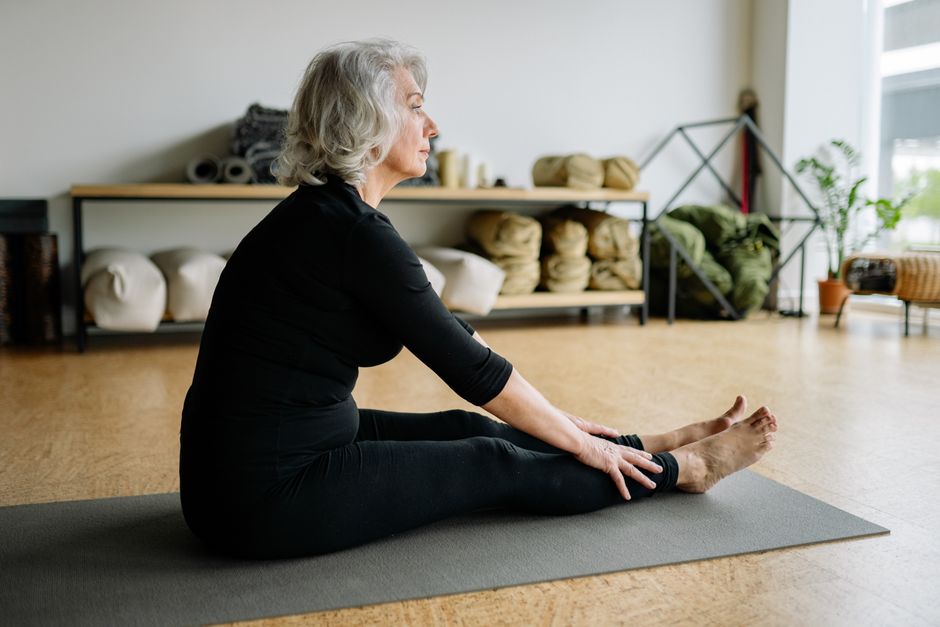
Here’s what I think gets skipped in most of these discussions: balance training and mobility work don’t count as “rest” in the way people assume, but they also don’t count as strength training. You can do balance work or gentle mobility sessions on your off days without compromising recovery from strength work. In fact, a 20-minute balance and stretching session on a Wednesday between your Monday and Friday strength days probably improves your outcomes overall. The research on this in older adults is genuinely encouraging, particularly around fall risk reduction.
One thing I’d push back on: the idea that “light days” of strength training, meaning very low load, high rep work, are truly restorative. I’ve seen this recommendation float around, and the evidence that it speeds recovery or reduces soreness is thin. If you need a light day, a walk and some hip mobility work will serve you better than a half-effort session with two-pound dumbbells.
The Signals Your Body Actually Sends
10 Stretching Exercises for 60 Year Olds: Mobility and Strength Training · Yes2Next on YouTube
Here’s something that took me an embarrassingly long time to communicate clearly to clients: soreness and fatigue are not the same signal, and conflating them leads people astray.
Delayed onset muscle soreness, that familiar ache that peaks around 24 to 48 hours after a new or challenging session, is generally fine to train through at moderate intensity. It’s uncomfortable but not a red flag. Fatigue that feels deeper than soreness, a general heaviness, disrupted sleep, a noticeable drop in how well you’re moving, that’s your body asking for more time. For older adults especially, this kind of systemic fatigue is a real sign that frequency or volume needs to come down.
Joint pain is a different category entirely. Aching muscles after a hard squat session is normal. Knee pain during or after squats is not something to train through without figuring out what’s causing it. I’ve seen too many people in their 60s and 70s push through joint pain because they heard “no pain no gain” and apply it to tissue that can’t absorb that philosophy. Please don’t do this.
A practical self-check I give clients: before each session, rate how you feel on a simple 1-to-10 scale (10 being great). If you’re regularly coming in at a 4 or below, something about your frequency, volume, or recovery outside the gym needs attention.
Special Considerations Nobody Talks About Enough
Medications matter here more than most fitness content acknowledges. Beta-blockers affect heart rate response, making perceived exertion a better guide than target heart rate numbers. Corticosteroids used long-term can affect muscle tissue and bone density in ways that change what “appropriate load” means. Blood thinners raise the stakes on any falls during training. If you’re on multiple medications, talking to your doctor about your training plan isn’t just a liability disclaimer, it’s genuinely useful information gathering.
Chronic conditions change the calculus too. Osteoporosis doesn’t mean you shouldn’t strength train; in fact, it’s one of the strongest arguments for it. But it changes which exercises are appropriate and may affect how quickly you should progress loading. Type 2 diabetes affects recovery and hydration in ways worth understanding. Rheumatoid arthritis means some days the answer to “should I train today?” is no, and that’s a valid answer.
I’ll be honest: the fitness industry is bad at acknowledging this stuff. There’s a commercial incentive to tell everyone they can and should do more, and that’s not always the right message.
Most older adults will do best starting at two days per week of full-body strength training, progressing to three days as their body adapts, with at least 48 hours between sessions. More than that is only warranted for those with significant training history and solid recovery. What matters more than hitting a specific number is consistency, appropriate load progression, and actually listening to what your body is telling you between sessions.
That last part sounds obvious. In practice, it’s where almost everyone needs the most help.
Photo: Ketut Subiyanto via Pexels
This article is for general informational purposes only and does not constitute medical or fitness advice. Consult your physician or a licensed physical therapist before starting a new exercise program, especially if you have existing health conditions.
Sources
- Ketut Subiyanto
- Nutramax Cosequin Senior Dog Soft Chews (60ct)
- Nutramax Cosequin DS Joint Supplement for Dogs (132ct)
- Certified Pet First Aid Kit with Guide Book
- for maintaining and building muscle mass in adults over 60
Disclosure: As an Amazon Associate, we earn a small commission from qualifying purchases at no extra cost to you. We only recommend products that genuinely support the topics covered in this article.
- Nutramax Cosequin Senior Dog Soft Chews (60ct) (~$32), Senior-specific Cosequin formula with added Omega-3s, designed for aging dogs with joint and immune health needs.
- Nutramax Cosequin DS Joint Supplement for Dogs (132ct) (~$36), The #1 veterinarian-recommended joint supplement brand, clinically studied for reducing joint pain in dogs.
- Certified Pet First Aid Kit with Guide Book (~$22), Certified pet first aid kit with step-by-step instructions, an essential item for every pet owner.