 Robert Davis
Most people guess the answer is 10,000 steps. Most people are wrong.
That number, 10,000 steps, traces back to a 1960s Japanese marketing campaign for a pedometer called the Manpo-kei, which literally translates to “10,000 steps meter.” It was never based on clinical research. And yet, for decades, it’s been repeated so confidently and so often that it’s become gospel. I spent years working with clients over 60 who were either demoralized because they couldn’t hit that target, or pushing themselves past what was safe trying to reach it. Both groups were operating on a myth.
Here’s what the actual numbers say.
What the Research Really Shows
A landmark study published in JAMA Internal Medicine tracked over 16,000 older women and found that mortality risk dropped significantly as daily step counts rose, but the benefits essentially plateaued around 7,500 steps per day. Not 10,000. The sweet spot for older adults appears to be somewhere between 6,000 and 8,000 steps, depending on your baseline fitness and health conditions.
More recently, a 2023 analysis in the European Journal of Preventive Cardiology pooled data from 17 studies covering more than 226,000 participants and found that even 3,967 steps per day was enough to begin reducing all-cause mortality risk. Every additional 1,000 steps reduced that risk by approximately 15%. What surprised me was the shape of that curve: the gains are steepest at the low end. Going from 2,000 to 4,000 steps matters more than going from 8,000 to 10,000.
The World Health Organization currently recommends that adults 65 and older get at least 150 minutes of moderate-intensity aerobic activity per week. Brisk walking counts. That works out to roughly 22 minutes per day, which for most people translates to somewhere around 2,500 to 3,500 steps. That’s the floor, not the goal.
I’ll be honest: I thought that sounded too easy when I first started paying attention to it. But then I actually mapped it against the clients I’d seen struggle. A 72-year-old woman recovering from a knee replacement isn’t going to hit 8,000 steps in week three of rehab. Telling her the target is 10,000 isn’t motivating. It’s discouraging.
What “Steps” Actually Measures (and Doesn’t)
Steps are a useful proxy, but they don’t capture intensity. Ten minutes of flat sidewalk strolling is not the same as ten minutes walking uphill, and your body knows the difference even if your step counter doesn’t. Research from the University of Massachusetts Amherst, using cadence tracking, found that walking at 100 steps per minute or faster corresponds to moderate intensity for most adults. That’s a pace where you can still talk but you’re working a little.
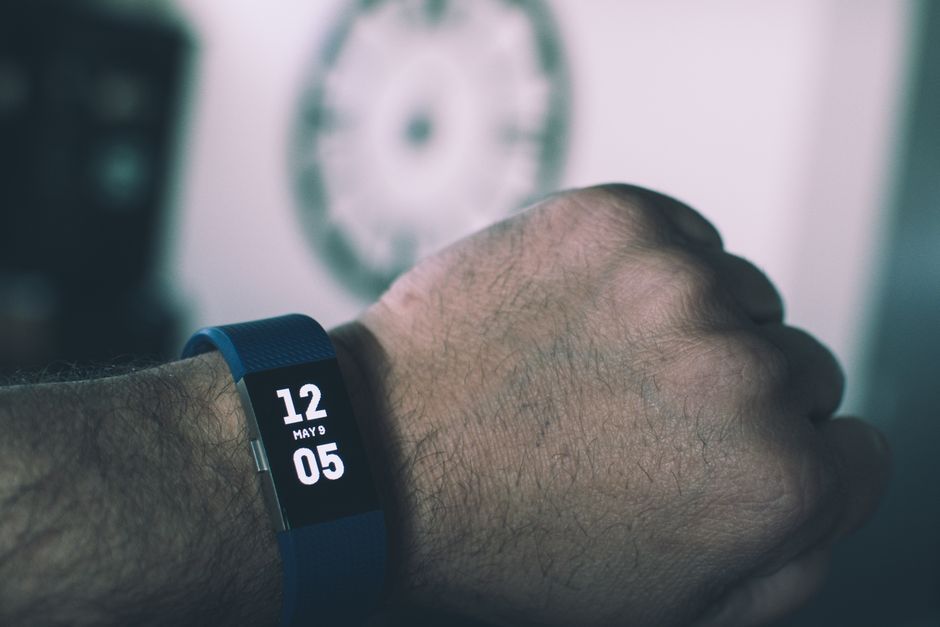
For my clients who use fitness trackers, I always ask them to check cadence, not just total steps. It changes the picture completely. I had one client, a 68-year-old retired teacher from Tucson, who was proud of his 9,000 daily steps. When we looked at his cadence data, nearly all of it was under 70 steps per minute, which is essentially a slow amble. He adjusted his pace for just 20 minutes of each walk, and three months later his resting heart rate had dropped 8 points. Same step count. Better result.
Step counters also miss swimming, cycling, and strength training entirely. If you’re doing two days of resistance training per week, which I’d argue is more important for fall prevention than walking mileage, those sessions don’t show up in your daily step total at all.
The Real Goal by Fitness Level
This is where I see the most confusion. “How many steps should I walk?” is actually two questions bundled together: how many steps to maintain what you have, and how many to actually improve. The targets are different.
| Fitness Level | Daily Step Target | Notes |
|---|---|---|
| Sedentary / recovering | 2,000 to 3,000 | Focus on consistency, not distance |
| Lightly active | 4,000 to 5,500 | Matches WHO minimum intent |
| Moderately active | 6,000 to 7,500 | Where most mortality benefit peaks |
| Very active / athletic | 8,000 to 10,000+ | Beneficial if you’re conditioned for it |
| Post-surgical / cardiac rehab | As prescribed | Always defer to your care team here |
That “as prescribed” row matters more than it looks. I’ve watched well-meaning relatives push a post-hip-replacement parent to “get more steps in” when their orthopedist had given them a specific protocol. More steps is not always better. This is genuinely a situation where a conversation with your doctor or physical therapist about your specific starting point is worth more than any general recommendation.
Building Up Without Breaking Down
The number one mistake I see: trying to jump straight to a target instead of building toward it. The research on injury risk in older adults is pretty clear that rapid increases in walking volume, especially on hard surfaces, correlate with overuse injuries in the knees and feet. A 10% weekly increase in total walking time is the guideline most sports medicine practitioners use, though I’ll admit that figure comes largely from running injury literature applied to walking by analogy, not from dedicated senior walking studies.
Here’s what a realistic ramp-up looks like for someone starting from a low base:
Starting at 2,000 steps per day → Adding 300 to 400 steps each week → Reaching 5,000 to 6,000 steps per day in approximately 10 to 12 weeks → Sustained at that level, research suggests a meaningful reduction in cardiovascular and all-cause mortality risk.
The detail that only comes from actually doing this work: soreness in the first two to three weeks almost always shows up in the shins and the outer hips, not the knees or feet. New walkers expect knee pain. What catches them off guard is anterior tibialis tightness. I always tell clients to watch for that, because if they’re only waiting on their knees to protest, they miss an early warning sign.
Terrain, Surface, and Timing
I’ll be honest, this section gets almost no attention in mainstream fitness writing, and it should get a lot more.
Walking on grass or packed dirt is meaningfully different from walking on concrete. The impact forces on concrete are harder on joints over time, and for older adults with osteoarthritis or any history of stress fractures, surface matters. A treadmill at a 1% incline is widely considered the closest match to outdoor flat-ground walking in terms of energy expenditure, and it removes the curb-hopping and uneven pavement variables that contribute to falls.
Speaking of falls: the CDC reports that falls are the leading cause of injury-related death among adults 65 and older, with over 36,000 deaths annually as of recent data. Walking is one of the best ways to reduce fall risk by improving balance and leg strength, but only if you’re walking in conditions that don’t themselves create fall hazards. Wet pavement, loose gravel, and distracted walking (looking at your phone) are real risks. One of my clients, a 74-year-old in Phoenix, stopped her evening walks during summer because of heat. Smart call. Heat-related illness is underappreciated as a risk for older walkers.
Timing is the research here is genuinely mixed. Some studies suggest morning walks produce better glycemic control for people with type 2 diabetes. Others find no significant difference by time of day for general cardiovascular outcomes. My practical take: the best time to walk is the time you’ll actually do it consistently.
Sources
- Paluch AE, et al. (JAMA Internal Medicine, 2021): Prospective study of over 16,000 women linking daily step counts to mortality, finding benefit plateau around 7,500 steps.
- Banach M, et al. (European Journal of Preventive Cardiology, 2023): Meta-analysis of 17 studies/226,000+ participants on step counts and all-cause/cardiovascular mortality.
- World Health Organization: Global guidelines on physical activity and sedentary behaviour for adults aged 65 and older.
- Centers for Disease Control and Prevention: Current data on falls as leading cause of injury-related death in adults 65+, including annual fatality figures.
- Tudor-Locke C, et al. (International Journal of Behavioral Nutrition and Physical Activity): Research on cadence thresholds and their correspondence to moderate-intensity walking.
FAQ
Does walking every day actually improve balance, or is that a myth?
Walking does improve balance to some degree, primarily by strengthening the ankles, calves, and hip stabilizers. But it’s not the most efficient balance training available. Adding standing single-leg exercises or tai chi twice a week produces significantly faster improvements in balance metrics than walking alone.
Is it better to walk all at once or break it into smaller chunks?
For cardiovascular benefit, research suggests that accumulating steps in bouts of at least 10 minutes is preferable to scattered movement throughout the day, though even short walks are better than sitting. If your joints make longer sessions uncomfortable, three 10-minute walks is a genuinely solid alternative to one 30-minute walk.
Should I use a cane or walking poles?
Walking poles (often called Nordic walking poles) have solid evidence behind them for older adults: a 2019 study in the Journal of Geriatric Physical Therapy found they increased upper-body muscle activation by up to 22% compared to regular walking and improved stability. If you have any history of falls or significant balance issues, they’re worth considering, not as a sign of limitation but as a tool that makes walking both safer and harder.
How do I know if I’m walking fast enough to get a real benefit?
The “talk test” is the easiest field method: you should be able to carry on a conversation but feel slightly breathless doing it. If you can sing comfortably, pick up the pace. If you can’t complete a sentence, slow down. On a step counter with cadence tracking, aim for 100 steps per minute or faster during your intentional walking time.
What if my knees or hips hurt too much to walk that far?
Pain is a signal, not something to push through. A physical therapist can assess whether your pain is mechanical (and potentially addressable through gait changes or strengthening work) or a sign of something that needs medical attention. Water walking in a pool produces similar cardiovascular benefits with a fraction of the joint impact, and as of July 2026, many community recreation centers offer senior aquatic programs for under $40 a month. It’s a genuinely underused option.
Photo: Roman Biernacki via Pexels
This article is for general informational purposes only and does not constitute medical or fitness advice. Consult your physician or a licensed physical therapist before starting a new exercise program, especially if you have existing health conditions.