 Robert Davis
Most people assume the answer involves five days a week of sweating it out, or they’ve heard “30 minutes a day” so many times it’s become background noise. I’ll be honest: when I started looking seriously at the actual research on exercise volume for adults over 60, I was surprised by how much of the popular advice either undershoots what’s possible or overshoots what’s safe for someone just getting started. The real picture is messier, more interesting, and ultimately more encouraging than the tidy soundbites you see on health websites.
Let me tell you what I actually found.
The short version is this: yes, there are official guidelines, and they’re a reasonable starting point. But the type of exercise matters as much as the amount, the research on strength training for older adults has exploded in the last decade with findings that would genuinely surprise most general practitioners, and “how much” turns out to be a question with a very different answer depending on whether you’re 62 and fit or 78 and recovering from a hip replacement.
- Adults 65+ need at least 150 minutes of moderate aerobic activity per week, per CDC guidelines.
- Strength training at least 2 days per week is non-negotiable for preserving muscle mass after 60.
- Balance exercises (like single-leg stands) dramatically reduce fall risk and are often completely skipped.
- Starting with 10-minute sessions is clinically valid, you don't need to hit 30 minutes right away.
- More is not always better: recovery time increases with age, and overtraining injuries are common in motivated beginners.
What the Guidelines Actually Say (And What They Leave Out)
The current physical activity guidelines from the U.S. Department of Health and Human Services, which as of 2026 remain the standard most clinicians reference, call for 150 to 300 minutes of moderate-intensity aerobic activity per week, or 75 to 150 minutes of vigorous activity. They also specify muscle-strengthening activities on two or more days per week. For adults with balance concerns, they add multicomponent physical activity that includes balance training.
That’s the official answer. Here’s what it leaves out.
Those guidelines were written to be achievable across a huge population range. They’re not optimized for your particular situation. A 65-year-old former athlete and a 70-year-old with osteoporosis and mild heart failure are both reading the same recommendation, and treating them identically would be a mistake. The guidelines acknowledge this in footnotes that most people never read: adults with chronic conditions should consult their doctor and do as much as their condition allows.
What surprised me was how consistently the research shows that any increase from a sedentary baseline produces significant health benefits. A 2019 study published in JAMA Network Open found that adults 65 and older who went from completely sedentary to just 48 minutes of light-to-moderate activity per week reduced all-cause mortality risk meaningfully, well below the 150-minute threshold. The dose-response curve is steepest right at the bottom. If you’re doing nothing, doing a little delivers enormous returns.
The Four Types You Actually Need
Here’s where I see the biggest gap between what’s recommended and what most older adults actually do. The guidelines describe four distinct categories of exercise, and the vast majority of people I’ve worked with focus almost entirely on one (usually walking) and ignore the other three.
Aerobic exercise is the one everyone knows. Walking, swimming, cycling, dancing. The 150-minute weekly target lives here. Moderate intensity means you can talk but not sing. Vigorous means you can say a few words but you’re working hard.
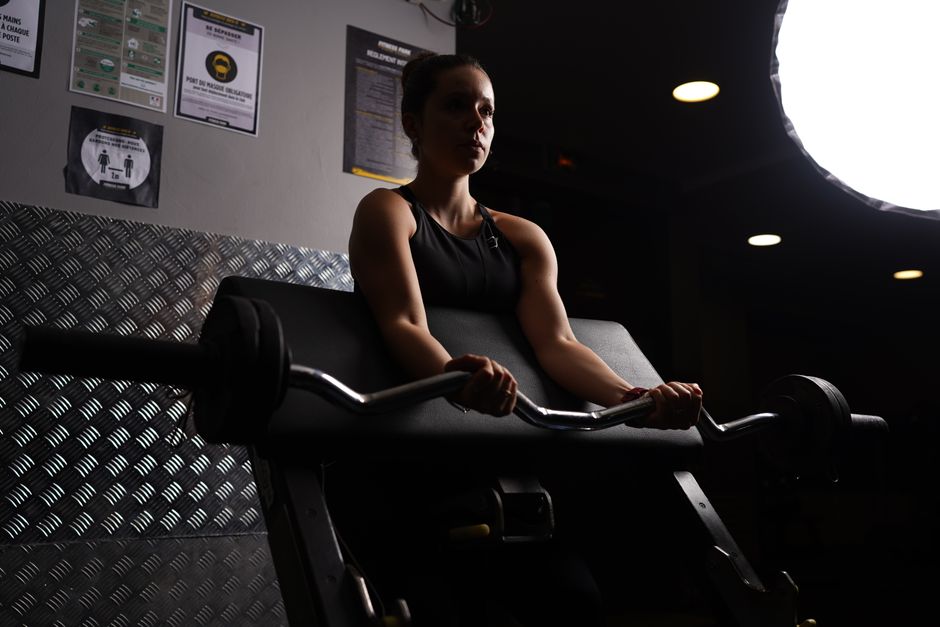
Strength training is the one most people skip, which is a genuine problem. After 60, adults lose roughly 1 to 2 percent of muscle mass per year without resistance training (a process called sarcopenia). Losing muscle isn’t just a cosmetic issue: it directly affects your ability to get up from a chair, carry groceries, and recover from illness. I worked with a client, James, a 71-year-old retired engineer from Tucson, who had been walking 4 miles a day for three years but couldn’t do a single sit-to-stand without pushing off the armrests. His cardiovascular fitness was fine. His leg strength was that of someone a decade older. Two days a week of basic resistance work, bodyweight squats, resistance band rows, step-ups onto a 6-inch platform, changed that completely inside 12 weeks.
Balance training is the one that could literally save your life. Falls are the leading cause of injury-related death among adults over 65 in the U.S. The research on simple balance exercises is remarkably consistent: things like single-leg stands, tandem walking (heel-to-toe in a line), and tai chi reduce fall risk by 20 to 30 percent in most trials. These take 10 minutes. They require no equipment. They’re almost universally neglected.
Flexibility and mobility work is the fourth category, and the research here is genuinely mixed. Stretching for its own sake doesn’t have strong evidence behind it for older adults. What does have evidence is maintaining functional range of motion, specifically the hip flexors, thoracic spine, and ankles, because restrictions in those areas directly affect walking gait and fall risk. I’d prioritize mobility over static stretching if you’re choosing.
A Realistic Weekly Framework
Rather than parsing guidelines abstractly, here’s a concrete breakdown that reflects what I’ve seen work for healthy adults in their 60s and 70s who are starting from a low baseline.
| Day | Activity | Duration | Intensity |
|---|---|---|---|
| Monday | Brisk walk | 25-30 min | Moderate |
| Tuesday | Strength (upper + lower body) | 20-30 min | Moderate |
| Wednesday | Light walk or rest | 20 min or off | Low |
| Thursday | Brisk walk + balance exercises | 30 min + 10 min | Moderate |
| Friday | Strength (full body or alternate) | 20-30 min | Moderate |
| Saturday | Longer walk, swim, or bike | 40-45 min | Moderate |
| Sunday | Rest or gentle movement | As desired | Low |
That adds up to roughly 155 to 175 minutes of aerobic activity, two strength sessions, and two rounds of balance work. It also builds in recovery, which is something I can’t stress enough. Recovery capacity genuinely decreases with age. A 40-year-old can lift hard on Monday and do it again Wednesday. Many 70-year-olds need 48 to 72 hours between strength sessions, and ignoring that leads to joint irritation, fatigue, and eventually giving up.
If this looks like too much to start, cut everything in half. Seriously. Ten-minute walks count. The body doesn’t care that you split 30 minutes into three 10-minute segments. A small study published in the Journal of the American Geriatrics Society in 2018 confirmed that accumulated short bouts of activity produce similar cardiovascular benefits to continuous bouts of the same total duration.
The Strength Training Question Most People Get Wrong
I thought for years that older adults needed to stay in the high-rep, low-weight range to stay safe. That’s what I was taught early in my training. What changed my mind was getting more serious about the actual literature on muscle physiology, specifically a body of work coming out of researchers like Dr. Stuart Phillips at McMaster University.
The evidence is pretty clear now: moderate-to-heavy resistance training, done with proper form, is safe for healthy older adults and produces substantially better strength gains than the “light weights, lots of reps” approach that well-meaning trainers have been pushing for decades. You don’t need to be competitive powerlifting at 72. But working in the 8 to 12 rep range at a weight that genuinely challenges you in the last two or three reps is more effective than doing 20 reps with a band that offers almost no resistance.
The caveat: form matters enormously, and this is where self-guided YouTube programs can get people into trouble. A free weight squat done with the knees caving inward under load stresses the knee joint in ways that accumulate into real injury over time. Working with a trainer for even four to six sessions to establish movement patterns is worth whatever it costs. In most metro areas, a certified personal trainer runs $60 to $120 per session. That’s not nothing. But four sessions of form coaching is a different investment than committing to ongoing training, and it’s money that pays dividends for years.
How Health Conditions Change the Math
There’s a real scenario that plays out constantly: an older adult gets cleared by their cardiologist, starts an exercise program, and hits a wall because nobody explained that their beta-blocker medication suppresses heart rate in ways that make the traditional “target heart rate zone” calculations meaningless. Heart rate-based intensity monitoring genuinely does not work for people on beta-blockers. Rate of perceived exertion, the simple 0-10 scale of how hard you feel like you’re working, is more reliable in that situation.
For osteoporosis specifically: high-impact activities like jogging and stair climbing are actually beneficial for bone density in people who don’t already have significant fracture risk. Counterintuitive, but the mechanical loading stimulates bone formation. The concern is falls during exercise, not impact per se. For someone with a T-score below -2.5 (severe osteoporosis), any new exercise program should be cleared by a physician before starting, particularly anything involving forward spinal flexion like sit-ups or certain yoga poses, which can increase vertebral fracture risk.
Arthritis is a different case. One of the most persistent myths I run into is that people with arthritis should avoid exercise to protect their joints. The evidence runs the other direction. Low-impact strength training and aerobic activity reduce joint pain and stiffness in most forms of osteoarthritis. The key is avoiding high-impact loading during flares, not avoiding movement altogether.
Sources
- U.S. Department of Health and Human Services Physical Activity Guidelines for Americans, 2nd edition: Official federal guidelines covering recommended activity volumes for all age groups, including adults 65 and older.
- Piercy KL et al., “The Physical Activity Guidelines for Americans,” JAMA (2018): Peer-reviewed companion to the HHS guidelines with detailed evidence review on dose-response relationships.
- Doherty TJ, “Invited Review: Aging and sarcopenia,” Journal of Applied Physiology (2003): Foundational paper on age-related muscle loss rates and mechanisms, still widely cited.
- Sherrington C et al., “Exercise for preventing falls in older people living in the community,” Cochrane Database of Systematic Reviews (2019): Meta-analysis of over 100 trials finding that balance and functional exercise reduces falls by approximately 23%.
- Liu CJ and Latham NK, “Progressive resistance strength training for improving physical function in older adults,” Cochrane Database of Systematic Reviews (2009): Systematic review supporting moderate-to-heavy resistance training in older adults.
Photo: Cara Denison via Pexels
This article is for general informational purposes only and does not constitute medical or fitness advice. Consult your physician or a licensed physical therapist before starting a new exercise program, especially if you have existing health conditions.