 Helen Santos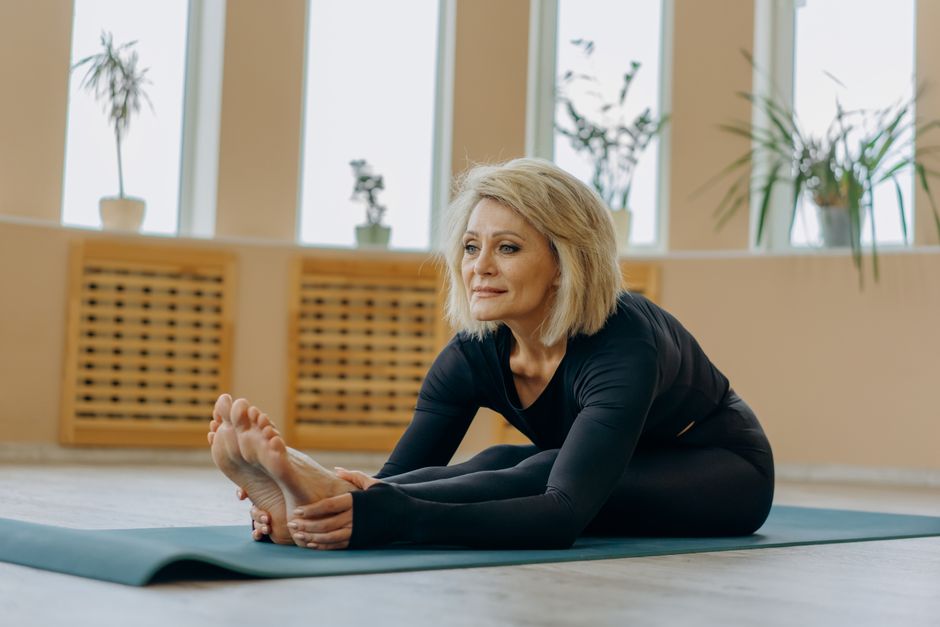
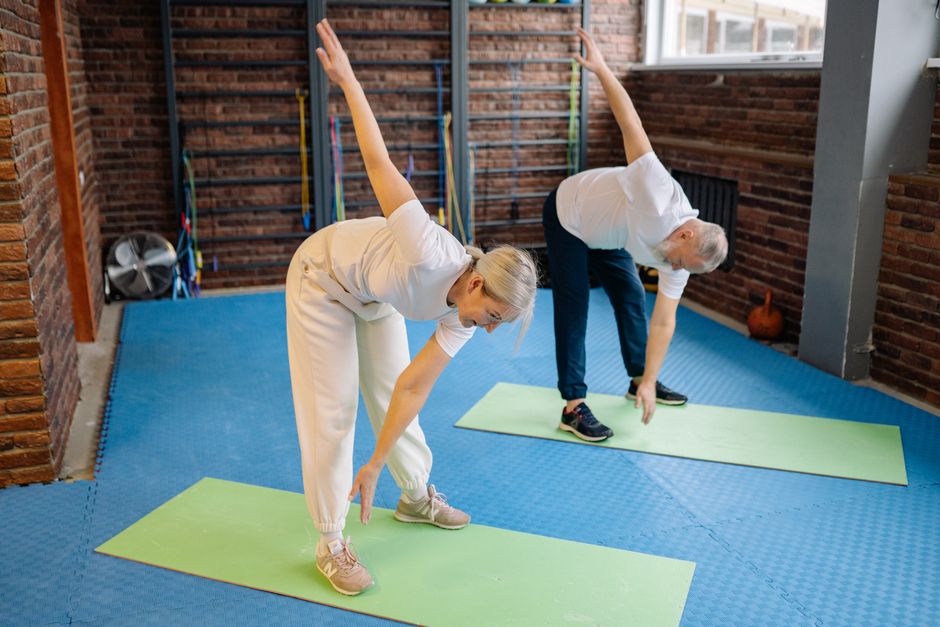
Most people think stretching is the safe part of fitness. The warm-up. The part where nothing bad happens. I used to think that too, until I watched a 68-year-old client nearly topple during a standing quad stretch she’d pulled from a magazine. She was healthy, active, and completely blindsided by how fast her balance went. That moment rewired everything I thought I knew about flexibility work for older adults.
Here’s what hit me: stretching isn’t automatically gentle. And “gentle” doesn’t mean useless. Getting those two things right is basically the entire game.
Why Flexibility Changes After 60 (And What You Can Actually Do About It)
The stiffness that shows up after 60 isn’t just muscles getting “tighter.” Multiple things are happening simultaneously. Tendons and ligaments lose water content and elasticity over time. Fascia, the connective tissue wrapping around everything, becomes less pliable. And if you’ve spent decades at a desk or on long commutes, certain muscle groups have been compressed into the same position so long they’ve essentially reshaped themselves around it.
Take the hip flexors. After years of sitting, they adaptively shorten. Then you stand up and try to walk with a full stride, or bend down to pick something up, and they resist. Most people call that “just getting older.” Some of it is. But a real chunk of it is reversible with consistent, thoughtfully-designed stretching.
The research is genuinely encouraging, though I’ll be straight with you: it’s not as clean as the fitness industry presents it. A 2016 review in the Journal of Aging Research found that regular flexibility training improved functional range of motion in adults over 60, with the biggest gains in the hips and shoulders. But the studies varied wildly in protocol, frequency, and how they measured results. What does seem consistent: stretching works, you need to do it regularly, and you need to stick with it long enough to see actual change (weeks, not days).
The One Rule That Overrides Everything Else
Before any technique, any routine, any specific stretch: no pain.
I don’t mean “push through mild discomfort.” I mean the instant you feel a sharp sensation, pinching, or joint pain, you back off. Stretching should feel like a mild to moderate pull in the muscle itself, not in the joint. If you’re feeling it in your knee, hip socket, or shoulder joint, something’s wrong with either your position or how deep you’re going.
This matters more after 60 for concrete reasons. Tissues are more vulnerable to micro-tears at this stage. Recovery takes longer. And because older adults often have some osteoporosis, arthritis, or other underlying joint changes, a stretch that’s totally fine for a 35-year-old can cause real damage when applied carelessly to a 70-year-old.
Here’s one practical rule I give every client: the “3-second rule.” Hold the initial stretch for three seconds. If the sensation softens or stays the same, you’re probably fine to continue. If it intensifies, back off. Your nervous system is trying to tell you something.
Before you start any new exercise program, including stretching, talk to your doctor or physical therapist. This is especially true if you have osteoporosis, a recent joint replacement, balance issues, or any unmanaged cardiovascular conditions. A professional can flag stretches you should avoid or modify.
A Practical Gentle Stretching Routine You Can Start Today
Reduce Hip Pain Or Tight Hips | Seated Stretches For Seniors And Beginners | 12 Min · Senior Fitness With Meredith on YouTube
This routine works for most healthy adults over 60, but “most” isn’t “all.” Use your judgment, listen to your body, and modify anything that doesn’t feel right.
What you’ll need: A sturdy chair, a mat or carpeted surface, and 15 to 20 minutes.
When to do it: After light activity like a short walk is ideal. Never stretch cold right after waking up, before your muscles have had a chance to warm up.
Hold each stretch for 20 to 30 seconds. Do twice per side.
1. Seated Chest Opener Sit tall, feet flat. Clasp your hands behind your back (or grip the back of the chair if that’s too much). Gently squeeze your shoulder blades together and lift your chest toward the ceiling. You’ll feel a stretch across the front of your shoulders and chest. This directly counteracts the forward rounding that builds up from decades of desk work or driving.
2. Seated Hip Flexor Stretch Sit near the edge of a sturdy chair. Slide your right leg back so your foot is behind you, top of foot resting on the floor or toes touching down. Sit tall and gently press your hips forward. You should feel a pull at the front of your right hip. This one’s a revelation for people with chronic low back tightness. Repeat on the left.
3. Seated Hamstring Stretch Sit tall, extend your right leg straight out with your heel on the floor. Keep your back straight (don’t round your spine) and hinge slightly forward at your hips until you feel a pull along the back of your thigh. Most people try to touch their toes and end up stretching their lower back instead. Keep the spine long. That’s what actually works.
4. Standing Calf Stretch (at the wall) Stand facing a wall, hands resting on it for support. Step your right foot back about 18 inches. Keep your right heel flat and your back knee straight, then lean your weight gently forward. Feel the stretch in the back of your lower leg. Calf flexibility matters more than most realize: it directly affects your ankle stability and your ability to walk safely on uneven terrain.
5. Doorway Neck Stretch Sit or stand tall. Drop your right ear toward your right shoulder gently. If you want more sensation, place your right hand lightly on the left side of your head, adding just the weight of your hand (no pulling). Hold, breathe, release. Switch sides. Neck flexibility matters for looking over your shoulder while driving, checking blind spots, and maintaining balance.
6. Floor Hip Rotation (optional, if getting to the floor is comfortable) Lie on your back with both knees bent, feet flat. Let both knees fall slowly to the right, stopping well before they touch the ground if that’s your limit. Hold, breathe, return to center. Repeat left. This gently rotates the lumbar spine and opens the outer hips. If getting down to the floor is difficult or getting back up feels unsafe, skip this until you’ve worked with a trainer or therapist on floor transitions.
Static vs. Dynamic Stretching: Which One Do Seniors Actually Need?
I get this question constantly, and the honest answer is both, but at different times.
| Type | What It Is | Best For Seniors When… | Caution |
|---|---|---|---|
| Static Stretching | Hold a position for 20-60 seconds | After exercise or as a standalone routine | Don’t hold longer than 60 sec; avoid on truly cold muscles |
| Dynamic Stretching | Controlled, slow movements through a range of motion | Before activity as a warm-up | Keep movements slow and controlled; not the same as ballistic |
| Ballistic Stretching | Bouncing or forcing range | Not recommended | High injury risk for older adults; avoid |
The routine above uses static stretching, which is the right tool for improving long-term flexibility and relaxing your nervous system. Dynamic stretching, like slow leg swings or gentle torso rotations, works better as a pre-activity warm-up because it raises tissue temperature without the sustained length that can temporarily reduce muscle power.
What surprised me digging into the research: static stretching right before strength training can actually reduce muscle output for up to an hour afterward. For older adults trying to build strength, that timing matters. Stretch after strength work, not before.
Breathing, Mindset, and the Nervous System Connection
This might sound a little soft, but stick with me, because it’s biomechanically important.
When you hold a stretch and your muscle starts to resist, your nervous system is often a bigger factor than the muscle itself. The stretch reflex, a protective mechanism that fires when a muscle is lengthened too quickly or too far, will cause muscles to contract and resist. Slow breathing directly downregulates that reflex.
Here’s what I tell clients: inhale before you enter the stretch, then exhale slowly as you move into it. Keep breathing throughout. If you catch yourself holding your breath, you’ve probably gone too deep.
The mindset part connects here too. People who approach stretching as something to “push through” tend to breathe poorly, go too far, and get less benefit than people who treat it as an exploration. What’s the edge of your range today? Not last week, not what your neighbor can do. Today. That curiosity-based approach isn’t just kinder. It actually produces better results because you stay below the threshold that triggers the protective reflex.
Flexibility isn’t something you either have or don’t have. It’s a physical quality you can genuinely improve at any age, with the right approach and enough patience. I’ve watched clients in their 70s make real gains in hip mobility, shoulder range, and overall ease of movement. It doesn’t require an hour a day or any special equipment. It requires showing up regularly, staying honest about what your body is telling you, and resisting the urge to rush. Start with the routine above, give it six weeks, and I think you’ll surprise yourself.
This article is for general informational purposes only and does not constitute medical or fitness advice. Consult your physician or a licensed physical therapist before starting a new exercise program, especially if you have existing health conditions.
Sources
- Nutramax Cosequin Senior Dog Soft Chews (60ct)
- Nutramax Cosequin DS Joint Supplement for Dogs (132ct)
- is genuinely encouraging
Disclosure: As an Amazon Associate, we earn a small commission from qualifying purchases at no extra cost to you. We only recommend products that genuinely support the topics covered in this article.
- Nutramax Cosequin Senior Dog Soft Chews (60ct) (~$32), Senior-specific Cosequin formula with added Omega-3s, designed for aging dogs with joint and immune health needs.
- Nutramax Cosequin DS Joint Supplement for Dogs (132ct) (~$36), The #1 veterinarian-recommended joint supplement brand, clinically studied for reducing joint pain in dogs.