 James Cooper
Most articles about morning exercise for seniors show a 70-year-old doing yoga on a beach at sunrise. Beautiful photo. Useless guidance.
What you actually need is something you can do in your living room, before coffee if necessary, that doesn’t require getting down on the floor and wondering how you’re going to get back up. I’ve worked with adults over 60 for more than a decade, and the gap between what fitness media prescribes and what real people can actually do safely at 7 AM is embarrassing.
Let me close that gap.
Why Morning Specifically (and Why the Advice Gets This Wrong)
Here’s the thing most fitness content skips: older adults tend to be stiffest in the morning. Synovial fluid needs time and movement to redistribute through the joints. Muscles that haven’t moved since 10 PM the night before aren’t ready to be pushed. This isn’t weakness or aging poorly. It’s basic physiology, and it applies to everyone.
The mistake I see constantly is recommending the same workout intensity regardless of the time of day. A HIIT video labeled “senior-friendly” is not morning-appropriate just because it shows someone with gray hair doing it. A 2019 study published in the British Journal of Sports Medicine found that musculoskeletal injury risk is meaningfully higher in the first hour after waking, particularly for adults over 55, compared to mid-morning exercise at equivalent intensity. The joints need a warm-up phase that most programs skip entirely.
The good news: a genuinely gentle morning routine, done consistently, produces real results. Not despite being gentle. Because of it.
The Actual Routine: What to Do, in What Order
I’m going to give you a 20-to-25-minute routine. No floor work unless I flag it as optional. No equipment required, though I’ll note where a chair or resistance band can upgrade things.
Start with 3-5 minutes of seated joint circles. Sit on the edge of a firm chair (not a soft couch). Roll your ankles five times each direction, then your wrists, then your shoulders. Finish with slow neck rotations, ear toward shoulder rather than full circles, which can strain the cervical spine. This sounds almost insultingly simple. It isn’t. You’re literally warming the joints before loading them.
Seated marching: 2 minutes. Still in the chair, alternate lifting each knee as high as comfortably possible. Arms swing opposite to the leg. This gets your heart rate gently rising and activates the hip flexors, which are almost universally tight in adults who spend time sitting. One of my clients, a retired school principal named Dorothy, told me she thought this was too easy to bother with. Three weeks in, she said climbing her porch stairs felt noticeably different.
Chair-assisted standing: 10 repetitions. Stand up from the chair slowly, pause fully upright, then sit back down with control. Do not plop. This is functionally a squat, and it might be the single most important exercise in this entire routine. Falls often happen during transitions, standing from a chair, stepping out of a car, getting off a toilet. Training these exact movements is specific and protective. Aim for control over speed.
Wall push-ups: 10-15 repetitions. Stand arm’s length from a wall, hands at shoulder height. Lower your chest toward the wall, elbows at roughly 45 degrees from your sides, then press back. For most people this is dramatically easier than a floor push-up, which is exactly the point. Upper body pressing strength has a direct relationship to independence in daily life.
Standing calf raises: 15 repetitions. Hold the back of the chair lightly (not tightly, you’re not death-gripping it). Rise up on your toes, hold one second, lower slowly. Calf strength and ankle stability are underrated balance factors. Seriously underrated. A 2020 systematic review in Age and Ageing identified calf and ankle weakness as among the top modifiable risk factors for falls in community-dwelling older adults.
Hip hinge practice: 10 repetitions. Stand with feet hip-width apart, slight bend in knees. Push your hips back like you’re trying to close a car door with your backside, keeping your back straight. This teaches the hinge pattern that protects your lower back every time you bend to pick something up. Most people round their back because they’ve never been shown the alternative.
Standing balance hold: 30 seconds each side. Hold the chair if needed, work toward fingertip contact only. Stand on one leg. That’s it. This is where the real balance training happens, and it’s non-negotiable if fall prevention matters to you. Which it should, because falls are the leading cause of injury-related death among adults over 65, according to the CDC. Current statistics as of 2026 show roughly 36 million falls reported annually in this population in the U.S. alone.
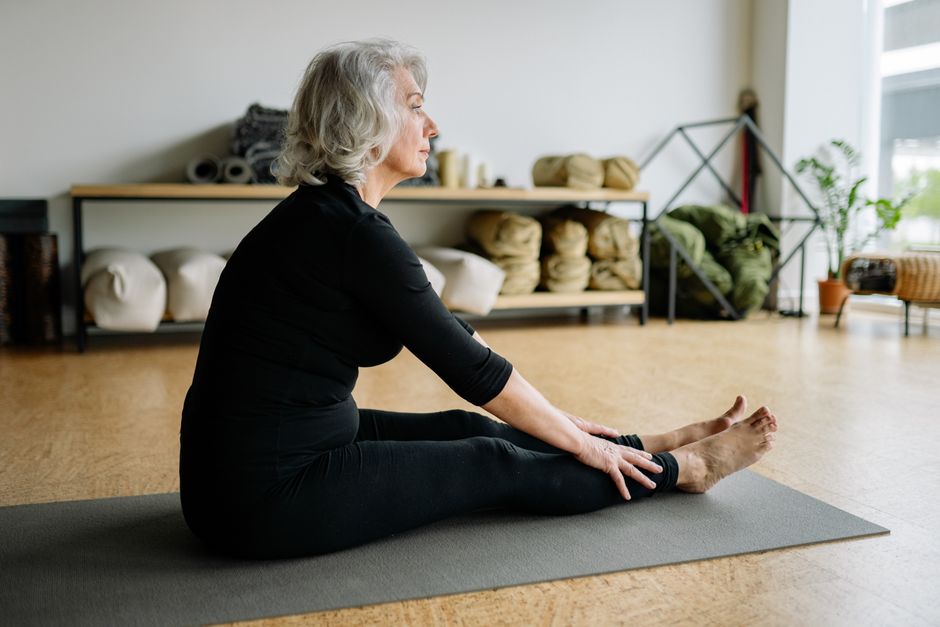
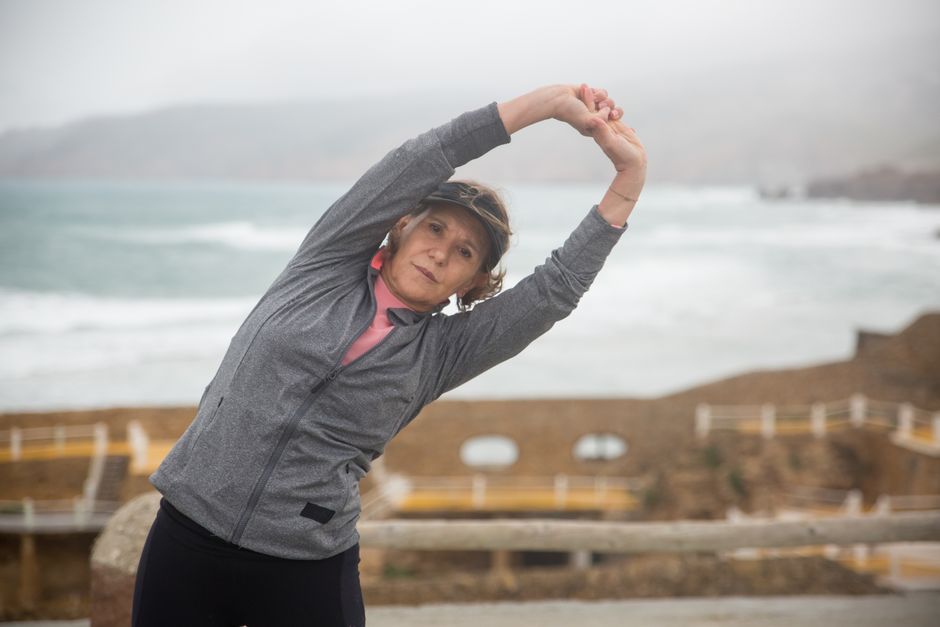
Finish with 3-4 minutes of gentle stretching. Seated hamstring stretch (straighten one leg, hinge forward slightly at the hip). Chest opener (arms wide, breathe in). Neck and shoulder rolls. Hold each for 20-30 seconds. Breathing slowly. Not trying to increase range of motion here, just settling the nervous system before you start your day.
The Chair Is a Tool, Not a Crutch
There’s a persistent idea, and I’ve heard it from clients and read it in fitness forums, that using a chair for balance support means you’re cheating or taking the easy way out. I want to push back on this directly.
Using a chair correctly during balance training actually teaches your nervous system more effectively than wobbling through an unsupported movement with poor form. The goal is to gradually reduce reliance on the support as stability improves, from full grip, to fingertip contact, to hovering the hand nearby, to free-standing. That progression can take weeks or months, depending on where someone starts. Both timelines are fine.
I had a client, a 72-year-old retired electrician named Frank, who refused the chair out of pride. His standing balance attempts looked like a drunk at a bowling alley. When he finally accepted the chair and worked through the proper progression, he was doing 45-second single-leg stands unassisted within eight weeks. Pride costs you progress.
Frequency, Progression, and the Question Everyone Asks
How often? Four to five mornings a week produces meaningfully better results than two or three. Not because three is useless, but because balance and strength adaptations in older adults respond well to higher frequency at lower intensity. This is actually different from younger adults, where you might program more rest between sessions. The loads here are gentle enough that recovery isn’t a limiting factor for most people.
Progression matters, though, and most people underestimate when they’re ready for it. A rough benchmark: when you can complete the full routine without pausing to rest and with good form throughout, add one repetition to each exercise or add a second set to one movement. Don’t try to add both at once.
Here’s a worked example of what reasonable progress looks like:
Starting point: 67-year-old woman, sedentary for several years, can’t hold single-leg balance for more than 3 seconds without grabbing the chair.
Action: Followed this routine five mornings per week for 12 weeks. Used the chair for all balance work initially.
Result: At 12 weeks, single-leg hold reached 28 seconds unassisted. Chair-to-stand repetitions increased from 10 to 18 per set with full control. Self-reported confidence on stairs went from 4/10 to 8/10.
That’s not a dramatic transformation story. It’s what consistent, appropriate work actually produces. Real results, not a miracle.
What to Skip (and Why Those Exercises Show Up Anyway)
A few movements appear constantly in “senior workout” content that I’d steer you away from, at least first thing in the morning.
Full sit-ups or crunches. Spinal flexion under load when the discs are still relatively hydrated from horizontal sleep is not the time. If core work matters to you (it does), seated abdominal compressions or standing core bracing are far safer morning options.
Deep lunges. The range of motion required stresses the knee and hip in ways that cold joints don’t appreciate. If you want to include lunges later, save them for mid-morning when you’ve been moving for an hour.
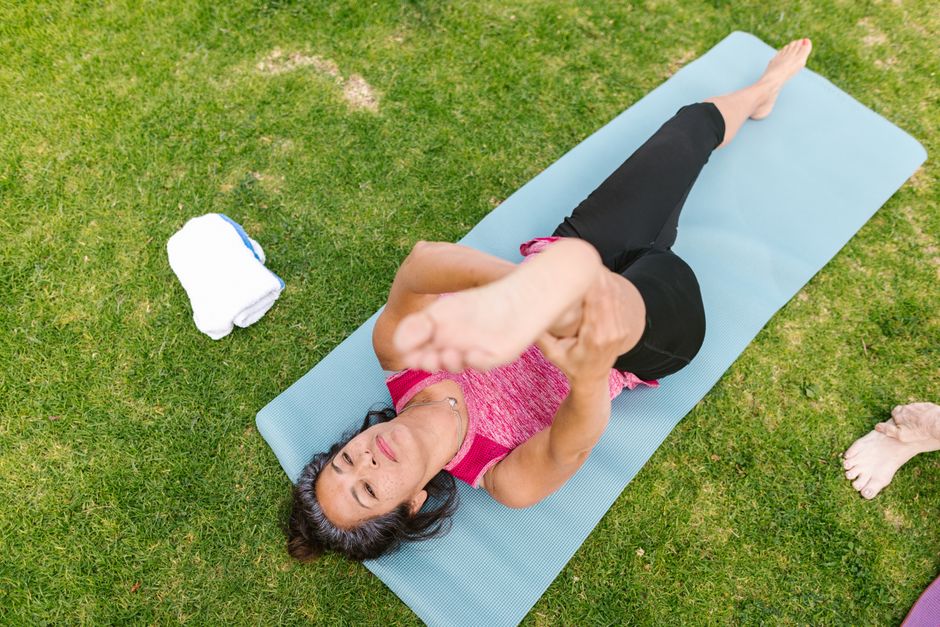
Any exercise that requires lying on the floor unless you have a reliable way to get back up and it doesn’t stress you out. The anxiety of being stuck on the floor is real, it affects breathing and effort, and it’s not worth it for a morning routine. There are seated and standing alternatives for everything.
Overly complex balance challenges marketed as beginner-friendly. Standing on a folded yoga mat or wobble board with no support when you’re still building basic balance is a fall waiting to happen. I’ve seen this recommended in workout programs currently sold online (as of 2026), and it frustrates me every time.
Sources
- British Journal of Sports Medicine (2019): Study on time-of-day variation in musculoskeletal injury risk, with specific findings for adults over 55.
- Age and Ageing (2020): Systematic review identifying calf and ankle weakness as modifiable fall-risk factors in community-dwelling older adults.
- Centers for Disease Control and Prevention (CDC): STEADI (Stopping Elderly Accidents, Deaths & Injuries) program data on falls among adults 65+, including annual incidence statistics.
- American College of Sports Medicine (ACSM) Position Stand on Exercise and Physical Activity for Older Adults: Evidence-based frequency and intensity guidelines for strength and balance training.
- National Institute on Aging, “Exercise & Physical Activity” resource guide: Practical recommendations for older adults beginning or maintaining an exercise routine.
Photo: Kampus Production via Pexels
This article is for general informational purposes only and does not constitute medical or fitness advice. Consult your physician or a licensed physical therapist before starting a new exercise program, especially if you have existing health conditions.