 Helen Santos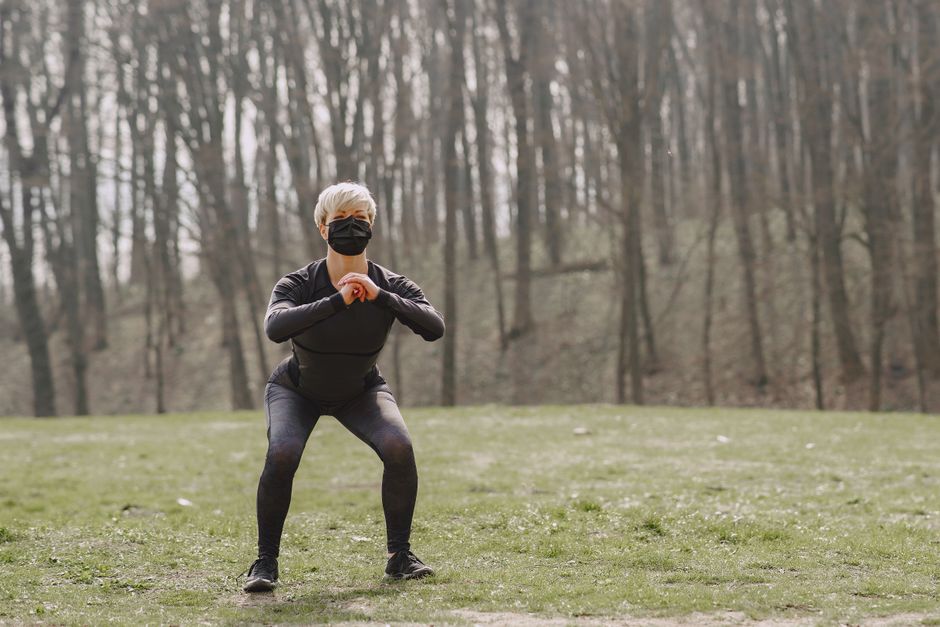
Most people assume functional fitness means doing “senior-friendly” versions of real exercise. Gentler. Smaller. Scaled way down. I used to think that too, honestly, until I started paying close attention to what actually kept my older clients independent, strong, and out of the ER.
The answer wasn’t modified chair yoga or those painfully slow resistance band routines you see on daytime TV. It was training movements, not muscles. And that distinction changes everything about how you design a program for someone over 60.
Functional fitness, at its core, means training your body to do the things life actually asks of it. Getting off the floor. Carrying groceries. Reaching overhead without your shoulder seizing up. Standing from a toilet without using your arms. These aren’t glamorous benchmarks, but they’re the ones that determine whether you stay independent at 75 or 85 or 92.
Let me tell you what I’ve figured out, what surprised me, and where the conventional wisdom is genuinely wrong.
Why “Low Impact” Is Not the Same as “Safe”
I’ll be honest: I spent years defaulting to low-impact recommendations for clients over 65 because that’s what most continuing education programs teach. Protect the joints. Go easy. Progress slowly.
The problem is that “low impact” got conflated with “low load,” and low-load training for older adults is often a disservice. Research published in the Journal of Strength and Conditioning Research has consistently shown that progressive resistance training at moderate to high intensity produces significantly better outcomes for muscle mass retention in adults over 60 than light resistance work. The key word there is progressive. The load has to increase over time, or you’re just going through the motions.
What surprised me was how many of my clients, once they understood this, actually felt relieved. They weren’t fragile. They were undertrained.
The caveat: low impact on the joints is genuinely important if someone has significant osteoarthritis, recent joint replacement, or balance deficits severe enough that a fall risk is real. Those are real considerations. But “older adult” by itself isn’t a reason to keep the weights light forever.
The Six Movements That Actually Matter
I don’t organize my training around muscle groups. I organize it around movement patterns, because that’s how the human body works in the real world. For adults over 60, I focus on six:
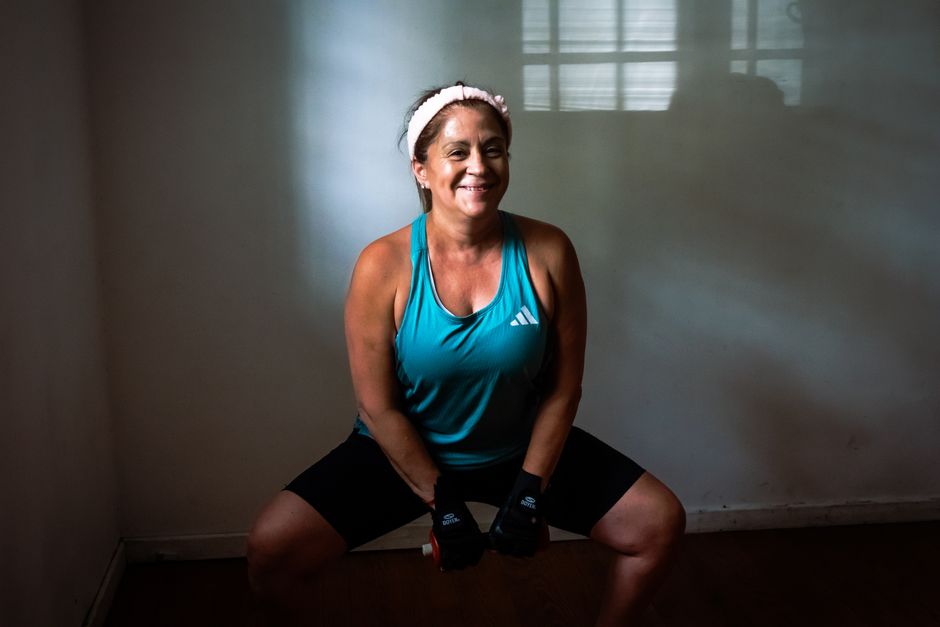
Squat (sit-to-stand). The single most functional movement you can train. If you can lower yourself to a chair and stand back up without using your hands, you’re maintaining a baseline of independence that matters enormously over time. I always start here.
Hip hinge. Picking things up off the floor. Loading the dishwasher. This is where lower back injuries happen when people don’t train it. A proper Romanian deadlift, even with light dumbbells, teaches the body to move through the hips instead of rounding the spine.
Pushing. Wall push-ups are a legitimate starting point, not a consolation prize. Progress to incline push-ups on a sturdy table, then to the floor. Overhead pressing, if shoulder health allows, builds the strength to reach high shelves and lift carry-on bags.
Pulling. Rowing movements. This is where I see the biggest gap in most senior fitness programs. Almost nobody trains pulling, and almost everybody over 60 has rounded, forward-hunched posture as a result. A seated cable row or a resistance band row done consistently will change your posture more than any amount of stretching.
Carry. Farmer’s carries: pick up dumbbells or grocery bags and walk with them. This is the most underrated exercise in existence for older adults. It builds grip strength, trains the core in a completely functional way, and improves gait stability simultaneously.
Single-leg stability. Balance. Standing on one foot, step-ups, lateral step-overs. Falls are the leading cause of injury-related death in adults over 65, and single-leg work is one of the most evidence-backed interventions we have for reducing fall risk. The research is genuinely clear on this one.
A Real Walkthrough: How I’d Start Someone From Scratch
Single BEST Exercise to Improve BALANCE in Seniors · Tim Fraticelli - PTProgress on YouTube
| Week Range | Focus | Load | Duration | Key Exercises |
|---|---|---|---|---|
| Weeks 1-2 | Movement relearning | Bodyweight only | 20-25 min, 3x/week | Chair squats, wall push-ups, seated band rows, single-leg stance |
| Weeks 3-4 | Load introduction | Light dumbbells (3-5 lbs) | 20-25 min, 3x/week | Goblet squats, table push-ups, farmer’s carry (5 lbs each hand) |
| Weeks 5-8 | Progressive overload | Dumbbells (8-12 lbs) | 25-30 min, 3x/week | Goblet squats, step-ups (6 inches), hip hinge with dowel |
| Week 12+ | Established program | Progressive loads | Per individual plan | Full six-movement pattern training |
Say someone comes to me at 68, hasn’t exercised consistently in a decade, has mild knee arthritis, and is worried about falling. Here’s roughly how the first eight weeks look.
Weeks 1-2: Bodyweight only, three days a week, 20-25 minutes. Chair-assisted squats (they sit all the way down, stand up, repeat), wall push-ups, seated band rows with a light resistance band, and single-leg stance holds (hand on the wall, 20-30 seconds each side). The goal isn’t fatigue. It’s relearning movement patterns safely.
Weeks 3-4: Add load. Light dumbbells (3-5 lbs to start) for goblet squats. Progress wall push-ups to a table. Add a farmer’s carry: two 5-lb dumbbells, walk 20 feet and back, three rounds.
Weeks 5-8: Increase load progressively. Work toward 8-12 lbs on goblet squats. Add a step-up onto a low step (6 inches). Begin hip hinge with a dowel rod along the spine so they feel the correct pattern before adding weight.
Worked example from my own practice: One client, a 71-year-old retired teacher named Margaret, came in after a minor fall in her kitchen. She had avoided strength training her entire life. After 12 weeks following a program structured like this, her sit-to-stand time (timed 5-repetition test) improved from 19.2 seconds to 11.4 seconds. That’s a clinical improvement. It meant she was no longer in the “high fall risk” category on that particular screen.
Balance Training: More Specific Than You Think
Here’s where I made a mistake myself for years. I treated balance as one thing. Stand on one foot, you’re training balance. Done.
The research is more nuanced than that. Balance has multiple components: static balance (standing still), dynamic balance (moving while staying upright), reactive balance (catching yourself when you trip), and vestibular balance (what your inner ear is doing). A standard one-leg stand improves static balance but doesn’t do much for reactive balance, which is actually what determines whether you catch a stumble before it becomes a fall.
Training reactive balance means doing things like: standing on a slightly unstable surface (a folded yoga mat, not a wobble board), having someone give a gentle unexpected tap to your shoulder, or practicing catching yourself from a controlled lean. These feel awkward and a little uncomfortable, which is exactly why they work.
As of June 2026, some of the more interesting work in fall prevention is coming out of programs that combine cognitive tasks with balance training, basically making you think about something while balancing. The dual-task research is still developing, but preliminary findings suggest that training the brain and body simultaneously produces better real-world fall prevention outcomes than physical training alone. I’m watching this area closely. The research here is genuinely mixed, and I wouldn’t overhaul a program based on it yet, but it’s worth knowing about.
The Mobility Piece (And What Most People Skip)
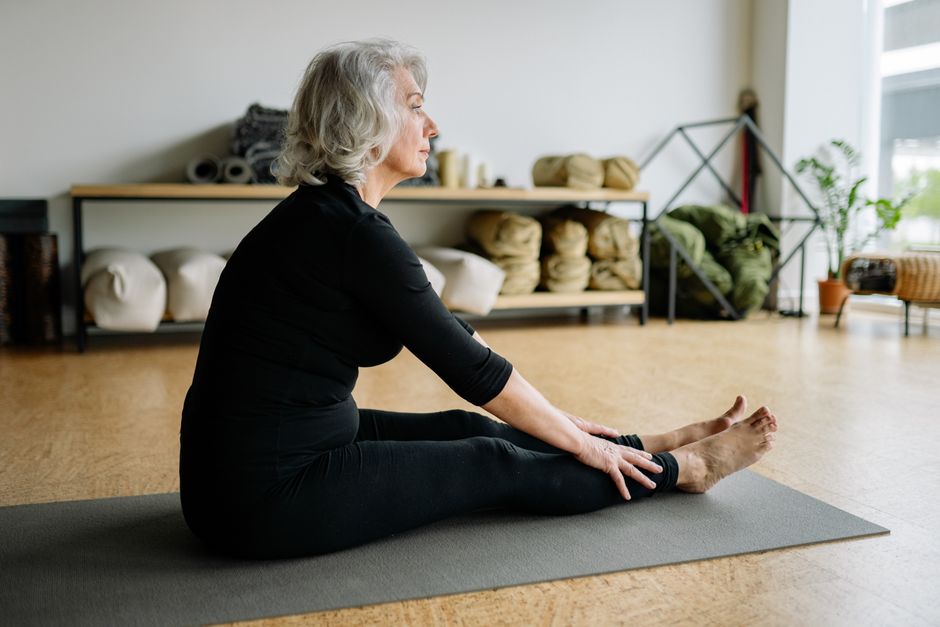
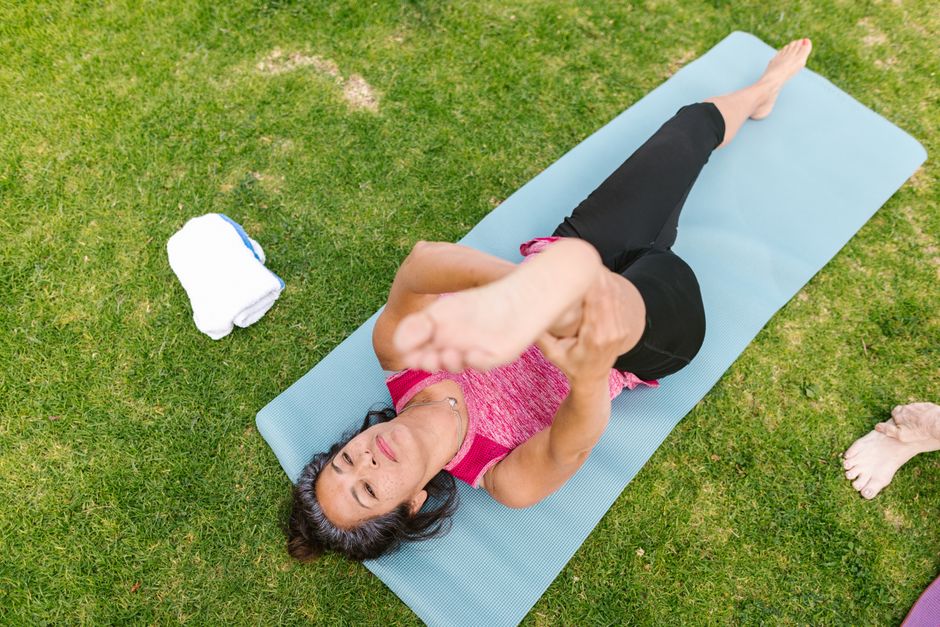
Mobility is not the same as flexibility. Flexibility is passive (how far your hamstring can be stretched). Mobility is active (how much range of motion you can control under your own muscular power). For older adults, mobility matters more.
The hip flexors and thoracic spine (upper and mid back) are the two areas where I see the most restriction in adults over 60, and both directly affect how well every other movement pattern works. A stiff thoracic spine means you can’t overhead press safely. Tight hip flexors mean your squat mechanics fall apart and your lower back does the work instead of your hips.
Worked example: A 64-year-old retired firefighter came to me for knee pain during squats. His knees weren’t the problem at all. Ten minutes with him showed me severe thoracic restriction and hip flexor tightness that was forcing his knees to compensate. Eight weeks of targeted thoracic rotation work and hip flexor lengthening (not passive stretching, active range-of-motion drills) and his knee pain resolved almost entirely without us ever directly treating the knee. His squat depth increased from about 60 degrees of knee flexion to past parallel.
I’m not saying that’s a universal story. But I see this pattern constantly, and I’d estimate that 40-50% of the “knee problems” I encounter in older clients are actually upstream mobility deficits. That’s an estimate based on experience, not controlled data, so take it for what it’s worth.
Sources
- American College of Sports Medicine (ACSM): Position Stand on Exercise and Physical Activity for Older Adults, comprehensive evidence-based guidelines on resistance training frequency, intensity, and fall prevention for adults 65 and older.
- Journal of Strength and Conditioning Research: Multiple peer-reviewed studies on progressive resistance training outcomes in older adult populations, including muscle mass retention and functional performance measures.
- Centers for Disease Control and Prevention (CDC): STEADI (Stopping Elderly Accidents, Deaths & Injuries) program, evidence-based fall prevention clinical resources, including functional balance screening tools.
- Sherrington C. et al.: Systematic review and meta-analysis (published in British Journal of Sports Medicine) examining exercise interventions that reduce fall rates in older adults, showing balance and functional training reduce falls by approximately 23%.
- Liu CJ & Latham NK: Cochrane Review on progressive resistance strength training for improving physical function in older adults, foundational evidence for loading parameters in senior populations.
Photo: Gustavo Fring via Pexels
This article is for general informational purposes only and does not constitute medical or fitness advice. Consult your physician or a licensed physical therapist before starting a new exercise program, especially if you have existing health conditions.