 Robert Davis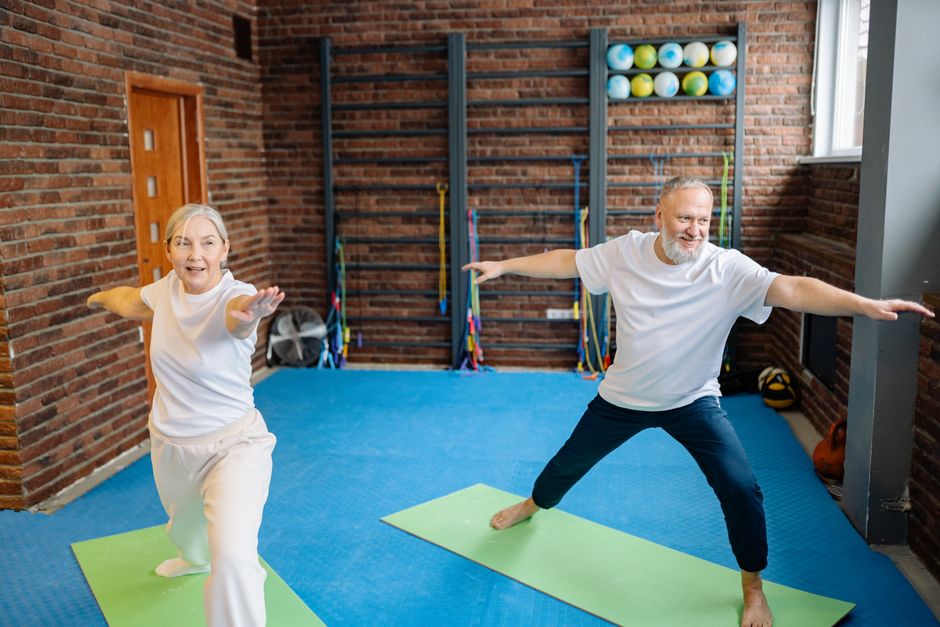
The American College of Sports Medicine just did something it has never done in 20 years of annual fitness trend surveys: it put programs for older adults at #2. Not top ten. Not top five. Second place, out of every fitness category tracked globally, based on responses from 2,000 clinicians, researchers, and exercise professionals. If you’re over 60 and you’ve been told that “senior fitness” is a niche concern, the profession disagrees with you now in writing.
This matters beyond bragging rights. The ACSM ranking reflects where money, attention, and program design are heading. That affects what’s available to you, how it’s coached, and whether the science driving those programs is actually current. Some of it is very good. Some of the mainstream coverage celebrating this moment is getting the takeaways exactly wrong.
The Number Means Something Specific
The ACSM has published its Worldwide Fitness Trends report every year since 2006. “Fitness Programs for Older Adults” has never ranked this high. It climbed to #2 in 2026, ahead of categories like fitness technology and group exercise. That’s not a soft cultural gesture. It reflects where certified professionals are actually seeing demand.
The demographic pressure behind it is real. All 73 million American baby boomers will be over 65 by 2030. According to the 2023 IHRSA U.S. Health & Fitness Consumer Report, adults 65 and older already visit gyms and studios more frequently than any other age group. More often than 25-year-olds. That statistic tends to surprise people, including gym owners who spent the last decade designing facilities for millennials.
NASM’s 2026 survey of 625 fitness professionals found that longevity and healthy aging are now the fastest-growing client goals, outpacing traditional physique motivations. The culture shifted. The industry is finally catching up.
What’s Actually Driving People Through the Door
Here’s something the trend coverage keeps glossing over: what you call a program changes who shows up.
A 2024 industry report cited in the ACSM findings found that programs labeled “low intensity,” “functional,” or “active aging” consistently attract more participants than those labeled “senior fitness.” Same exercises, different words. Enrollment goes up when you drop the word “senior.” That’s not vanity. It’s a reasonable signal that older adults don’t want to be categorized as fragile before they’ve done a single rep.
The practical implication: if you’re looking for a program and you can’t find one explicitly marketed to your age group, look for “functional fitness,” “active aging,” or “longevity training.” The content is often identical or better.
The Research Has Quietly Gotten Remarkable
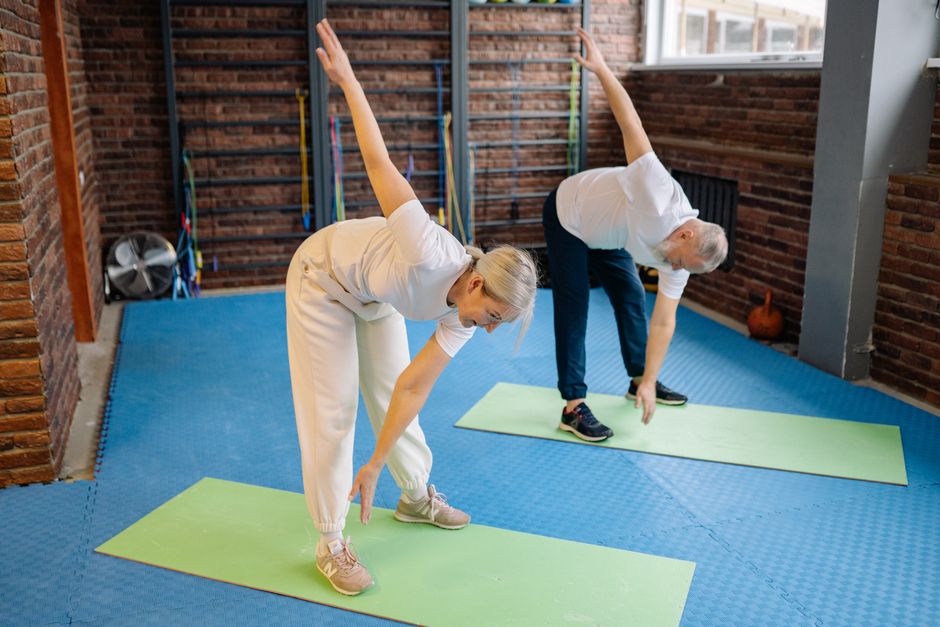
7 Stretches to Ease Stiffness and Boost Your Balance | Day 14 Better Balance Program · Yes2Next on YouTube
Two studies published in early 2026 are worth knowing about, because they change the conversation around what “enough” looks like.
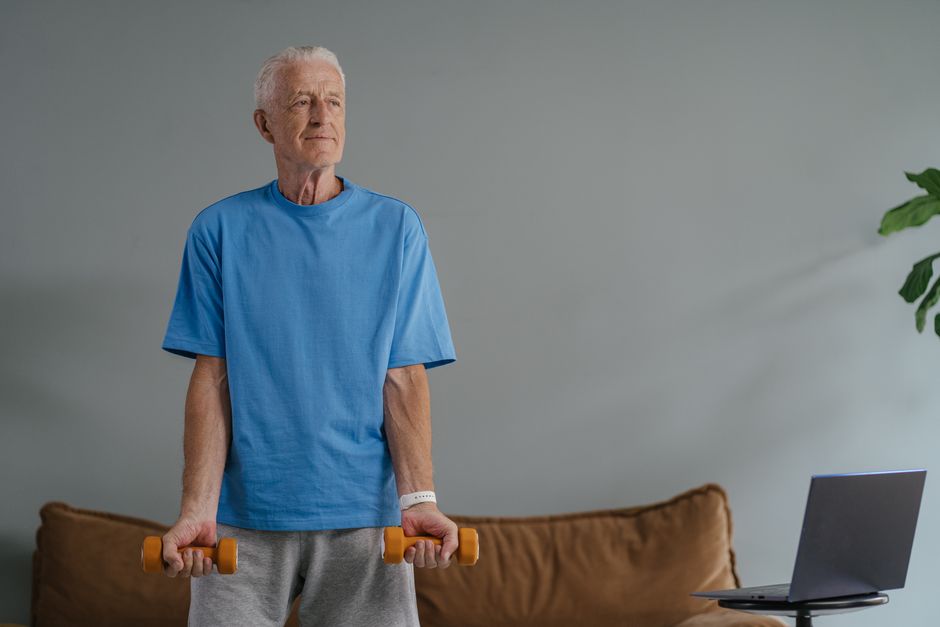
A Penn State College of Medicine study published in PLOS One in June 2026 found that just 4 minutes of daily resistance training significantly improved strength, balance, and sit-to-stand speed in adults 65 and older within 12 weeks. Participants completed the exercise on 81% of days. Four minutes. That’s not a warmup. That’s the whole session, and it moved measurable outcomes.
The University at Buffalo published what it described as the largest study of its kind in JAMA Network Open in February 2026. The finding: for every 7 kg of grip strength in women over 60, there was on average a 12% lower mortality rate, even among those not meeting standard aerobic activity guidelines. Grip strength is a reliable proxy for overall muscle mass and function. It’s also easy to test and track. The study’s emphasis on women matters because women have historically been underrepresented in strength training research.
Put these two studies together and a clear picture forms: the threshold for meaningful training is lower than most people assume, and muscle strength is doing work far beyond aesthetics.
What Good Programs Look Like Right Now
The category ranked #2 by ACSM isn’t monolithic. There’s a wide range of quality, and the ranking doesn’t tell you which programs are worth your time.
Here’s what separates programs that produce results from ones that feel safe but accomplish little:
| Feature | Programs that work | Programs that underdeliver |
|---|---|---|
| Resistance training | Included, progressive load | Avoided or treated as optional |
| Balance training | Integrated into movement | Tacked on as an afterthought |
| Assessment at intake | Baseline strength, mobility, function | Questionnaire only |
| Progression model | Load or complexity increases over weeks | Same workout indefinitely |
| Coaching credential | Certified in older adult fitness or PT background | General group fitness only |
Progressive overload applies to people over 60. The body adapts when challenged and stagnates when it isn’t. A program that keeps you at the same resistance for six months isn’t keeping you safe. It’s keeping you static.
Talking to a physician or physical therapist before starting a new program is always a reasonable step, especially if you’re managing a chronic condition or returning after a long gap. The research supports training. It doesn’t suggest skipping the intake conversation.
What to Actually Do With This Moment
The ACSM ranking creates a window. More facilities are investing in qualified instructors for this population. More research is being funded. Insurance and Medicare Advantage plans are slowly expanding coverage for fitness-related services. The infrastructure is better in 2026 than it was five years ago.
That doesn’t mean every program that markets itself as “active aging” has earned the label. Ask about the coach’s credentials. Ask whether resistance training is part of the program. Ask how they track progress. A good program can answer all three without hesitation.
The Penn State four-minute finding is compelling, but it’s a floor, not a ceiling. If you can do more, do more. The University at Buffalo grip strength data is a useful reminder that strength training isn’t about looking a certain way. It’s about being here longer and functioning better while you are.
The profession has made its call. Programs for older adults are no longer a specialty footnote. They’re the second biggest thing happening in fitness worldwide. That’s a reasonable argument for taking your training seriously, right now, in 2026.
Sources
- ACSM: The Future of Fitness , Top Trends for 2026 (July 8, 2026)
- Penn State Health News: Four Minutes of Daily Resistance Training Can Quadruple Fitness in Older Adults (June 2026)
- University at Buffalo: Study Finds That for Women Over 60, Muscle Strength Matters (February 18, 2026)
- NASM: Top Fitness Trends 2026 (June 2, 2026)
- Athletech News: Wearables, Fitness for Older Adults Tipped as Top Fitness Trends for 2026 (January 6, 2026)
Photo: Yan Krukau via Pexels
This article is for general informational purposes only and does not constitute medical or fitness advice. Consult your physician or a licensed physical therapist before starting a new exercise program, especially if you have existing health conditions.