 Helen Santos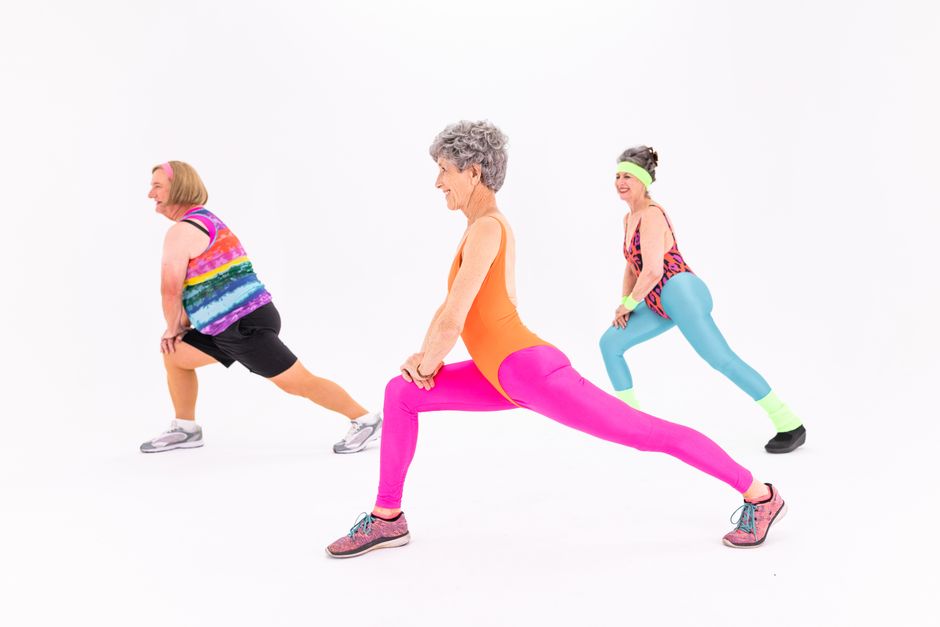
Most people who come to me with back pain are already frustrated before they even sit down. They’ve tried the stretches their doctor printed off a handout, maybe watched a few YouTube videos, probably rested more than they should have. And nothing stuck, or it helped briefly, then the pain crept back.
Here’s what I tell people in that situation: back pain in adults over 60 is almost never just about the back. It’s almost always about what the back is compensating for.
That sounds like a small distinction. It isn’t.
Why Rest Is Usually the Wrong Answer
The instinct to stop moving when your back hurts makes complete sense. Pain is the body’s way of saying something is wrong, and rest feels protective. But here’s the problem: after about 48 to 72 hours, rest stops helping and starts making things worse. Muscles weaken, joints stiffen, and the supporting structures around the spine lose the little activation they had left. Research published in the Annals of Internal Medicine has consistently shown that bed rest for non-specific low back pain produces worse outcomes than staying gently active.
I’ve seen this play out too many times. Someone hurts their back on a Tuesday, spends the rest of the week on the couch, and then on Sunday wonders why they can barely stand up straight.
For older adults specifically, there’s a compounding factor: sarcopenia, the natural age-related loss of muscle mass. After 60, the deep muscles that stabilize the lumbar spine, the multifidus, the transverse abdominis, the quadratus lumborum, are already working harder to do their job. Take away what little active support they provide through inactivity, and the passive structures (discs, ligaments, joints) pick up a load they weren’t designed to handle alone.
Movement is medicine. Gentle, appropriate, consistent movement. That’s the frame for everything that follows.
The Exercises That Actually Move the Needle
| Exercise | Starting Repetitions | Target Repetitions | Duration/Hold | Primary Benefit |
|---|---|---|---|---|
| Pelvic Tilts | 10 | 10 | 5 sec hold | Recruits deep core stabilizers |
| Glute Bridges | 8 | 15 | 2-3 sec hold | Reduces lumbar spine demand |
| Bird Dog | Per side | Per side | 3-5 sec hold | Anti-rotation and anti-extension stability |
| Cat-Cow | 5-8 | 5-8 | Slow continuous | Mobility and warm-up |
| Standing Hip Flexor Stretch | Per side | Per side | 30 sec hold | Addresses tight hip flexors |
| Wall Sits | 1 set | 1 set | 20-30 sec hold | Quad and glute strength without spinal load |
I want to be specific here rather than give you a generic list. Not all “back exercises” are created equal for people over 60, and some popular ones, I’d argue, are actively counterproductive for certain presentations. (More on that in a moment.)
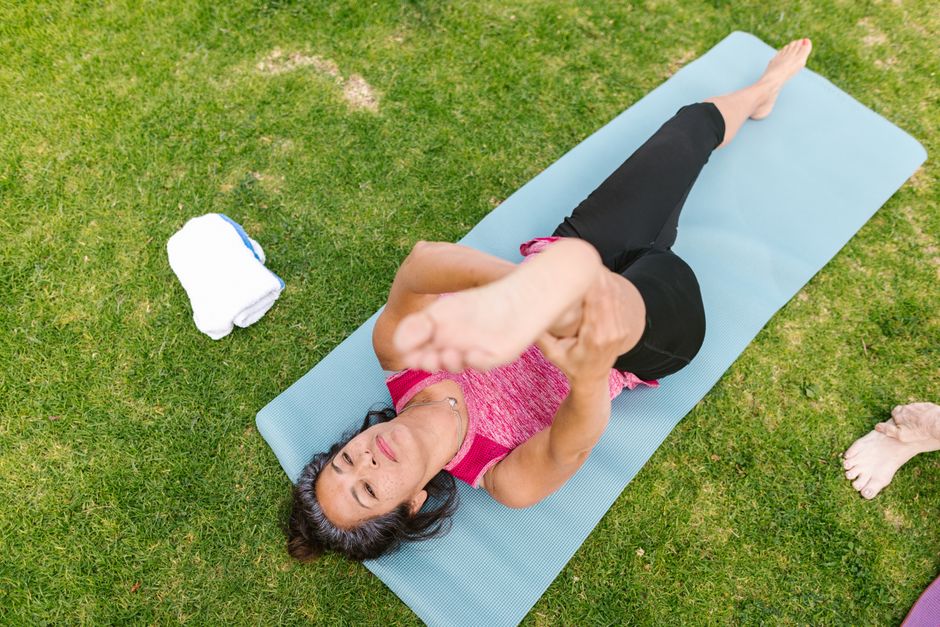
Pelvic tilts. This is where I start with almost every new client dealing with low back pain. Lying on your back with knees bent, feet flat on the floor: gently flatten your lower back against the floor by tightening your abdominals, hold for five seconds, release. That’s it. It sounds too simple to matter. It matters enormously because it teaches the body to recruit the deep core stabilizers rather than relying on the lumbar extensors to do all the work. Do 10 repetitions, twice a day. You’ll feel almost nothing while doing them. Give it two weeks.
Glute bridges. Same starting position as the pelvic tilt. Tilt your pelvis first (see above), then press through your heels and lift your hips off the floor until your body forms a straight line from knees to shoulders. Hold for two to three seconds, lower slowly. The key word is “slowly.” Most people rush this movement, which shifts the work from the glutes to the lower back. The glutes are the primary movers here, and strengthening them directly reduces the demand on the lumbar spine during everyday activities like walking, climbing stairs, and getting up from a chair.
Start with 8 repetitions. Work toward 15 before you add difficulty.
Bird dog. On hands and knees, spine neutral (not arched, not rounded). Extend your right arm and left leg simultaneously until both are parallel to the floor, hold for three to five seconds, return, repeat on the other side. This exercise builds the anti-rotation and anti-extension stability that the lumbar spine needs to hold up under load. It also requires enough hip mobility to execute properly, and that’s worth paying attention to, if you can’t extend your leg without your pelvis rotating or your low back arching, that’s information about what else needs work.
Cat-cow. Also on hands and knees. Slowly arch the back upward (cat), then let it drop into an extension (cow). Move through the full range slowly and continuously. This is not a strength exercise. It’s a mobility exercise, and that distinction matters. Use it as a warm-up or a cool-down, not as the main event. Five to eight slow repetitions is enough.
Standing hip flexor stretch. Take a half-kneeling position (one knee on the floor, the other foot in front). Gently tuck your pelvis under and shift your weight slightly forward until you feel a stretch at the front of the hip of the kneeling leg. Hold 30 seconds, switch sides. Tight hip flexors are one of the most underappreciated contributors to low back pain in seniors, and this is one of the better ways to address them. If getting down to the floor is difficult, you can do a modified version standing at a countertop with one foot elevated on a low step.
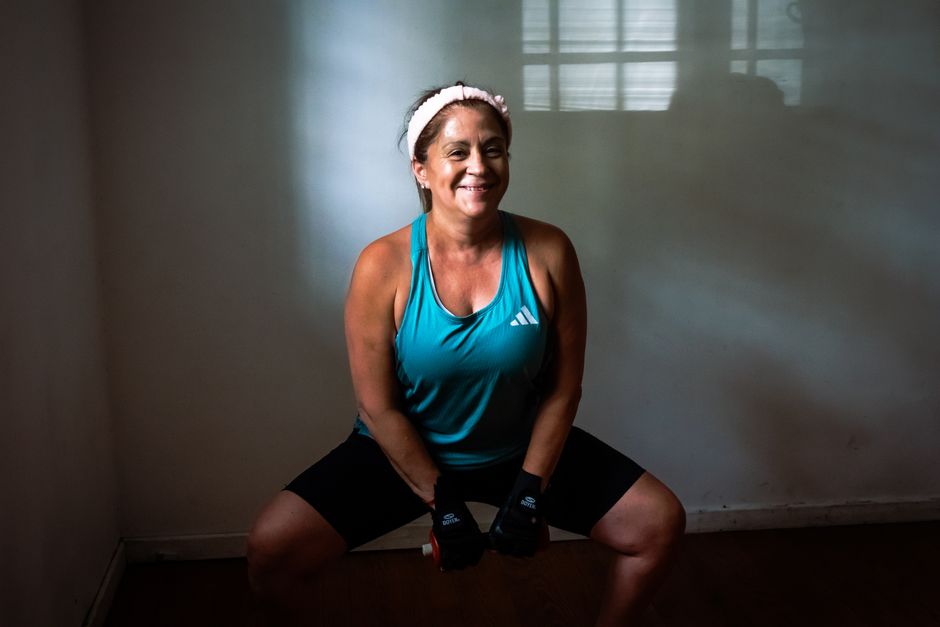
Wall sits. Back against the wall, feet out about 18 inches, slowly lower until your thighs are roughly parallel to the floor, or as far as is comfortable. Hold 20 to 30 seconds. Wall sits build quad and glute strength simultaneously without any spinal loading, which makes them one of the safest lower body strengthening options available for people with disc issues or stenosis.
The Contrarian Take: Core Work Is Often Done Wrong
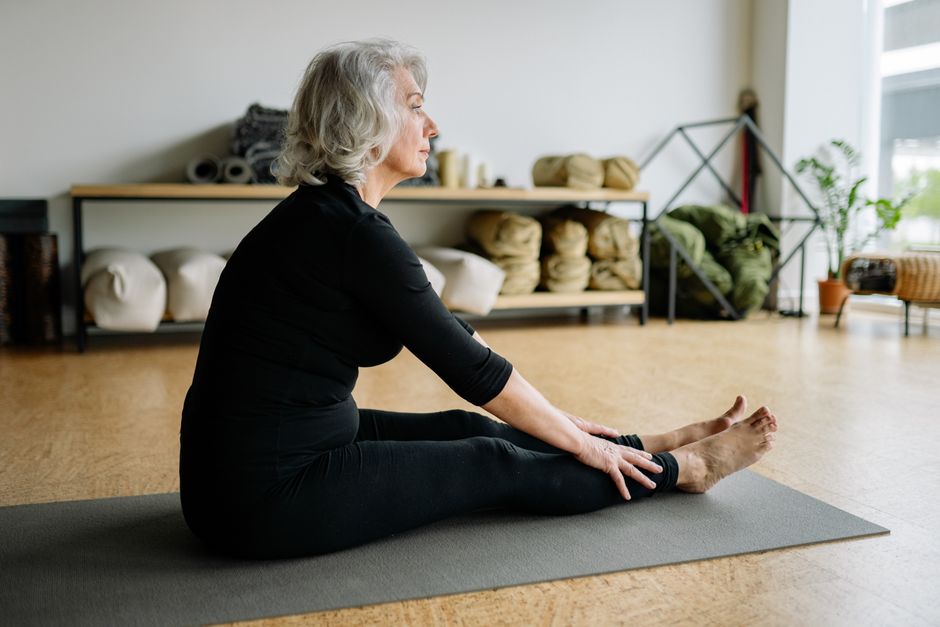
Reduce Hip Pain Or Tight Hips | Seated Stretches For Seniors And Beginners | 12 Min · Senior Fitness With Meredith on YouTube
Here’s where I expect some pushback.
A lot of seniors come to me having been told to “strengthen your core.” And so they’ve been doing crunches, or sit-ups, or some variation of both. I understand why, that’s been the conventional wisdom for decades. But for adults over 60 with degenerative disc disease, spinal stenosis, or osteoporosis (all very common), repeated spinal flexion under load is a real problem. Stuart McGill, a spinal biomechanics researcher at the University of Waterloo whose work has substantially reshaped how clinicians think about back rehabilitation, has documented how flexion-based movements can accelerate disc damage over time.
The “core” most people need to strengthen is not the six-pack musculature. It’s the deep, circumferential stabilizing system: the muscles that resist movement rather than produce it. That’s what pelvic tilts and bird dogs are training. That’s why I’d rather have a 68-year-old doing a 20-second plank (properly, with a neutral spine) than 20 crunches.
If you’ve been doing crunches and they’ve been helping, I’m not saying stop immediately. I’m saying there’s a better option, and the research backs it up.
Breathing and Back Pain (Most People Skip This Entirely)
The diaphragm is part of the deep core system. When it functions correctly, the intra-abdominal pressure it helps generate acts as a natural brace for the spine. When people are in chronic pain, breathing patterns almost always get disrupted: they breathe shallowly into the chest, the diaphragm disengages, and that natural bracing mechanism disappears.
This isn’t abstract. I have clients who’ve gotten meaningful reduction in back pain just by working on breathing mechanics. Before every session, spend two minutes doing this: lie on your back, one hand on your chest, one on your belly. Breathe so that only the hand on your belly rises. That’s diaphragmatic breathing. Practice it until it becomes automatic during movement.
It sounds like a small thing. Add it anyway.
What to Do When Pain Flares Up
Some days will be worse than others. That’s not a sign that the exercises aren’t working or that something is seriously wrong. But there are some practical rules.
Acute, sharp pain that’s new or significantly worse, especially if it radiates down your leg or is accompanied by numbness or bladder/bowel changes: stop exercising and call your doctor or physical therapist. That symptom profile warrants evaluation.
For the more typical flare of familiar back pain: reduce intensity but don’t stop entirely. Pelvic tilts and cat-cow in particular are usually tolerable even during moderate flares and can help calm down muscle guarding. Heat applied for 15 to 20 minutes before movement can help. Ice after, if there’s any inflammation.
Please don’t push through sharp, worsening pain. That’s not toughness; that’s how a minor problem becomes a major one.
How Long Before You See Results?
Genuinely and honestly? Most people feel some improvement within two to three weeks of consistent, appropriate exercise. Meaningful functional change, the kind where you’re loading the dishwasher differently or getting up from the floor with less effort, takes closer to six to eight weeks.
Consistency matters more than intensity here. Three times a week, every week, will do more for your back than an ambitious session followed by four days off.
I’d also strongly encourage working with a physical therapist at least a few times, especially at the start. The exercises I’ve described are appropriate for most people with common age-related back issues, but “most people” isn’t “everyone,” and someone who can watch you move and give real-time feedback is worth more than any article.
You don’t need to do all of this at once. Pick two or three exercises from this list, do them consistently for two weeks, and notice what changes. Most people are surprised by how much difference the basics make when done correctly and regularly. The back you have at 70 can genuinely function better than the one you had at 65, if you give it the right inputs. That’s not optimism. That’s just what I’ve watched happen, over and over again.
Photo: RDNE Stock project via Pexels
This article is for general informational purposes only and does not constitute medical or fitness advice. Consult your physician or a licensed physical therapist before starting a new exercise program, especially if you have existing health conditions.
Sources
- RDNE Stock project
- Nutramax Cosequin Senior Dog Soft Chews (60ct)
- Nutramax Cosequin DS Joint Supplement for Dogs (132ct)
- published in the Annals of Internal Medicine has consistently shown that bed res
- backs it up
Disclosure: As an Amazon Associate, we earn a small commission from qualifying purchases at no extra cost to you. We only recommend products that genuinely support the topics covered in this article.
- Nutramax Cosequin Senior Dog Soft Chews (60ct) (~$32), Senior-specific Cosequin formula with added Omega-3s, designed for aging dogs with joint and immune health needs.
- Nutramax Cosequin DS Joint Supplement for Dogs (132ct) (~$36), The #1 veterinarian-recommended joint supplement brand, clinically studied for reducing joint pain in dogs.