 Linda Chen
Most post-knee replacement guides hand you a tidy list of “safe” exercises and call it a day. What they skip is the other list: the movements that feel fine, look harmless, and can quietly damage your new joint before you even realize something’s going wrong.
That omission costs people. I’ve worked with clients who did everything their surgeon told them, then added a “gentle” yoga class or hopped on a stair climber at week eight because a friend said it was fine. Some got through it. Others set their recovery back by months.
Let’s fix that gap.
Why the Stakes Are Higher Than Most People Realize
A total knee replacement (TKR) involves removing damaged cartilage and bone, then capping the joint with metal and plastic components. That plastic spacer, typically high-density polyethylene, is the part that wears. It’s engineered to last, but it is not indestructible, and the activities you choose in the first year matter disproportionately to how long the implant holds up.
The American Academy of Orthopaedic Surgeons has tracked implant survivorship data for decades. Current figures (as of 2026) show roughly 90% of TKR implants still functioning well at 15 years, and better than 80% at 20 years. Those numbers assume reasonable activity choices. Push the joint hard in the wrong directions repeatedly, and you accelerate wear on that polyethylene, loosen the cement fixation, or stress the surrounding soft tissue before it’s healed.
Your physical therapist gives you a protocol timed to tissue healing. There’s a reason the phases exist. The problem is that once people feel good, around weeks six to ten for most, they start improvising.
The Specific Exercises to Avoid (and Why Each One)
| Activity | Impact Level | Primary Risk | Typical Restriction Timeline |
|---|---|---|---|
| Running/Jogging | High | Accelerated polyethylene wear, implant revision | Permanent for most patients |
| Deep squats (>90°) | High | Patellofemoral stress, posterior insert wear | First 3-6 months, then modified only |
| Leg press at full depth | High | Compressive stress on knee joint | Indefinite; use range limiters |
| Stair climbers/step mills | High | Repetitive deep flexion under load | Often indefinite |
| Elliptical (high resistance/incline) | Moderate-High | Increased force across knee | Adjust settings; moderate only |
| Contact/pivot sports (singles tennis, soccer, skiing) | High | Periprosthetic fracture, ligament stress | Indefinite; doubles tennis may be approved |
| Kneeling on replaced knee | Moderate | Disruption of healing tissue | First 6 months minimum |
High-impact everything, full stop. Running, jogging, jumping rope, plyometric circuits, high-impact aerobics, basketball, racquetball. The vertical ground reaction force during running hits roughly 2.5 times your body weight per step. For a 170-pound person, that’s 425 pounds of force cycling through the implant with every stride. Repeatedly. The AAOS and most major orthopedic guidelines explicitly advise against running after TKR, not just during recovery, but permanently for most patients.
You’re probably thinking: “But I’ve seen people run after replacement.” Yes, some do. The research on long-term outcomes for those patients is not reassuring. A 2019 study in the Journal of Arthroplasty followed runners who returned to jogging post-TKR and found meaningfully higher rates of implant revision compared to matched non-runners. That data point has stuck with me because the patients in that cohort largely felt fine right up until they didn’t.
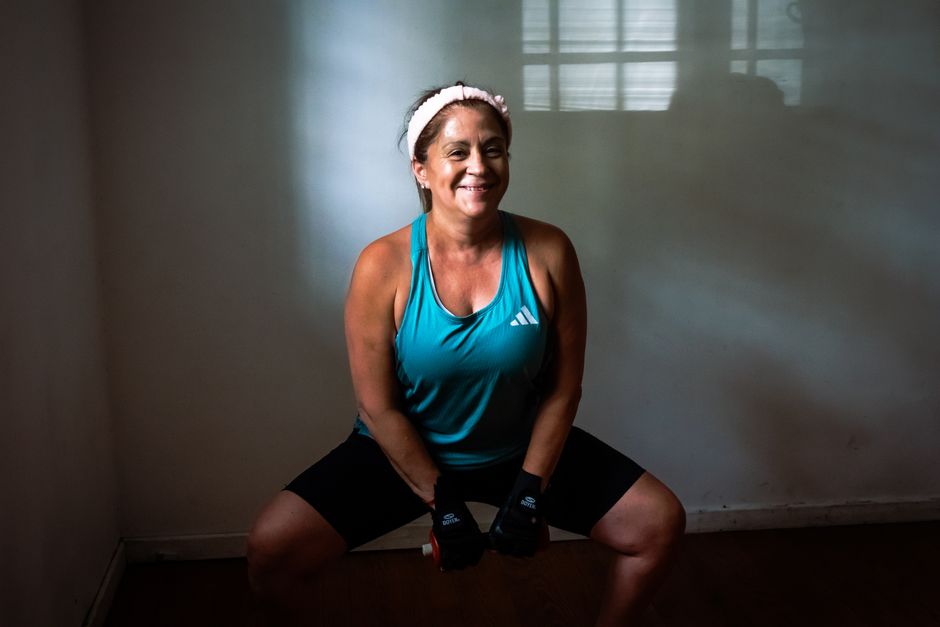
Deep squats and full-range lunges. This one surprises people. Squats are the go-to strength exercise, and the instinct to get back to them makes total sense. But a deep squat, below 90 degrees of knee flexion, puts the patellofemoral joint and the posterior aspect of the tibial insert under significant compressive stress. Early in recovery, when scar tissue is still remodeling, this can cause pain and swelling that derails progress. Later in recovery, repeated deep squatting accelerates wear on the back edge of that plastic spacer.
Partial squats to about 90 degrees, done with control, are a different story. Those are usually on your approved list for good reason.
Leg press at full depth. Same principle as deep squats. Physical therapy departments have leg press machines with range-of-motion stops for exactly this reason. At the gym? Most don’t. I’ve watched clients load up a leg press, feel strong, and crank it all the way down because it “didn’t hurt.” The absence of pain is not a green light for full depth on a leg press after TKR.
Stair climbers and step mills. These feel like responsible low-impact cardio. They’re not. The step mill requires repetitive deep knee flexion under load, basically hundreds of mini-lunges per session. Many surgeons restrict stair climbers indefinitely post-TKR. If yours hasn’t mentioned it, ask directly.
Elliptical with high resistance and steep incline. The elliptical at moderate resistance and flat incline is often approved and is genuinely one of the better options. But crank the incline or resistance up, and you’re dramatically increasing the force across the knee. I see this mistake constantly: someone gets cleared for the elliptical, interprets that as cleared for any elliptical setting.
Contact sports and activities with unpredictable lateral movement. Soccer, tennis (singles, with its hard cuts and pivots), skiing, and anything that puts you at risk of a fall or collision. The concern here isn’t just wear, it’s fracture around the implant (periprosthetic fracture) and ligament stress on a joint that no longer has its original anatomy. Some surgeons clear recreational doubles tennis; very few clear singles. Know the difference.
Kneeling directly on the replaced knee. Not technically an exercise, but people do it during stretching routines, yoga, and floor-based core work. Direct pressure on the tibial component can be uncomfortable and, in the early months, risks disrupting healing tissue around the implant. If you need to get to the floor, kneel on the other knee or use substantial padding.
The Movements That Fool People
The ONLY 3 Exercises You Need to Prevent FALLS After 65 · Will Harlow – Over-Fifties Specialist Physio on YouTube
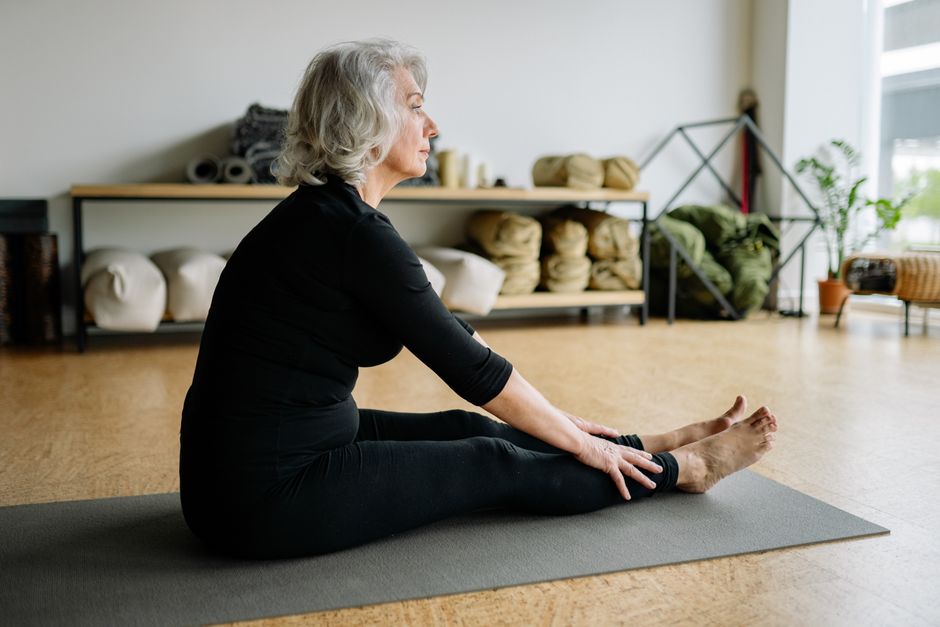
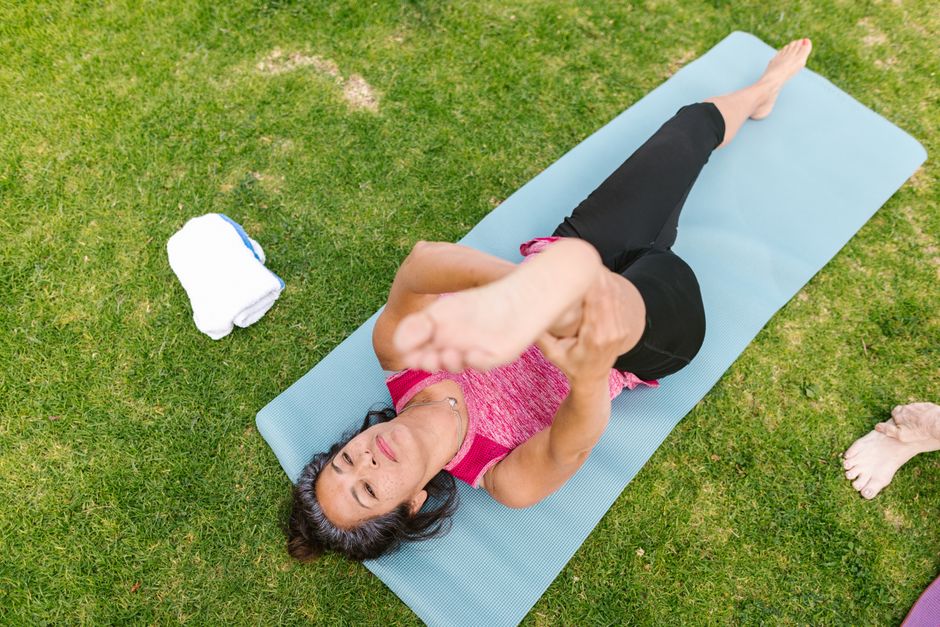
Yoga is the big one. The word “gentle” does a lot of misleading work in fitness marketing. A slow yoga class still includes child’s pose (deep knee flexion), hero pose (extreme knee flexion with the foot tucked under the hip), and pigeon variations that torque the knee. These are not safe post-TKR regardless of how slowly you move into them.
I had a client, Margaret, 68, six weeks post-op, genuinely diligent about her PT protocol. She’d been a yoga practitioner for fifteen years and missed it badly. She found a “gentle seniors yoga” class and went once. She reported afterward that she’d “modified everything.” She was back in my office two weeks later with an inflamed joint and a two-week setback. The instructor had no TKR training and Margaret felt too awkward to sit out the kneeling poses entirely.
The lesson: the class label doesn’t protect you. Your own knowledge of which positions to refuse does.
Cycling is another one that gets complicated. Stationary cycling is excellent after TKR, within the right seat height and resistance settings. Outdoor cycling is different. Road bikes require more extreme knee flexion, the seat is often lower, and a fall risk exists that doesn’t on a stationary bike. Mountain biking is out for most TKR patients for the foreseeable future. The terrain variability alone creates joint stress that no implant study has called acceptable.
What Actually Works: The Exercises Worth Your Time
To be clear, avoiding the wrong things doesn’t mean becoming sedentary. The opposite, actually. Inactivity after TKR is its own hazard: it leads to quad atrophy, stiffness, and weight gain that then stresses the joint.
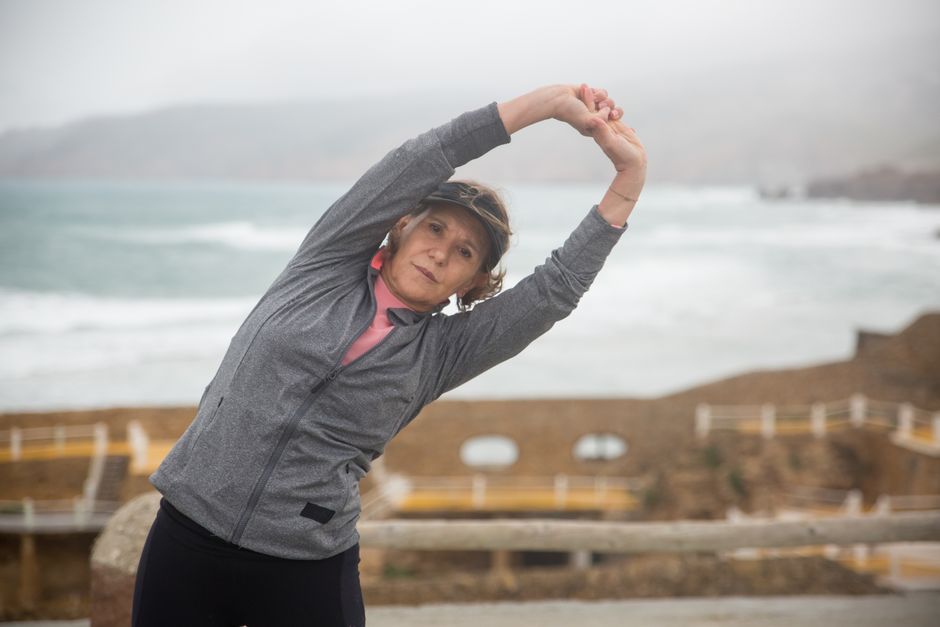
The short version of what works well: walking on flat surfaces (building gradually), stationary cycling with proper seat height, swimming and pool walking, partial squats (to 90 degrees), straight-leg raises, seated leg extensions (carefully and typically within a limited arc), and resistance band work targeting the hip abductors and glutes.
Strong glutes and hip abductors are, genuinely, the underrated factor in TKR recovery. They offload force from the knee by improving alignment throughout the entire lower extremity kinetic chain. Most rehab protocols underemphasize this. If your PT has you doing clamshells and side-lying hip abduction and it feels too easy, don’t assume it doesn’t matter. It matters.
Here are a few patterns I’ve tracked in my own work:
Patient returns to TKR rehab at week 10 with swollen knee after adding a stair climber at the gym → discontinued the machine, returned to walking and pool work → swelling resolved within 10 days, resumed progression on track by week 12.
Patient at week 16 complaining of stalled progress and ongoing stiffness → assessment found almost no hip abductor work in home routine → added focused glute and hip strengthening three times weekly → reported significantly improved stability and reduced knee fatigue within six weeks.
Patient at 8 months post-op frustrated by “plateau” → cleared by surgeon for stationary bike, had been avoiding it out of excessive caution → introduced cycling at proper seat height and low resistance → regained meaningful functional range of motion over two months.
The Conversation Most Patients Don’t Have with Their Surgeon
Surgeons are busy. Post-op appointments are short. Many patients leave their six-week or three-month check-in without asking the specific questions that would actually guide their exercise choices.
Ask these: Can I use a stationary bike? What seat height? Can I use the elliptical, and at what settings? Am I cleared for the pool? Is yoga ever going to be appropriate, and if so, which modifications? What’s the long-term activity guidance, not just the recovery guidance?
If your surgeon’s office has a dedicated physical therapist or physician’s assistant, often they’re the better resource for the granular movement questions. Surgeons do surgery. PT specialists often know more about the day-to-day activity restrictions.
One more thing worth saying plainly: the guidance in this article reflects general evidence and current standards as of July 2026, but your individual implant type, surgical approach, comorbidities, and healing trajectory change the calculus. There is no substitute for direct guidance from your orthopedic team. What’s appropriate for someone with an uncomplicated posterior-stabilized TKR at six months may be completely wrong for someone with a more complex revision or a history of osteoporosis.
Sources
- American Academy of Orthopaedic Surgeons (AAOS): Clinical practice guidelines and patient activity recommendations for total knee arthroplasty, updated guidance current as of 2025-2026.
- Mont MA, et al. “Return to Sports Activity After Total Knee Arthroplasty.” Journal of Arthroplasty (2019): longitudinal data on implant survivorship in patients who returned to running post-TKR.
- Carr AJ, et al. “Knee replacement.” The Lancet (2012): foundational overview of TKR outcomes, implant wear mechanics, and activity-related risk.
- Kuster MS. “Exercise recommendations after total joint replacement.” Sports Medicine (2002): still-cited framework for activity classification following knee and hip replacement.
- Hospital for Special Surgery (HSS) Patient Education Resources: Activity and exercise guidance post-TKR, including sport-specific recommendations; current protocols verified 2026.
Photo: Ron Lach via Pexels
This article is for general informational purposes only and does not constitute medical or fitness advice. Consult your physician or a licensed physical therapist before starting a new exercise program, especially if you have existing health conditions.