 Helen Santos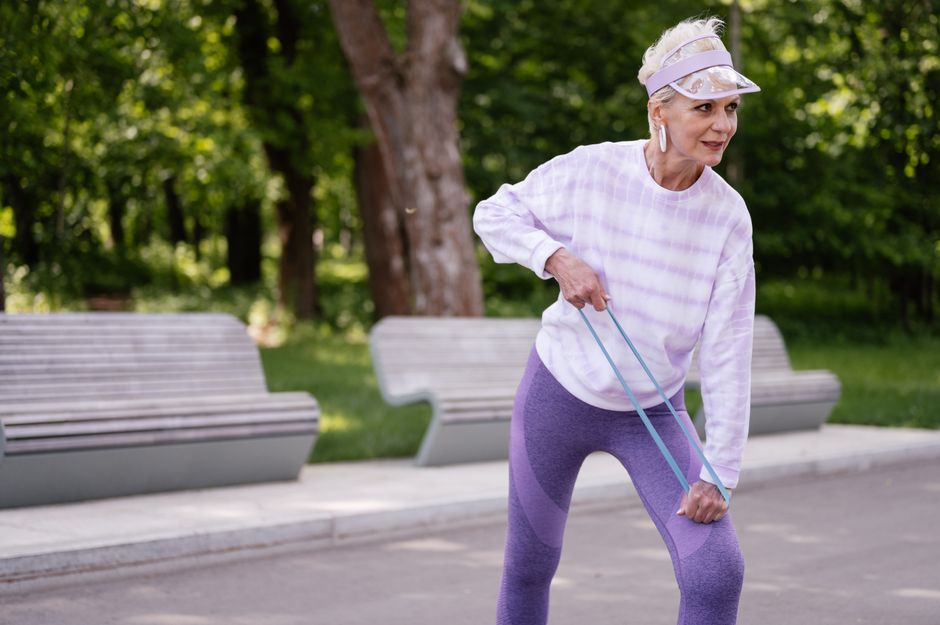
Most people don’t realize they’re losing independence long before a fall happens. It happens quietly: gripping a railing tighter than you used to, skipping stairs when you can take the elevator, hesitating before standing up from a low chair. If any of that sounds familiar, you’re not alone, and you’re not too late.
I’ve worked with adults in their 60s, 70s, 80s, and beyond, and what I’ve seen consistently is this: the exercises that actually protect independence aren’t the ones most people think of first. It’s rarely about getting “fit” in the conventional sense. It’s about keeping the specific physical capacities that daily life demands, the ability to catch yourself when you trip, to carry groceries without your back giving out, to get up off the floor if you need to.
Here’s what I tell people who come to me feeling behind: you don’t need to reclaim the body you had at 45. You need to invest in the body you have now.
Why Functional Strength Beats Everything Else
You might be wondering whether you should join a gym, take a class, or just do something at home with YouTube videos. Honestly? The format matters less than what you’re training.
Functional strength means training your body to do the movements real life actually requires: pushing, pulling, standing, sitting, carrying, reaching. A bicep curl has its place, but it won’t save you when you’re getting up from a deep couch or steadying yourself on an uneven sidewalk. The research backs this up. A 2019 study published in JAMA Internal Medicine found that exercise programs emphasizing functional movements reduced fall risk more significantly than general fitness routines in adults over 70.
When I build a program for someone in their 60s or 70s, I’m always asking the same thing: what physical tasks matter most to this person’s daily life? Then we train those patterns relentlessly.
The five movement patterns I come back to again and again are the sit-to-stand, the hip hinge, the single-leg stance, overhead reaching with control, and the floor-to-standing transition. If you can do all five reasonably well, you’re protecting a huge portion of what independence actually requires.
The Exercises That Matter Most (And How to Do Them Right)
Sit-to-Stand
This one is non-negotiable. The ability to get up from a chair without using your arms is one of the strongest predictors of longevity and fall risk in older adults. A 2012 study in the European Journal of Preventive Cardiology showed that adults who could sit and rise from the floor with minimal support had dramatically lower mortality rates over a 13-year follow-up.
Start with a sturdy chair, seat height around 17 to 18 inches if possible. Sit at the edge, feet shoulder-width apart and slightly behind your knees. Lean forward from the hips (not the waist), then drive through your heels to stand. Lower back down slowly, with control. That slow descent is where the real strength gets built.
If this feels impossible without your hands, use them. Then work toward using just a fingertip touch on the armrests. Over weeks, you’ll need them less. I’ve seen 75-year-olds go from white-knuckling their armrests to standing clean in about six weeks of daily practice.
Aim for 10 to 15 repetitions, twice a day. Yes, twice. This is one of those exercises where frequency matters more than intensity.
Single-Leg Stance
Balance doesn’t fail all at once. It degrades slowly, and we stop noticing because we subconsciously compensate: wider stances, furniture-grazing, avoiding uneven surfaces. Single-leg standing trains the ankle, knee, and hip stabilizers that are first to go.
Here’s how I teach it: stand next to a counter or sturdy chair. Lift one foot just an inch off the floor and hold for 10 seconds. Switch sides. That’s the starting point.
Over time, work toward 30 seconds on each leg without touching the support. When that becomes easy, try closing your eyes. The difference is startling. With eyes closed, your balance system has to work without visual compensation, which is exactly what happens in the split second before a fall.
Don’t rush this. Rushing is how people get hurt.
Hip Hinge
Most low back pain in older adults comes from using the spine to do a job the hips should be doing. The hip hinge teaches you to bend and lift safely, which protects your back every time you pick something up, load the dishwasher, or pull laundry out of a front-loader.
Stand with feet hip-width apart. Push your hips back (think: closing a car door with your backside) while keeping your spine long and upright, not rounded. Let your hands rest on your thighs. You should feel a stretch in the back of your legs.
Then drive through your hips to return upright. Practice this without any weight at first. When it feels natural, add a light load. A gallon of water jug is about 8.3 pounds, which works fine for most people starting out.
Floor-to-Standing Transition
This one scares people, which is exactly why it matters. Falling isn’t the catastrophe. Lying on the floor unable to get up is. The statistics are sobering: among adults 65 and older who fall and can’t get up without help, long-term care admission rates increase significantly.
I teach this in stages. First: can you get down to the floor in a controlled way? Then: can you roll to your side, push to hands and knees, and step one foot forward to a half-kneeling position? From there, you can push up to standing using a chair or couch for support.
Practice this when you’re not in an emergency. On a carpeted surface, slowly. Work through the sequence a few times a week. Your brain will remember it when it matters.
The Balance Work Most People Skip
Single BEST Exercise to Improve BALANCE in Seniors · Tim Fraticelli - PTProgress on YouTube
Strength and balance are related, but they’re not the same thing. You can have strong legs and still be unstable. The vestibular system, that inner ear mechanism that helps you track your body’s position, genuinely changes with age, and it responds to training.
Tai chi is probably the most researched balance intervention for older adults in existence. A 2020 meta-analysis in JAMA Internal Medicine looked at over 8,000 participants and found that tai chi reduced fall rates by about 20% compared to control groups. Community-based tai chi classes are usually affordable ($10 to $15 per drop-in class in most cities), and the social component isn’t insignificant either.
If tai chi isn’t accessible, a simple progression called tandem walking works well at home. Walk heel-to-toe in a straight line, arms out slightly, for about 10 steps. Turn slowly. Walk back. A hallway is perfect for this. Use the wall lightly if you need it.
Here’s something that might surprise you: I think the Bosu ball, those half-sphere balance trainers you see at gyms, gets overused with older adults who aren’t ready for it. Unstable surface training has its place, but it needs a solid baseline first. If you can’t balance well on flat ground, an unstable surface just introduces fall risk without proportional benefit. Work up to it.
What to Do About Grip Strength (It’s Not Just for Opening Jars)
Grip strength gets treated like a party trick, but it’s actually one of the better proxy measures for overall muscular health as we age. A 2018 study in the British Medical Journal found that low grip strength was associated with higher cardiovascular risk, lower bone density, and poorer mobility outcomes in older adults.
You don’t need special equipment. Squeeze a tennis ball 20 times each hand, twice a day. Or buy a hand grip strengthener: the Prohands Gripmaster runs about $18 on Amazon and lasts for years. A Theraband Hand Exerciser is another solid option at a similar price.
The everyday carryover is real: opening jars, carrying bags, gripping a handrail, catching yourself on a stumble. Strong hands matter.
Building a Routine That Actually Sticks
Knowing what to do is the easier part. Actually doing it is where most programs fall apart.
Here’s what I’ve seen work: attach new exercise habits to things you already do. Standing calf raises while you brew coffee. Sit-to-stands during commercial breaks. Single-leg stance while you brush your teeth. You’re not replacing your day, you’re layering into it.
For a more structured approach, three 30-minute sessions per week is a solid target, backed by the American College of Sports Medicine’s guidelines for older adults. But I’ve worked with people who couldn’t start there, and that’s fine. Ten minutes a day, every day, beats an ambitious plan that falls apart after two weeks.
The only equipment I’d actually recommend having at home: a resistance band set (the TheraBand Resistance Band Set runs about $20 for three levels), a sturdy chair, and comfortable non-slip shoes. That’s genuinely enough to run a thorough functional program.
If you have osteoporosis, a recent joint replacement, or significant balance impairment, please work with a physical therapist before starting on your own. This isn’t a disclaimer to brush past. A physical therapist can identify compensations and asymmetries that you’d never spot yourself, and they can keep you from reinforcing movement patterns that cause injury over time.
That last one is the whole point, really. Not a milestone workout or a weight on a bar. Just a railing you didn’t need. That’s what staying independent looks like, and it’s absolutely within reach.
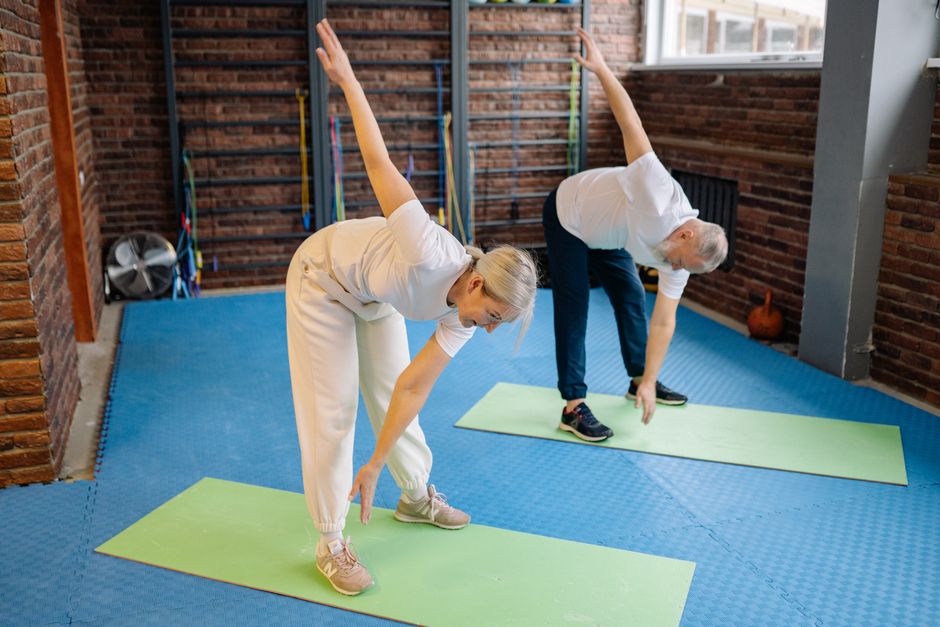
Photo: SHVETS production via Pexels
This article is for general informational purposes only and does not constitute medical or fitness advice. Consult your physician or a licensed physical therapist before starting a new exercise program, especially if you have existing health conditions.
Sources
- SHVETS production
- Nutramax Cosequin Senior Dog Soft Chews (60ct)
- Nutramax Cosequin DS Joint Supplement for Dogs (132ct)
- backs this up
- published in JAMA Internal Medicine found that exercise programs emphasizing fun
Disclosure: As an Amazon Associate, we earn a small commission from qualifying purchases at no extra cost to you. We only recommend products that genuinely support the topics covered in this article.
- Nutramax Cosequin Senior Dog Soft Chews (60ct) (~$32), Senior-specific Cosequin formula with added Omega-3s, designed for aging dogs with joint and immune health needs.
- Nutramax Cosequin DS Joint Supplement for Dogs (132ct) (~$36), The #1 veterinarian-recommended joint supplement brand, clinically studied for reducing joint pain in dogs.