 Linda Chen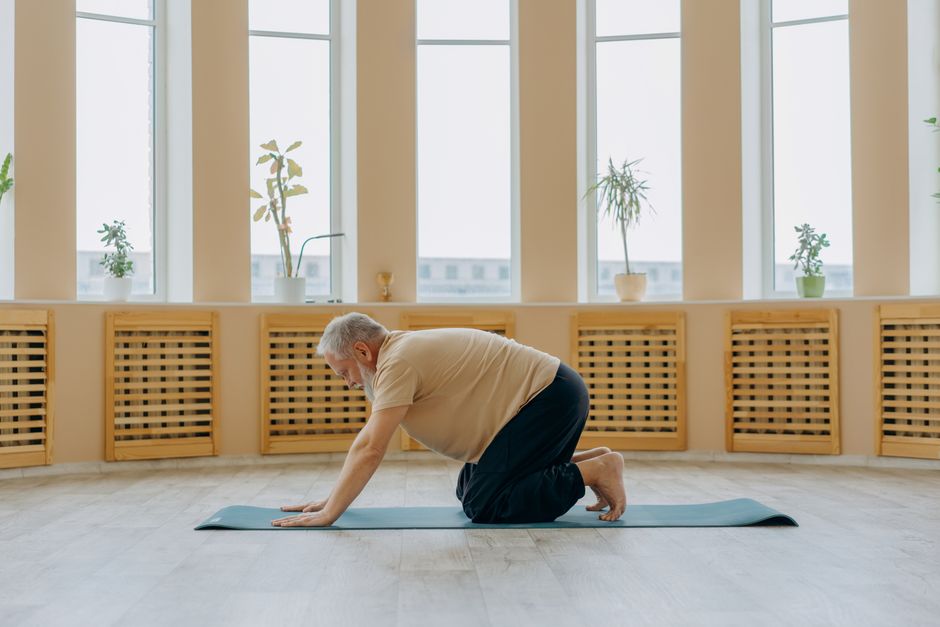
Most people with a bad back have been told, at some point, to “strengthen your core.” What they’re rarely told is which exercises are actually safe for them, and which ones are quietly making things worse. I’ve seen this play out dozens of times: someone comes in after months of doing crunches and sit-ups on a doctor’s recommendation, and their back pain has gotten measurably worse. Not because they were lazy or doing them wrong. Because crunches are genuinely a bad choice for most adults over 60 with existing back problems, full stop.
Let me save you some time and some pain.
Why Most “Core” Advice Is Wrong for This Group
The fitness industry spent about forty years treating the core like it was just the abs. Do a hundred crunches, get a strong core. The research moved on, but a lot of gyms and YouTube videos didn’t.
What we know now, partly from the work of spine biomechanist Stuart McGill at the University of Waterloo, is that spinal flexion under load, which is exactly what a crunch or a sit-up asks your spine to do, repeatedly compresses the lumbar discs in a way that can be genuinely damaging, especially if you already have disc issues, spinal stenosis, or osteoporosis. McGill has measured this directly. A single crunch can put over 3,000 newtons of compressive force on the lumbar spine. For a 65-year-old with a herniated disc at L4-L5, that’s not “core training.” That’s a bad idea dressed up as exercise.
What most people don’t realize is that the core isn’t primarily a movement machine. Its real job is stability, resisting movement, keeping your spine safe while your arms and legs do things. The most effective core exercises for older adults with back pain are ones that train that anti-movement function.
Here’s the other thing I want you to hold onto: a weak core isn’t just an aesthetic problem or a performance problem. Falls are the leading cause of injury-related death in adults over 65, and your core musculature, specifically the deep stabilizers like the transverse abdominis and multifidus, is part of what keeps you upright and recovers you when you stumble. This is genuinely consequential.
The Exercises That Actually Work
I want to walk you through a short list of movements I’d actually use with a client who has chronic low back pain, a history of disc problems, or general age-related spinal degeneration. These aren’t the easiest things I’ve ever prescribed, but they’re the safest entry points I know.
Dead Bug
This one looks almost embarrassingly simple. You lie on your back with your knees bent at 90 degrees, feet off the floor, arms pointing straight up at the ceiling. Then you slowly lower one arm overhead while simultaneously extending the opposite leg, keeping your low back pressed into the floor, and bring everything back. Alternate sides.
The reason I love this for people with back pain is the setup itself: you’re lying down, so your spine is unloaded. You’re forced to maintain a neutral lumbar position or the whole thing falls apart. And if someone can’t keep their back flat during the leg extension, that’s valuable diagnostic information, not a failure.
Start with 3 repetitions per side. That’s it. Go slow. If your back arches off the floor when you extend your leg, shorten the range of motion. You don’t have to straighten the leg fully to get the benefit.
Bird Dog
The bird dog is the standing version of the dead bug concept. You’re on hands and knees (use a folded yoga mat or kneeling pad if you have knee sensitivity), and you extend one arm forward while extending the opposite leg back, hold for about 8-10 seconds, and return. The goal is a perfectly flat back, no rotation of the hips, no dipping on one side.
This one trains balance and coordination alongside spinal stability. I’d argue it’s one of the five most important exercises any adult over 60 should be doing, regardless of back history.
One cue I always give: instead of thinking “lift your leg,” think “push your heel toward the wall behind you.” That subtle shift tends to produce much better alignment and far less lower-back hyperextension.
Glute Bridge
Technically a hip exercise, but I’m including it because a significant chunk of what presents as “core weakness” in older adults is actually glute weakness. The gluteus maximus and the spinal extensors work together to support the pelvis. When the glutes are underperforming, the erector spinae and quadratus lumborum overwork, and that’s a recipe for chronic tightness and pain.
Lie on your back, knees bent, feet flat on the floor about hip-width apart. Press through your heels and lift your hips until your body forms a straight line from knees to shoulders. Hold two seconds at the top, lower slowly. That’s one rep.
If you feel this primarily in your hamstrings rather than your glutes, move your feet slightly closer to your body. You want the glutes doing the work.
Modified Side Plank (From the Knee)
A full side plank is too demanding for most people entering this kind of program. The modified version, where you prop up from your bottom knee rather than your foot, cuts the load significantly while still training the lateral stabilizers, the quadratus lumborum and the obliques, which are critical for side-to-side stability and for protecting the spine during rotation.
Lie on your side, bottom knee bent at about 90 degrees, top leg straight or stacked. Prop yourself up on your elbow (directly below your shoulder) and your bottom knee. Lift your hip off the floor until your body forms a diagonal line. Hold 10-15 seconds, lower, rest, repeat.
This one has a learning curve. Most people dip their hips the moment they start feeling fatigue. That’s the signal to stop, not to push through.
Heel Slides
This is where I’d start if someone is having an active flare-up or is very deconditioned. Lie on your back, knees bent. Slowly slide one heel along the floor until the leg is straight, then slide it back. That’s the whole exercise.
It sounds trivial. It isn’t. Done correctly, with the lower back pressed gently into the floor and the abdominals lightly braced, this is genuine core activation work. And the reason I’d choose it for someone in acute pain is that it involves almost no spinal loading whatsoever. You’re not compressing, not shearing. You’re just teaching your brain to coordinate the deep stabilizers while the superficial muscles stay quiet.
The Honest Talk About Planks
5 Exercises for Seniors to do EVERY DAY · Vive Health on YouTube
Here’s a take I know some trainers disagree with: I don’t think the standard forearm plank is the right starting point for most seniors with back pain, even though it looks like a “safe” exercise.
The problem isn’t the plank itself. It’s that holding a plank long enough to feel like you did something requires enough endurance to maintain perfect spinal alignment throughout, and most people with weak cores and back pain can’t do that. What happens is they sag in the middle after about 15 seconds, which puts the lumbar spine into extension under load, and we’re back to a bad place.
If you want to work toward planks, the right progression is: dead bug and bird dog for 4-6 weeks, then modified plank from the knees with a strict 10-second hold, then extend from there. McGill himself recommends short holds (8-10 seconds) repeated multiple times rather than one long hold, and the research backs that up.
A Note on What to Do Before You Start
I’d be doing you a disservice if I didn’t say this clearly: if your back pain has a specific diagnosis, whether that’s lumbar spinal stenosis, spondylolisthesis, a recent fracture, or active sciatica, you need a physical therapist to look at you before you build a home program. Not because these exercises are dangerous in general, but because certain diagnoses contraindicate certain movements. Stenosis patients, for example, sometimes tolerate gentle flexion better than extension, which is the opposite of what I’d expect for most disc patients. A 30-minute evaluation can save you months of unproductive effort.
If you don’t have a specific diagnosis and your doctor has cleared you for general exercise, the exercises above are a solid starting point. But listen to your body with unusual seriousness here. Mild muscle fatigue is expected. Pain during an exercise, or pain that’s worse for more than an hour after you finish, is a signal to back off.
Photo: Mikhail Nilov via Pexels
This article is for general informational purposes only and does not constitute medical or fitness advice. Consult your physician or a licensed physical therapist before starting a new exercise program, especially if you have existing health conditions.
Sources
- Mikhail Nilov
- Nutramax Cosequin Senior Dog Soft Chews (60ct)
- Nutramax Cosequin DS Joint Supplement for Dogs (132ct)
- backs that up
Disclosure: As an Amazon Associate, we earn a small commission from qualifying purchases at no extra cost to you. We only recommend products that genuinely support the topics covered in this article.
- Nutramax Cosequin Senior Dog Soft Chews (60ct) (~$32), Senior-specific Cosequin formula with added Omega-3s, designed for aging dogs with joint and immune health needs.
- Nutramax Cosequin DS Joint Supplement for Dogs (132ct) (~$36), The #1 veterinarian-recommended joint supplement brand, clinically studied for reducing joint pain in dogs.