 Robert Davis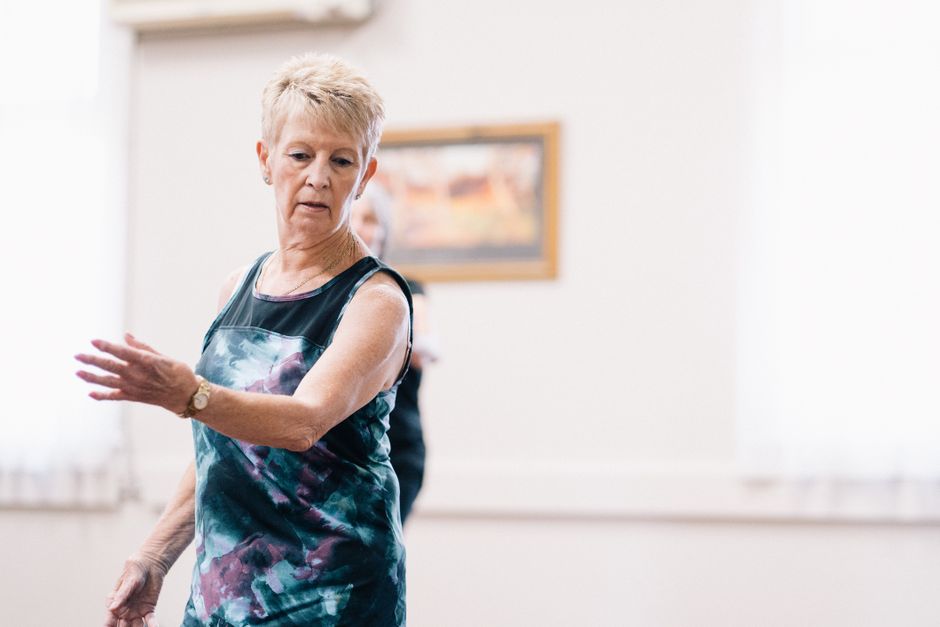
Most chair aerobics articles read like they were written by someone who’s never actually sat in one of those classes. They’ll tell you to “march your feet” and “wave your arms” and call it a day. What they skip: why the sequence matters, which movements quietly injure people, and what a well-designed session actually looks like at 60, 70, or 80-plus.
Let me fix that.
Chair aerobics done right is one of the most effective cardiovascular training tools available to older adults, and I mean that without any asterisks. A 2021 study published in the Journal of Aging and Physical Activity found that twice-weekly seated aerobic exercise programs improved VO2 max by roughly 12% in adults over 65 after just eight weeks. That’s not trivial. That’s the difference between getting winded on a short walk and not.
- Twice-weekly chair aerobics can improve cardiovascular capacity by ~12% in adults 65+ within 8 weeks.
- Seated doesn't mean easy: 20-30 minutes at moderate intensity (RPE 5-6 out of 10) drives real cardiovascular benefit.
- The most common injury in chair aerobics is shoulder impingement from overhead movements done wrong, not falls.
- A stable, armless chair on a non-slip surface is the single most important equipment choice you'll make.
- People with CHF, recent joint replacement, or uncontrolled hypertension should get specific clearance before starting.
Why “Just Sit Down and Move” Advice Falls Short
Here’s what I got wrong for the first two years of teaching this: I treated the chair as purely a safety accommodation. Something you used when someone “couldn’t” do standing exercise. That framing is backwards, and it costs people results.
The chair is a tool for isolating effort. When your lower body isn’t managing balance, your cardiovascular and muscular systems can work harder without the fear response that shuts down effort in deconditioned adults. I’ve had 78-year-old clients hit heart rates they hadn’t seen in years, safely, in a seated class, because the chair removed the anxiety equation. Standing aerobics for someone who’s had two falls in the past year means their nervous system is spending resources on fear management. Seated, that energy redirects to the workout.
The caveat: if the chair becomes a crutch that permanently replaces standing movement, you’re trading short-term gain for long-term loss. Good chair aerobics programs explicitly build toward more standing work over time, not away from it.
The Right Chair Actually Matters
This sounds obvious until you watch someone try to do seated marching in an armchair. The arms get in the way, the low seat height kills hip mobility, and the cushioning creates instability.
What you want: a sturdy, armless dining-style chair, seat height roughly 17-18 inches from the floor (so your hips sit level with or slightly above your knees), with four legs that don’t swivel or roll. Non-slip feet are non-negotiable. Push the chair against a wall if there’s any doubt about it sliding during vigorous upper-body movements.
What you don’t want: office chairs (they swivel), folding chairs with metal legs (they slide), recliners (obviously), or anything with wheels. I’ve seen a folding chair shoot backward on a hardwood floor during an enthusiastic arm-pump sequence. Nobody got seriously hurt, but that particular Tuesday is still memorable for the wrong reasons.
A Real Session Breakdown
Single BEST Exercise to Improve BALANCE in Seniors · Tim Fraticelli - PTProgress on YouTube
Here’s what a solid 30-minute chair aerobics session looks like, structured the way I’d actually run it:
Warm-up (5 minutes): Seated ankle circles, slow neck rolls (not full extension backward, that’s a fast route to dizziness in older adults), shoulder shrugs, and gentle trunk rotation. Heart rate should be going up, but only slightly. You’re lubricating joints, not taxing them.
Cardiovascular block (15-18 minutes): This is where most programs go either too easy or chaotic. Aim for a Rate of Perceived Exertion (RPE) of 5 to 6 on a 10-point scale. You should be breathing harder than normal but still able to say a short sentence. Good movement patterns include:
- Seated marching with alternating arm reaches
- Seated “jumping jacks” (arms go out, legs go wide, no actual jumping, obviously)
- Alternating knee lifts with opposite elbow drives
- Seated side steps (lift and tap to the side, alternate)
- Punching combinations (straight punches forward, cross-body, be precise about keeping the elbow below the shoulder during overhead variations)
Sequence matters here. Alternate between higher-effort moves and moderate ones so heart rate undulates rather than spikes. Two minutes of knee lifts, one minute of slower arm circles, back to two minutes of something harder. Your body adapts better to interval-style loading than a flat plateau, even seated.
Cool-down (5-7 minutes): Slow everything down intentionally. Seated cat-cow stretch, hamstring lengthening (slide one foot forward, flex the toes back), chest opener with hands clasped behind the lower back, and then just quiet breathing for ninety seconds. Don’t skip this. Post-exercise blood pressure drops too fast in older adults if you stop abruptly, and that’s when people get lightheaded standing up.
The Shoulder Problem Nobody Talks About
The most common injury I see from chair aerobics isn’t a fall. It’s shoulder impingement. Specifically, it comes from overhead arm movements done with internal rotation, which is exactly how most people naturally move their arms when they’re mimicking a “raise the roof” type motion.
When you lift your arm with the thumb pointing down (internally rotated), the supraspinatus tendon gets pinched under the acromion. Do that enthusiastically for 20 minutes, twice a week, for a month, and you’ll have a very unhappy shoulder. The fix is simple once you know it: cue “thumbs up” on any upward arm motion. It externally rotates the shoulder and clears that space. I tell clients to imagine they’re hitchhiking on both sides simultaneously. Sounds silly. Works every time.
If someone already has rotator cuff issues (and statistically, a significant percentage of adults over 60 do, a 2014 study in Radiology found that 22% of the general population has a full-thickness rotator cuff tear, many asymptomatic), overhead movements should be replaced with horizontal alternatives until they’ve seen a PT.
Comparing Common Chair Aerobics Formats
As of July 2026, there are several formats available to older adults, and the differences aren’t trivial.
| Format | Cost (monthly) | Live Instructor? | Customizable? | Best For |
|---|---|---|---|---|
| In-person senior center class | $0-$25 | Yes | Somewhat | Social engagement, form feedback |
| Live online group class (e.g., SilverSneakers LIVE) | Included with many Medicare Advantage plans | Yes | Minimal | Home-based, some social connection |
| Pre-recorded video (YouTube, streaming) | Free to ~$15/mo | No | No | Self-directed, flexible schedule |
| One-on-one virtual PT/trainer | $60-$120/session | Yes | Fully | Complex conditions, post-surgical |
| DVD programs (still available) | $20-$40 one-time | No | No | No-internet situations |
SilverSneakers is currently the most accessible option for Medicare Advantage members, and the LIVE classes specifically have improved significantly in quality over the past couple of years. That said, a live in-person instructor who can actually see your form is worth more than any digital alternative, full stop. If you have access to one, use it.
Worked Examples
Example 1: Margaret, 71, post-hip replacement (8 months out), deconditioned, anxious about falling. Started twice-weekly 20-minute chair aerobics with an in-person instructor. After 10 weeks, her 6-minute walk test distance improved from 312 meters to 401 meters, her resting heart rate dropped from 84 to 76 bpm, and she reported sleeping better. The fall anxiety didn’t disappear, but it decreased enough that she started taking short walks outside.
Example 2: A senior center in Tucson, Arizona added a 30-minute chair aerobics class to their Tuesday/Thursday schedule in early 2024. Attendance started at 9 participants. By the six-month mark, average class size had grown to 23. Staff reported a 40% drop in the number of members who cited “can’t do exercise” as a reason for not participating in fitness programming. Participation in standing classes also increased, which tracks with what I’d expect from improved confidence and baseline conditioning.
Example 3: Gerald, 68, well-controlled Type 2 diabetes, cleared by his cardiologist for moderate exercise. Switched from a standing aerobics class (which he kept skipping due to knee pain) to chair aerobics three times per week. After 12 weeks, his A1C moved from 7.4 to 6.9, and he reported zero skipped sessions. Consistency wins over intensity, every time.
Sources
- [Journal of Aging and Physical Activity (2021)]: Study on seated aerobic exercise improving VO2 max approximately 12% in adults 65+ over 8 weeks.
- [Radiology (2014)]: Population study finding approximately 22% prevalence of full-thickness rotator cuff tears in general population, including asymptomatic cases.
- [American College of Sports Medicine (ACSM) Guidelines for Exercise Testing and Prescription, 11th edition]: Recommendations for exercise intensity, RPE scales, and programming for older adults.
- [SilverSneakers Fitness Program (silversneakers.com)]: Current eligibility and class format information for Medicare Advantage participants.
- [National Institute on Aging, Exercise & Physical Activity Guide (nia.nih.gov)]: Evidence-based recommendations for aerobic and strength training in adults 65+.
Photo: Wellness Gallery Catalyst Foundation via Pexels
This article is for general informational purposes only and does not constitute medical or fitness advice. Consult your physician or a licensed physical therapist before starting a new exercise program, especially if you have existing health conditions.