 James Cooper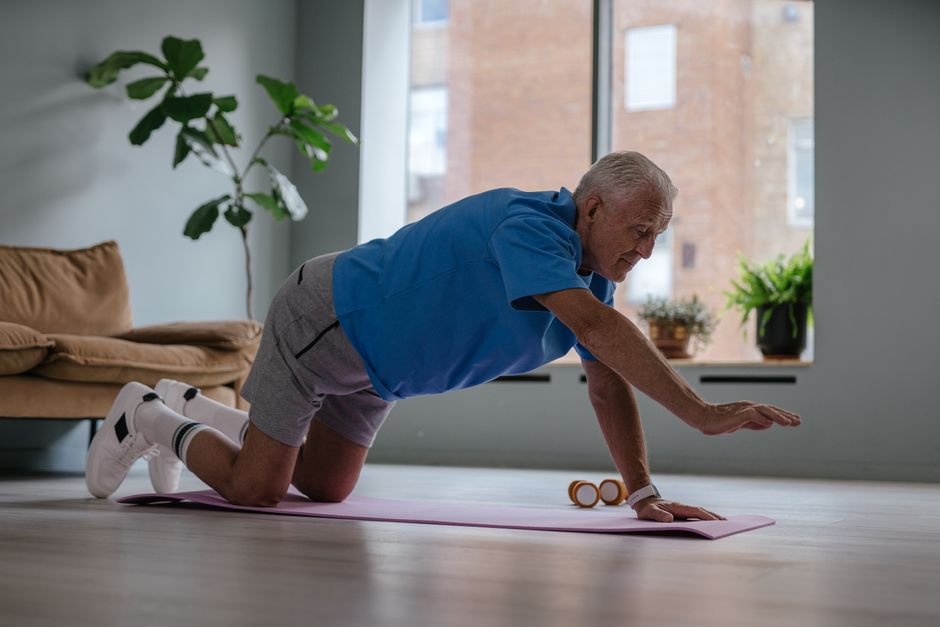
Most advice about osteoporosis exercise is dangerously incomplete. Not wrong, exactly, but incomplete in ways that can lead you straight into a fracture rather than away from one.
I’ll be honest: when I first started working with clients who had osteoporosis diagnoses, I assumed the research was pretty clear. Load the bones, they adapt, done. What I found instead was a topic full of legitimate disagreement, poorly applied guidelines, and a massive gap between what the studies show and what actually gets communicated to patients leaving their doctor’s office with a DEXA scan printout and a pamphlet about calcium.
So let me give you the real picture.
Your bone density T-score and fall history determine which exercises are appropriate-this matrix helps match intensity to your actual risk level.
| Exercise Type | Osteopenia (T-score -1.0 to -2.5), Low Fall Risk | Osteoporosis (T-score below -2.5), Low Fall Risk | Any T-score, High Fall Risk or Prior Fracture |
|---|---|---|---|
| Jumping/Hopping | Appropriate-50+ moderate impacts per session shown beneficial | Generally avoid-consult specialist first | Avoid-fall and fracture risk outweighs benefit |
| Resistance Training | Progress to 70-85% of 1-rep max; 2-3 sessions/week | Start at 50-60% 1RM; supervised progression recommended | Moderate loads with stable positions; avoid spinal flexion under load |
| Weighted Vests (Walking/Stairs) | 4-10% of body weight; effective for hip loading | Start at 4% body weight; gradual increase with clearance | Only if balance is stable; consider belt weights instead |
| Spinal Extension Exercises | Recommended-prone back extension, bird-dog variations | Recommended-key for vertebral fracture prevention | Recommended-prioritize these; avoid flexion-based core work |
| Balance Training | Include 2-3x/week as fracture prevention | Essential-tandem stance, single-leg work, perturbation drills | Daily priority-supervised initially; progress surface difficulty |
| Yoga/Pilates | Modify flexion-heavy poses; standing poses beneficial | Avoid loaded spinal flexion and twisting; many poses need modification | Only bone-safe modified classes; avoid floor-to-stand transitions if unsteady |
General information for comparison, confirm specifics for your situation.
Why “Just Walk More” Is Not Enough
Walking is probably the most common recommendation older adults hear after an osteoporosis diagnosis. And I get it. Walking is safe, accessible, and genuinely good for you in about fifty different ways. But if building or preserving bone density is your goal, walking alone won’t move the needle much, and the research here is pretty consistent on that point.
Bone responds to mechanical stress. Specifically, it responds to forces that are higher than what it normally experiences. If your skeleton’s already used to walking, walking doesn’t provide a novel enough stimulus to trigger bone remodeling. A 2017 study in the Journal of Bone and Mineral Research looked at postmenopausal women doing supervised resistance training twice a week and found meaningful improvements in femoral neck and lumbar spine density. Walking groups in similar studies rarely show the same gains.
What bone tissue needs is progressive loading. That means gradually increasing the challenge over time, whether through resistance training, impact activities, or both. The word “progressive” is doing a lot of work in that sentence.
The Two Categories That Actually Matter
Here’s how I think about exercise for osteoporosis: two categories, both necessary, neither sufficient on its own.
Weight-bearing and impact exercise. This covers anything where you’re on your feet and gravity is working through your skeleton. Brisk walking, dancing, hiking, low-impact aerobics, and stair climbing all count. So does jumping, though that requires a more careful conversation (more on that in a moment). The mechanical loading from impact sends signals to osteoblasts, the cells that build new bone. Even brief periods of higher-impact activity, like 10 to 20 jumps a day, have shown effects in some studies. The research on jumping is actually more interesting than most people realize, with a 2014 study in the American Journal of Health Promotion showing premenopausal women doing simple jump training improving hip bone density over just 16 weeks. For older adults with established osteoporosis, the picture gets messier, and impact intensity has to match carefully to your fracture risk.
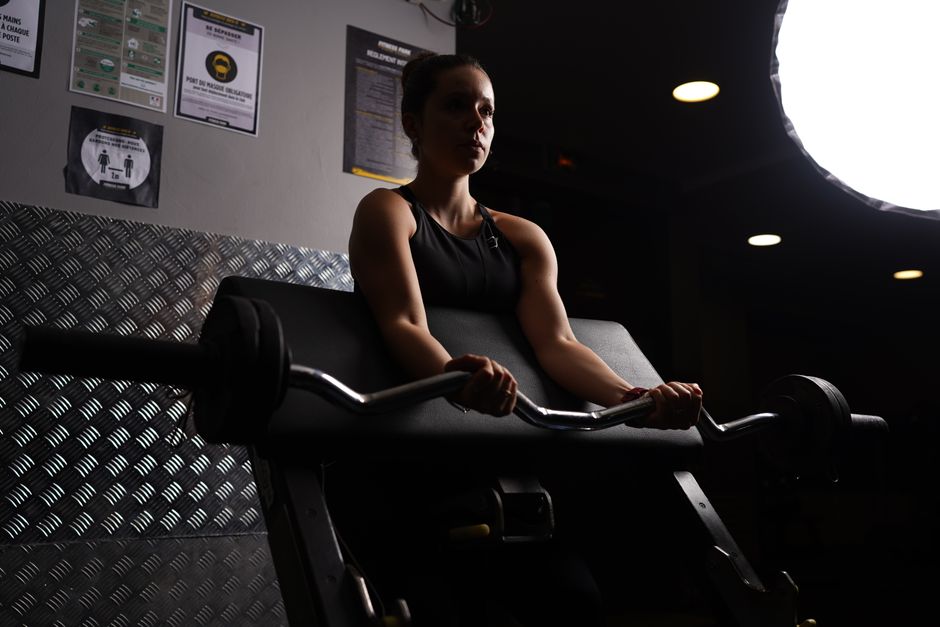
Resistance training. This is the one I’d fight hardest for if I had to choose. Lifting weights, using resistance bands, or working against your own bodyweight creates compressive and tensile forces through bone that actually stimulate remodeling. Hip hinge movements like deadlifts and Romanian deadlifts load the femoral neck and spine. Rows and lat pulldowns load the upper spine and shoulder girdle. Squats load the hips and spine simultaneously. Done with proper form and appropriate progression, these exercises do what walking simply can’t.
The Exercises I Actually Recommend (and Why)
Let me get specific, because generic advice isn’t useful here.
Deadlifts and hip hinges. I’ll put this at the top. A proper hip hinge, even done with just bodyweight to start, trains the exact movement pattern that protects against the most dangerous falls. It loads the posterior chain: glutes, hamstrings, spinal erectors. All of those matter enormously for balance and posture. If someone’s new to this, I start with a Romanian deadlift using a broomstick, then a light kettlebell (8 to 12 kg works for most beginners), then progress from there. The form coaching matters more here than anywhere else. Rounding your lumbar spine under load is exactly what you don’t want with osteoporosis, especially with vertebral involvement.
Squats. Not the knee-buckling, heels-off-the-floor version you sometimes see people grinding through. Box squats to a chair are a great starting point. They teach proper depth, give you a safety target, and remove the fear of falling backward. Once you’re confident, move to goblet squats with a dumbbell or kettlebell held at the chest. The loading goes through your hips and spine in a way that’s highly beneficial for bone density at those exact sites.
Rows. Upper back weakness is almost universal in older adults, and it contributes directly to the forward-flexed posture that increases thoracic fracture risk. Seated cable rows, dumbbell rows, or even resistance band rows done from a seated position all work well. I’ve seen clients go from a pronounced dowager’s hump posture to noticeably more upright just from consistent rowing work over six months. Not a guarantee for everyone, but it’s real.
Step-ups. Underrated. A simple step-up onto a sturdy box or stair, holding dumbbells, loads the hip unilaterally in a way that mimics the mechanics of a real-world stumble and recovery. It also builds single-leg stability, which is one of the strongest predictors of fall prevention.
Wall push-ups and progressed push-up variations. Loading through the wrist and forearm with resistance has shown benefits for distal radius bone density. That matters because the wrist is one of the first fracture sites in a forward fall. Start with wall push-ups if floor push-ups feel too challenging, then progress to an incline position using a countertop, then the floor.
What I’d caution against: spinal flexion exercises under load, like full sit-ups or crunches. If there’s vertebral osteoporosis or prior compression fractures, repeated loaded spinal flexion is a genuine fracture risk. Wendy Kemmler and others have shown that exercises requiring significant forward spinal loading should be approached carefully or modified. Plank variations are usually a safer way to train anterior core stability.
Balance Training: The Part Everyone Underestimates
I’ve seen programs that nail the bone-loading piece and completely ignore this, which is a mistake.
Fractures don’t happen because your bones are weak in isolation. They happen because you fall, and then the impact exceeds what your bone can absorb. Reducing fall risk might actually be more immediately protective than any bone density change you’re going to get from a six-month exercise program. Bone remodeling takes time. Balance can improve faster.
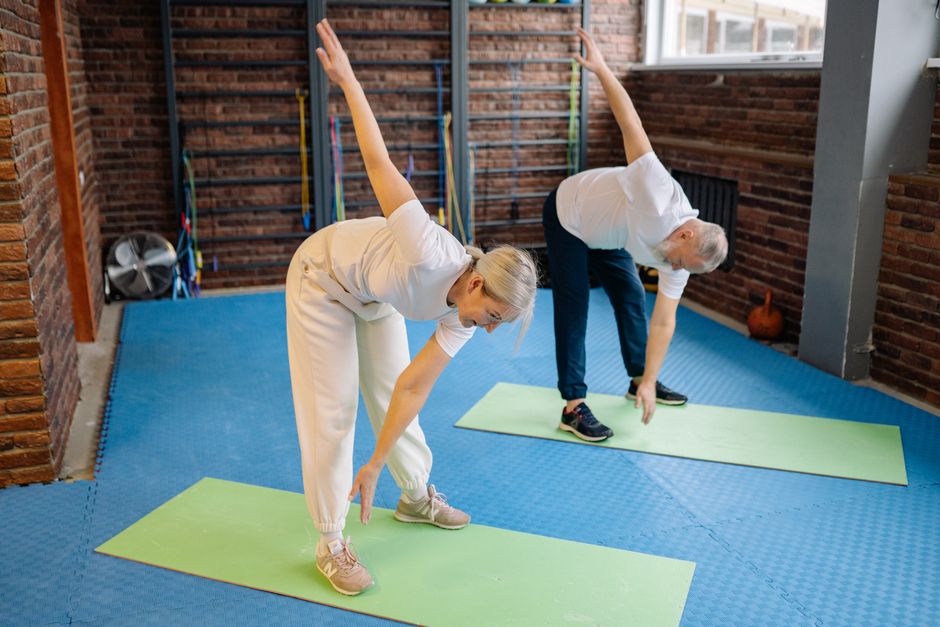
Single-leg stands, practiced daily, are one of the most evidence-backed interventions out there. Start with holding a counter. Progress to no hands. Progress to eyes closed. A 2004 Cochrane review (updated multiple times since) consistently finds that balance and resistance training combined reduces fall rates meaningfully, with some analyses suggesting a 23% reduction in fall risk. That number isn’t a guarantee, but it reflects a real signal.
Tai chi deserves a mention here. I was skeptical of it for years, to be honest. It felt like it wasn’t intense enough to matter. What surprised me was how strong the balance outcomes data actually is. A 2020 BMJ study found that tai chi reduced injurious fall rates by 50% compared to a stretching control group in adults over 70. The bone density effects are modest, but the fall prevention effects are significant.
A Note on Intensity and Knowing Your Own Risk Level
Sources
- SHVETS production
- was pretty clear
- here is pretty consistent on that point
- in the Journal of Bone and Mineral Research looked at postmenopausal women doing
- on jumping is actually more interesting than most people realize
This is where I’ll push back a little against some of the blanket “low-impact only” advice that gets handed to everyone with an osteoporosis diagnosis.
If you have osteoporosis but no prior fractures and a T-score between -2.5 and -3.0, your exercise capacity is probably broader than you’ve been told. Progressive resistance training at moderate to high loads is generally supported for this population. A program like LIFTMOR, developed by Belinda Beck at Griffith University in Australia, used relatively heavy lifting with postmenopausal women who had osteoporosis and found significant bone density improvements without increased fracture incidents. That program used barbell deadlifts and overhead presses at about 80-85% of estimated max effort.
If you have a prior vertebral compression fracture, multiple fractures, or a T-score below -3.5, the conversation gets more individualized and a qualified professional needs to be involved. Not because exercise is off the table, but because the specific modifications matter a great deal and I can’t responsibly give a blanket prescription for that situation in an article.
Always get clearance from your physician or a physical therapist who knows your imaging before starting a new program, full stop.
The most important thing I can leave you with isn’t a specific exercise. It’s this: the fear of doing too much is actually hurting a lot of people with osteoporosis more than a thoughtfully designed, progressive program ever would. Bones respond to challenge. So does the rest of you.
Photo: SHVETS production via Pexels
This article is for general informational purposes only and does not constitute medical or fitness advice. Consult your physician or a licensed physical therapist before starting a new exercise program, especially if you have existing health conditions.