 Helen Santos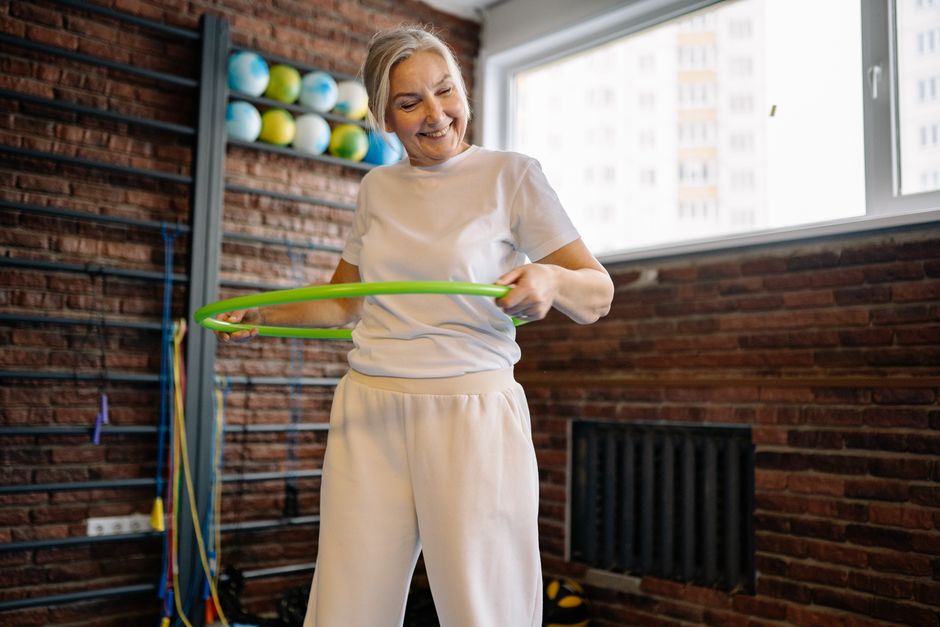
Three things I’ve watched derail more women over 65 than almost anything else: doing too much too soon, following routines designed for 35-year-olds, and skipping strength training because someone told them cardio was “safer.” All three are mistakes. The last one is genuinely dangerous.
Here’s what I’ve seen work, after years of training women in their 60s, 70s, and 80s: a short, consistent routine built around four physical qualities that matter more than anything else at this stage of life. Strength. Balance. Mobility. Cardiovascular health, in that order of priority. Not because cardio doesn’t matter, but because losing muscle and losing balance are what actually put women in the hospital.
Let’s get specific.
Use these evidence-based benchmarks to calibrate your routine, adjust based on your starting fitness level and how you recover between sessions.
| Training Goal | Weekly Frequency | Session Duration | Intensity Marker | Progression Signal |
|---|---|---|---|---|
| Muscle preservation | 2-3 strength sessions | 20-30 minutes | Last 2 reps of each set feel challenging but doable with good form | Ready to add weight or reps when current load feels easy for all sets |
| Balance improvement | 3-5 brief sessions | 5-10 minutes | Exercises should challenge stability without causing stumbles | Progress from two-foot to single-leg or add eyes-closed variations |
| Mobility maintenance | Daily or near-daily | 5-15 minutes | Gentle tension at end range, never sharp pain | Gradually increase range of motion over weeks |
| Cardiovascular health | 3-5 sessions | 20-30 minutes | Can talk in short sentences but not sing; moderate perceived effort | Increase duration before intensity; add intervals only when base is solid |
| Recovery days | 1-2 days per week | - | Light movement like walking or gentle stretching only | If soreness persists beyond 48 hours, add another recovery day |
General information for comparison, confirm specifics for your situation.
Why Most “Senior Fitness” Programs Miss the Mark
A lot of the programs marketed to women over 60 are, honestly, too gentle. Chair yoga, five-pound dumbbell circuits, walking on a treadmill for 20 minutes. None of these are bad. But for a 65-year-old woman in decent health, they’re often not enough to actually build strength or slow the muscle loss that accelerates after menopause.
Here’s what most people don’t know: sarcopenia (age-related muscle loss) doesn’t happen slowly. After 60, you can lose 1-2% of your muscle mass per year if you’re not actively working against it. That’s not background noise. That’s a significant shift in how you move, how stable you are, and what you can do independently a decade from now.
The research is pretty clear on this: progressive resistance training is the most effective way to preserve muscle and bone density in older women. A 2022 review in the Journal of Strength and Conditioning Research looked at 30-plus studies and found that twice-weekly strength training with progressive load consistently improved lean mass, functional strength, and fall risk in women over 60. “Progressive” is the key word. You have to gradually increase the challenge over time, not just repeat the same light workout forever.
I’ve had clients come to me after years of water aerobics three times a week, genuinely baffled about why they still can’t get up from the floor. Cardiovascular fitness and muscular strength are different systems. You need to train both.
The Four-Day Framework That Actually Works
You don’t need to work out every day. In fact, for most women in this age group, that’s counterproductive. Recovery takes longer at 65 than at 40, and overtraining becomes a real problem even at lower intensities.
What I recommend as a starting point is four days per week: two strength days, one dedicated balance and mobility day, and one longer cardio session. The other three days are rest, light walking, or gentle stretching, whatever feels good.
Strength days (two per week, with at least one rest day between them)
Focus on compound movements: exercises that work multiple muscle groups at once. Squats, deadlifts, step-ups, seated rows, overhead press, chest press, hip hinges. They give you the most functional return for your time.
A realistic starting session looks like this:
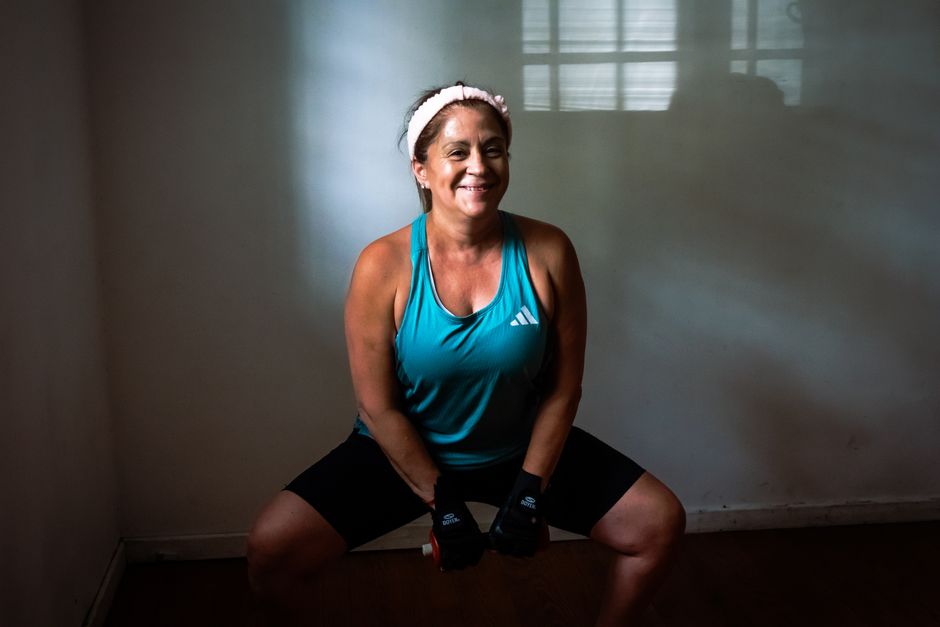
- Goblet squat with a light kettlebell (8-12 lbs to start): 3 sets of 8-10 reps
- Romanian deadlift with dumbbells: 3 sets of 8
- Seated cable row or resistance band row: 3 sets of 10
- Dumbbell chest press on a bench or stability ball: 3 sets of 8
- Standing overhead press (light dumbbells or a resistance band): 2 sets of 10
- Farmer’s carry (hold two dumbbells and walk 30 feet): 3 passes
The whole thing takes under 40 minutes. Every two to three weeks, increase the weight slightly once those reps feel genuinely easy. Not painful. Easy. There’s a real difference.
One thing I won’t budge on: if you’ve never lifted weights, don’t start alone with YouTube videos. Three to five sessions with a trainer who has experience working with older adults is worth the cost. It’s not about needing someone forever. It’s about learning what correct form actually feels like in your body, because form errors in deadlifts and squats don’t hurt you on day one. They hurt you on week six.
Balance and mobility day (one per week)
This is the session most women skip. Don’t.
Falls are the leading cause of injury-related death in adults over 65, according to the CDC. Balance declines significantly after menopause due to changes in proprioception, inner ear function, and leg strength. The good news is it responds well to training.
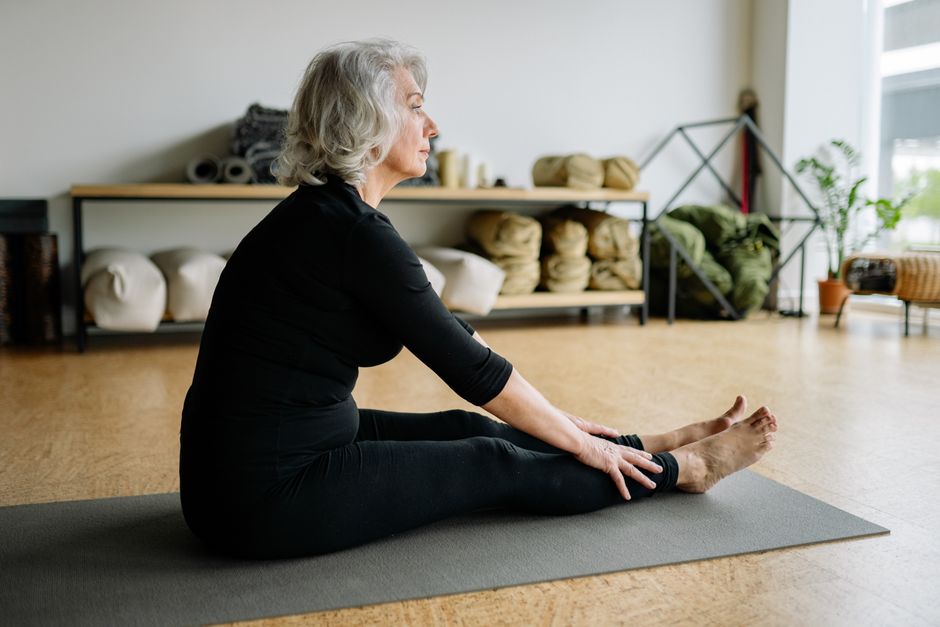
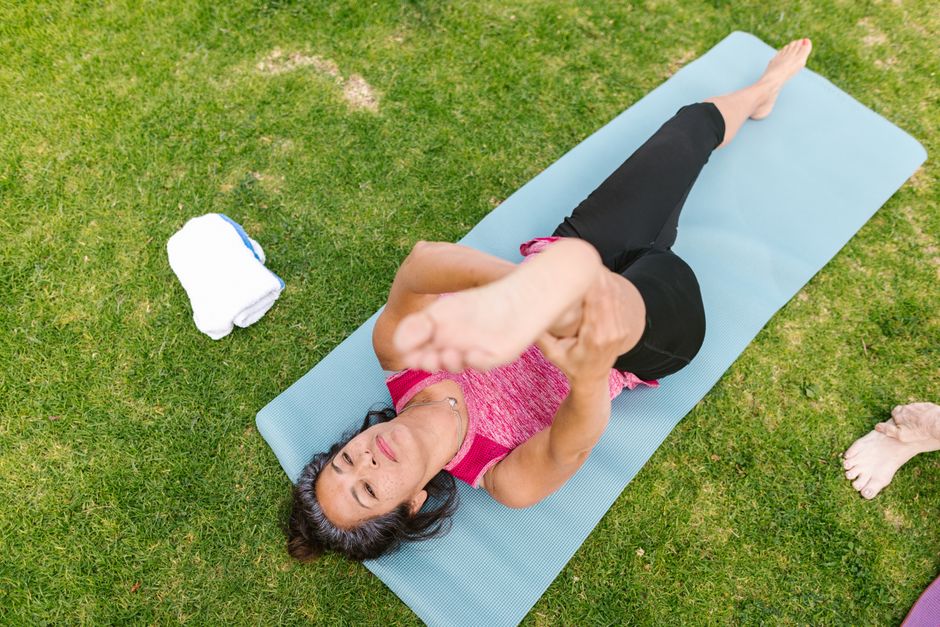
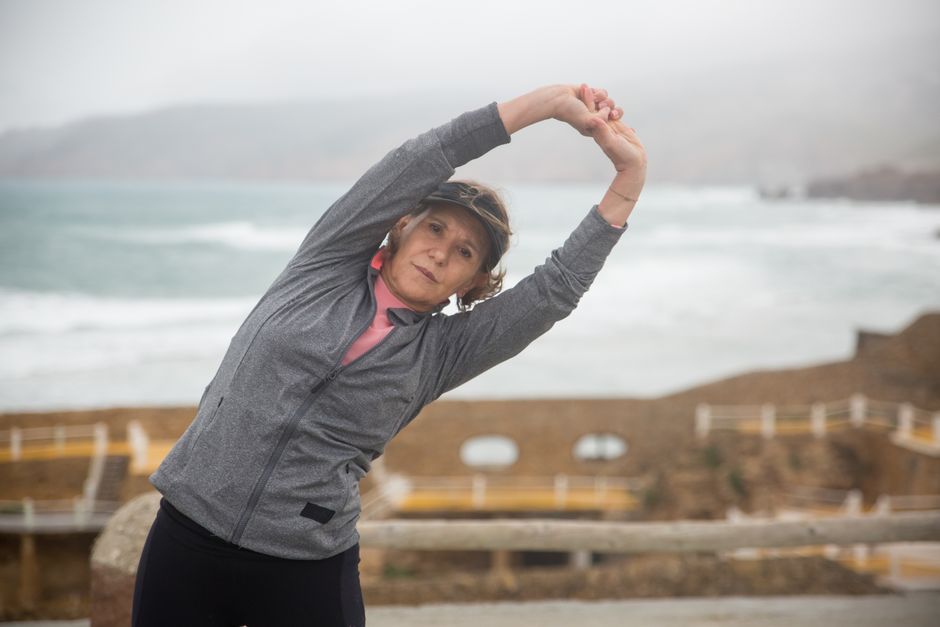
A 30-minute balance and mobility session might include single-leg stands (eyes open, then closed), tandem walking (heel to toe along a line), hip circles, thoracic rotation exercises, and yoga-inspired moves like warrior I and tree pose. You don’t need a studio. You need a clear floor and something nearby to hold if you lose your footing.
Tai chi is worth singling out because the evidence for it in preventing falls is remarkably strong. A 2021 meta-analysis in JAMA Internal Medicine found that tai chi reduced fall rates by 21% in older adults compared to other interventions. If a local senior center or community rec program offers it, I’d genuinely recommend trying it, especially in your first year.
Cardio day (one longer session per week)
Brisk walking, cycling, swimming, a rowing machine, a dance class, something that gets your heart rate into a moderate zone (roughly 60-70% of max heart rate, which for a 65-year-old is approximately 93-110 BPM) for 30-45 minutes.
The specific activity matters less than your actual effort level. “Brisk walking” means you can still hold a conversation but wouldn’t want to sing. A 2019 study in the British Journal of Sports Medicine found that 150 minutes of moderate aerobic activity per week was associated with a 35% lower risk of cardiovascular disease in adults over 60. You don’t have to hit that all in one session. Your two shorter walks on strength days count toward it.
The Equipment Question
You don’t need a gym membership to do this well. But you do need a few things.
A set of adjustable dumbbells costs around $80-150 and is genuinely worth it. The PowerBlock Sport 24 and the Bowflex SelectTech 552 are both solid options in the $150-200 range. Resistance bands in light, medium, and heavy sets run $15-25 on Amazon and handle a lot of the pulling work.
If you want access to machines, a basic gym membership at a YMCA typically costs $40-65 per month depending on your location. Many YMCAs offer Silver Sneakers, a fitness benefit included with many Medicare Advantage plans that covers the membership entirely. Check your plan benefits before paying out of pocket.
One piece of equipment I think is underrated for this age group: a sturdy weight bench, or even a firm, non-slip step platform. Being able to do incline and decline variations, step exercises, and seated presses safely at home is genuinely useful. A basic adjustable bench from Rep Fitness runs about $150.
What About Joint Pain?
Exercise for women with knee arthritis, hip replacements, osteoporosis, or other structural issues looks different. Not impossible. Different.
If you have osteoporosis, high-impact activities like jumping and certain spinal flexion exercises (crunches, toe touches) can increase fracture risk. That doesn’t mean no exercise. It means bone-loading through walking, stair climbing, and weight-bearing strength work becomes even more important, while a few specific movements need modification or avoidance.
If you have knee arthritis, squats might start as partial squats, or get replaced temporarily with leg press on a machine where the load distributes more easily. I’ve seen women convinced they “can’t do legs” who, after working with a physical therapist to modify their approach, were doing full goblet squats within four months.
The point is: consult your doctor or a physical therapist if you have a specific diagnosis. Not to get permission. To get information you can actually use.
Getting Started Without Burning Out
Sources
- Yan Krukau
- is pretty clear on this: progressive resistance training is the most effective w
- in JAMA Internal Medicine found that tai chi reduced fall rates by 21% in olde
- in the British Journal of Sports Medicine found that 150 minutes of moderate a
The most common pattern I see: a 65-year-old woman decides to get serious, does five days of intense exercise in week one, is exhausted and sore by day six, and quietly stops. This isn’t a willpower problem. It’s a planning problem.
Start with two days of strength work for the first three weeks. That’s it. Add the balance day in week four. Add the longer cardio session in week six or seven. This is slower than it sounds but dramatically more sustainable.
Track your weights. Write them down on paper, in a notes app, wherever. It sounds tedious but it’s the single most useful thing you can do for progressive strength training, because memory is unreliable and small gains are invisible without a record. Lifting 15 lbs instead of 12 lbs on a row might feel trivial. Four months of that is meaningful.
Soreness is normal. Pain in a joint is not. Learn the difference between delayed onset muscle soreness (a dull ache in the muscle belly that peaks 24-48 hours after exercise and fades) and something that needs attention.
The window where building strength is easiest, where injury risk from training is manageable, and where the gains have the most time to compound: that’s right now. Not ten years ago, not “someday when things slow down.” A 65-year-old woman who spends the next two years building a consistent strength and balance practice will be in a completely different physical situation at 70 than one who doesn’t. I’ve watched it happen too many times to think otherwise.
Dana Hargrove is a certified personal trainer and physical therapist assistant specializing in strength and balance training for adults over 60.
Photo: Yan Krukau via Pexels
This article is for general informational purposes only and does not constitute medical or fitness advice. Consult your physician or a licensed physical therapist before starting a new exercise program, especially if you have existing health conditions.