 Linda Chen
You reach for something on the top shelf, and for just a moment, your feet feel unsure beneath you. Or maybe you’ve caught yourself grabbing the counter more often than you used to. Balance issues are one of the most common concerns for adults over 60, and many seniors are now turning to a balance board for seniors as a simple, at-home tool to rebuild stability and confidence.
But are these wobbly-looking boards actually safe? Worth your time and money? Let’s break it down plainly so you can decide what makes sense for your body.
Use these specific criteria to determine if a balance board is appropriate and how to use it safely.
- Before Starting, Medical Clearance:
- Get physician approval if you have neuropathy, vertigo, recent joint replacement, or blood pressure medications causing dizziness
- Wait at least 6 months post-hip or knee surgery before unsupported balance training
- Board Selection Thresholds:
- Choose rocker boards with tilt range ≤15° (vs. 20°+ for standard wobble boards)
- Minimum platform width: 15 inches for stable foot placement
- Weight capacity should exceed your weight by at least 50 lbs
- Non-slip surface texture required; avoid smooth wood finishes
- Environment Setup:
- Position within arm's reach of sturdy support (counter, rail, or chair back rated for 250+ lbs)
- Clear 3-foot radius around board of tripping hazards
- Use only on flat, non-carpeted surfaces to prevent board sliding
- Session Parameters for Beginners (First 4 Weeks):
- Start with both hands on support; progress to one hand, then fingertips only
- Initial sessions: 30-60 seconds on board, 3-5 repetitions
- Maximum 10 minutes total per day initially
- Stop immediately if experiencing dizziness, pain, or fatigue
- Progression Readiness Signs:
- Can stand 2 minutes with fingertip support only
- No loss of balance incidents for 2 consecutive weeks
- Comfortable looking straight ahead (not at feet) while balancing
General information for comparison, confirm specifics for your situation.
Why Balance Declines as We Age
Balance is a complex system. Your eyes, inner ear, muscles, and brain all have to work together. As we age, each of these systems can weaken, and the result is that feeling of unsteadiness that many seniors know too well.
Muscle strength, particularly in the legs and core, tends to decline after age 60. Reaction time slows too, which means your body has less time to catch itself when you start to tip.
Here’s the good news: balance is a skill. Like most skills, it can be practiced and improved at any age. That’s where balance boards come in.
What Is a Balance Board and How Does It Work
A balance board is a flat platform that sits on a curved or rolling base, creating an unstable surface that challenges your body to stay upright. When you stand on it, your legs, ankles, and core muscles constantly make small adjustments to keep you from falling.
This continuous micro-adjustment is a form of exercise called proprioceptive training. Proprioception is your body’s ability to sense where it is in space. Training it can significantly reduce fall risk.
Several types of balance boards are available:
- Rocker boards tilt side to side or front to back; great for beginners
- Wobble boards tilt in any direction; more challenging
- Roller boards sit on a cylinder; most advanced and not typically recommended for seniors starting out
- Inflatable balance cushions are soft discs that offer gentle instability; very senior-friendly
Are Balance Boards Safe for Seniors
How to Improve Balance | Senior Exercises for Balance · Yes2Next on YouTube
The honest answer is: it depends on the type you choose and how you use it. Balance boards aren’t one-size-fits-all, and jumping into the wrong one without support can increase your fall risk rather than reduce it.
When used correctly with proper precautions, many balance boards are very safe for healthy seniors. The key is starting slow, choosing a beginner-friendly board, and always having something sturdy to hold onto nearby.
Before starting, speak with your doctor or a physical therapist if you have any of the following:
- A history of falls
- Osteoporosis or fragile bones
- Knee, hip, or ankle joint problems
- Vertigo or inner ear conditions
- Neuropathy affecting your feet
For most seniors with medical clearance, starting with an inflatable balance cushion or a gentle rocker board near a wall or sturdy chair is perfectly safe and effective.
Pro Tip: Always place your balance board near a wall, countertop, or sturdy chair when you first start. Having a hand support within easy reach gives you the confidence to focus on your balance without the fear of falling. That peace of mind actually helps you improve faster.
The Real Benefits of Using a Balance Board for Seniors
When used consistently, a balance board for seniors can deliver a surprisingly wide range of benefits. It’s not just about staying upright.
Here are some of the most well-documented benefits:
- Reduced fall risk, stronger ankles and improved reaction time mean your body catches itself more effectively
- Better core strength, standing on an unstable surface quietly activates your abdominal and back muscles
- Improved ankle stability, great for seniors with weak ankles or a history of sprains
- Sharper proprioception, your nervous system gets a workout, helping your body “re-learn” balance
- Increased confidence, as you feel steadier, everyday activities like walking on uneven ground become less intimidating
- Low-impact exercise, it’s gentle on joints while still providing a real workout for stabilizing muscles
Research published in geriatric rehabilitation journals consistently shows that balance training, including the use of unstable surfaces, meaningfully reduces fall rates in older adults. Falls are the leading cause of injury among seniors, so any safe tool that helps prevent them is worth considering.
How to Get Started Safely With a Balance Board
Starting the right way makes all the difference between a helpful new habit and a frustrating or unsafe experience. Here’s what to do.
Step 1: Choose the right board. For most seniors, an inflatable balance disc or a simple rocker board is the best starting point. These offer gentle instability that’s easier to manage than a full wobble board.
Step 2: Set up a safe environment. Place the board near a kitchen counter, sturdy table, or chair back. Never use it on a slippery floor. Carpet or a yoga mat underneath works well.
Step 3: Start with short sessions. Begin with just 1 to 2 minutes of standing on the board while holding onto your support. Your stabilizing muscles will tire quickly at first, and that’s completely normal.
Step 4: Progress gradually. Over several weeks, try reducing how much you rely on your hand support. You can also try gentle weight shifts, slow marching in place, or small knee bends as you advance.
Step 5: Be consistent. Aim for 5 to 10 minutes of balance board practice most days of the week. The benefits come from regularity, not intensity.
Best Balance Board Options for Seniors
Not all balance boards are created equal when it comes to senior fitness. When shopping, look for:
- Non-slip surface, essential for safety; look for textured tops or grip tape
- Low tilt angle, beginner boards should tilt no more than 15 degrees
- Wide platform, a larger standing area gives you more room to adjust your stance
- Weight capacity, check that the board comfortably supports your weight
- Adjustable resistance, some inflatable cushions can be deflated slightly for less challenge
Popular and well-reviewed options for seniors include inflatable balance discs (often called wobble cushions), the Yes4All wooden wobble board, and the Revolution 101 Balance Board, which offers adjustable difficulty levels suitable for beginners.
Other Balance Exercises to Pair With Your Board
A balance board works best as part of a broader balance training routine. The more varied your training, the better your overall stability will become.
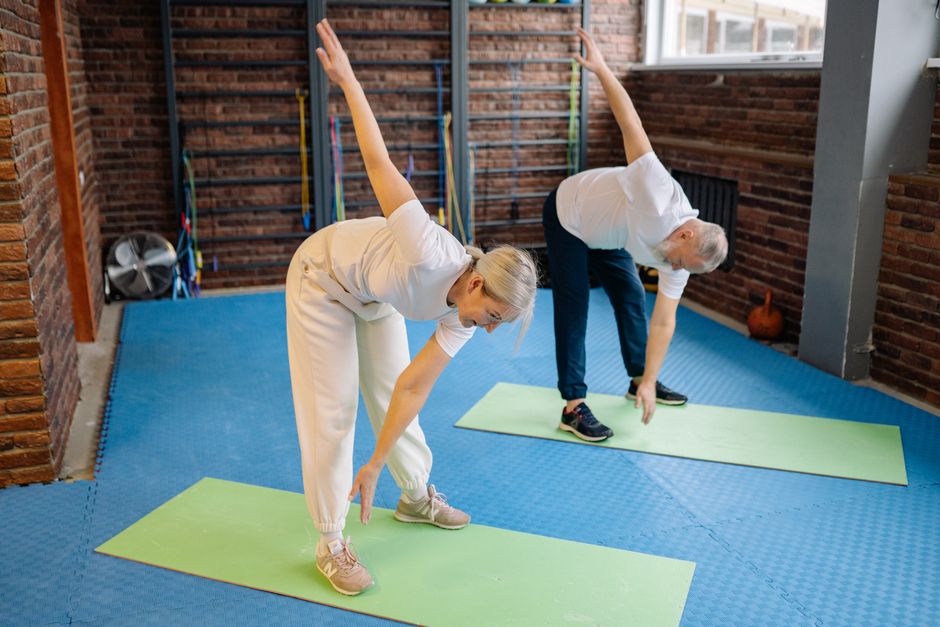
Try pairing your balance board sessions with these gentle exercises:
- Single-leg stands, hold for 10 to 30 seconds while gripping a counter
- Heel-to-toe walking, walk along a straight line like a tightrope
- Sit-to-stand practice, rising from a chair without using your hands builds leg and core strength
- Tai chi or yoga, both have excellent research behind them for fall prevention in seniors
Combining these exercises with regular balance board use gives your nervous system and muscles a well-rounded challenge and accelerates your progress.
You’ve Got This, One Steady Step at a Time
Improving your balance is one of the most powerful investments you can make in your independence and safety. A balance board for seniors, used safely and consistently, can help you feel more confident in your body, reduce your risk of falls, and keep you doing the activities you love for years to come.
Start small, stay safe, and remember that every minute you spend on that wobbly board is a minute you’re investing in a stronger, steadier future. You don’t have to be an athlete. You just have to show up and try.
Sources
- Nutramax Cosequin Senior Dog Soft Chews (60ct)
- Nutramax Cosequin DS Joint Supplement for Dogs (132ct)
- published in geriatric rehabilitation journals consistently shows that balance t
- behind them for fall prevention in seniors
Disclosure: As an Amazon Associate, we earn a small commission from qualifying purchases at no extra cost to you. We only recommend products that genuinely support the topics covered in this article.
- Nutramax Cosequin Senior Dog Soft Chews (60ct) (~$32), Senior-specific Cosequin formula with added Omega-3s, designed for aging dogs with joint and immune health needs.
- Nutramax Cosequin DS Joint Supplement for Dogs (132ct) (~$36), The #1 veterinarian-recommended joint supplement brand, clinically studied for reducing joint pain in dogs.