 Robert Davis
Most of us have heard the advice so many times it’s stopped registering: you need at least 150 minutes of moderate activity per week, plus two days of strength training. Good advice on paper. But for adults over 65, that prescription has a compliance problem so severe it’s almost embarrassing to mention. Fewer than one in five older adults actually meet the muscle-strengthening recommendation. Not because they’re lazy. Because the bar feels impossibly high when your knees hurt, your schedule is unpredictable, and the gym is 20 minutes away.
So when a randomized trial from Penn State College of Medicine landed in PLOS One on June 12, 2026, showing that four minutes of daily home exercise produced dramatic fitness improvements in adults averaging 74 years old, I’ll be honest: my first instinct was skepticism. Four minutes sounds like the kind of number that gets inflated in press releases. But then I read the actual trial data, and what surprised me was how specific and clinically meaningful the results were.
What the FAST-2 Trial Actually Found
| Metric | Improvement After 12 Weeks | Clinical Significance |
|---|---|---|
| Chair-stand repetitions (30-sec window) | +4.2 reps | Predictor of fall risk and functional independence |
| One-legged balance hold | +3.6 seconds | Balance and stability indicator |
| Sit-to-stand time | -2.3 seconds | Early marker of strength decline |
| Study adherence rate | 81% | Exceptionally high vs. traditional programs (50%+ dropout) |
The study enrolled 97 adults aged 65 and older and put them through a protocol called FAST-2: four exercises, 30 seconds each, with 30-second rest periods between them. Push-ups, chair stands, two-arm rows, and stair stepping. That’s it. No equipment beyond a chair and a set of stairs. Total active exercise time: four minutes.
After 12 weeks, the numbers were hard to dismiss. Participants added an average of 4.2 additional chair-stand repetitions in a 30-second window. They held a one-legged balance stand 3.6 seconds longer. They shaved 2.3 seconds off their sit-to-stand time. For younger adults, those improvements might sound modest. For someone in their mid-70s, they represent the difference between moving through the world confidently and quietly avoiding activities that feel risky.
Chair-stand performance and one-legged balance aren’t arbitrary fitness metrics. They’re among the strongest predictors of fall risk and functional independence in older adults. A 4.2 rep improvement in 30-second chair stands is clinically significant territory. The sit-to-stand time reduction matters because that movement, getting up from a chair, is one of the first things older adults start compensating around when strength begins to decline.
Why Adherence Is the Real Story Here
Here’s the part that I think deserves more attention than it’s getting. The participants completed this workout on 81% of study days. That’s an adherence rate that would make most fitness researchers do a double-take. Traditional exercise programs for older adults routinely see dropout rates climb past 50% within the first few months. The format itself, four minutes, daily, at home, appears to have fundamentally changed people’s relationship with showing up.
A companion survey published in PLOS One in August 2025 helps explain why. When researchers asked older adults which they’d prefer, a daily five-minute program or a traditional 45-minute, three-days-a-week program, 68.4% chose the shorter daily format. That’s 2.2 times as many people drawn to brevity over volume. The perceived time burden of longer workouts isn’t just an inconvenience. It’s a genuine barrier that keeps people from starting at all.
I’ve seen this play out in my own work with older clients. The ones who stick with exercise long-term are almost never the ones who commit to ambitious hourlong programs in January. They’re the ones who find something small enough that skipping it feels like more effort than doing it. Four minutes clears that bar for a lot of people.
What These Exercises Are Actually Doing
The FAST-2 exercise selection isn’t random, and it’s worth understanding the logic. Push-ups build upper body pressing strength and require trunk stability. Chair stands target the quadriceps and glutes, the same muscles that control sit-to-stand transitions and stair climbing. Two-arm rows address the pulling muscles of the upper back, which tend to weaken faster than pushing muscles in sedentary older adults and contribute to postural changes. Stair stepping reinforces lower-body coordination and dynamic balance.
Together, these four movements hit the functional movement patterns that older adults actually need for daily life. They’re not isolation exercises. They’re not machine-based. They require the body to stabilize and coordinate, which is where a lot of the real-world benefit comes from.
The research here is mixed on one important point: how much of the improvement comes from strength itself versus neuromuscular adaptation and improved movement confidence. The 12-week timeframe is short enough that some of the gains are almost certainly neural, meaning the brain and muscles are learning to communicate more efficiently rather than the muscles themselves growing substantially. That’s not a criticism. Neural adaptation is real, it shows up in functional performance, and it matters for daily life. But it does suggest that the long-term picture of continuing this protocol past 12 weeks is still an open question worth watching.
The Honest Caveats Worth Knowing
I wouldn’t be doing you any favors if I didn’t flag a few things. Ninety-seven participants is a meaningful sample for a pilot trial, but it’s not large enough to draw sweeping conclusions about every older adult. The study was conducted at Penn State, which means participants were recruited through a specific institution and may not reflect the full diversity of adults over 65. We don’t yet know how results differ across varying baseline fitness levels, chronic conditions, or mobility limitations.
The exercises themselves, particularly push-ups and stair stepping, may need modification for people with certain joint conditions, balance impairments, or cardiovascular concerns. Chair stands can be made easier by using armrests or a higher seat. Push-ups can be performed against a wall or countertop rather than on the floor. But those modifications should ideally be worked out with a physical therapist or a trainer experienced with older adults, not guessed at independently. If you have a history of falls, cardiovascular disease, or significant arthritis, please loop in your healthcare provider before starting any new strength program, even a four-minute one.
What Changes If This Holds Up
The implications of the FAST-2 trial go beyond the workout itself. If four minutes daily can produce clinically meaningful strength and balance improvements in adults over 65, it forces a real conversation about how we’ve been framing exercise recommendations for this population. The current guidelines weren’t wrong exactly, more activity does produce more benefit. But if the main effect of ambitious guidelines is that most older adults don’t meet them and feel defeated by the gap, then a four-minute daily program that 81% of people actually complete might produce better population-level outcomes than a 45-minute program that most people abandon.
That’s not permission to stop there. It’s more like a starting point that doesn’t feel like a wall. The Penn State researchers themselves framed FAST-2 as a functional fitness foundation, not a ceiling. Someone who builds the habit of four minutes daily has already solved the hardest problem in exercise behavior: showing up consistently. Adding volume or complexity from that foundation is a much more manageable challenge than starting from zero.
The study has arrived at an interesting moment. Older adults are the fastest-growing demographic in the country, fall-related injuries cost the U.S. healthcare system over $50 billion annually, and functional independence in later life is one of the things people care about most. A four-minute protocol that actually moves the needle on balance and lower-body strength isn’t a gimmick. It might be exactly the kind of practical, accessible tool this population has needed all along.
Sources
- Penn State Health News , Four minutes of daily resistance training can quadruple fitness in older adults (June 12, 2026)
- Penn State University Research News , Four-minute daily workout improves strength, balance in older adults (June 12, 2026)
- PLOS One , Brief daily functional strength training to improve functional performance in older adults (FAST-2 trial) (March 12, 2026)
- PLOS One , Interest in brief resistance training workouts among older US adults (August 2025)
- Medical Dialogues , Four minutes of daily resistance training can quadruple fitness in older adults (June 16, 2026)
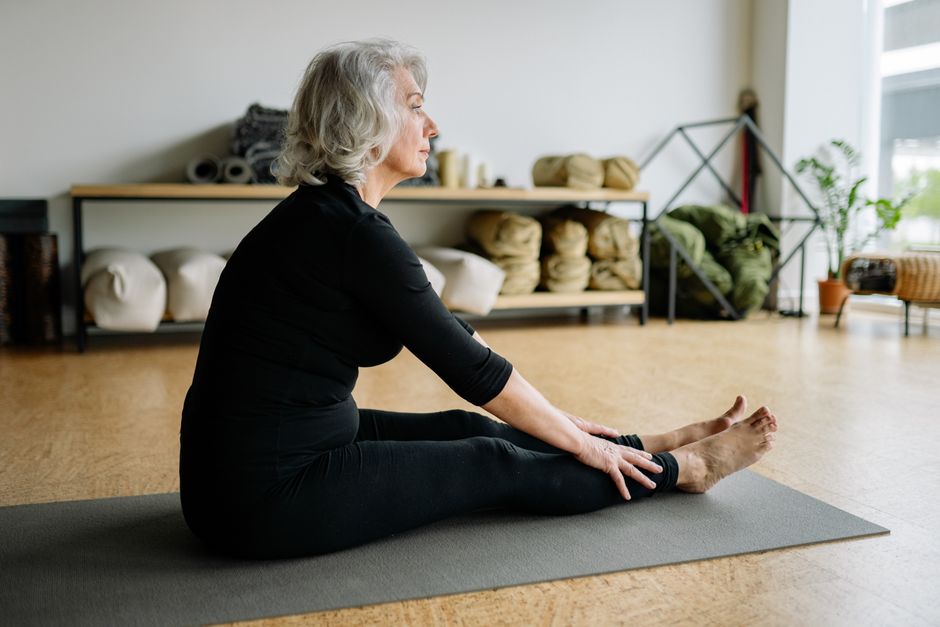
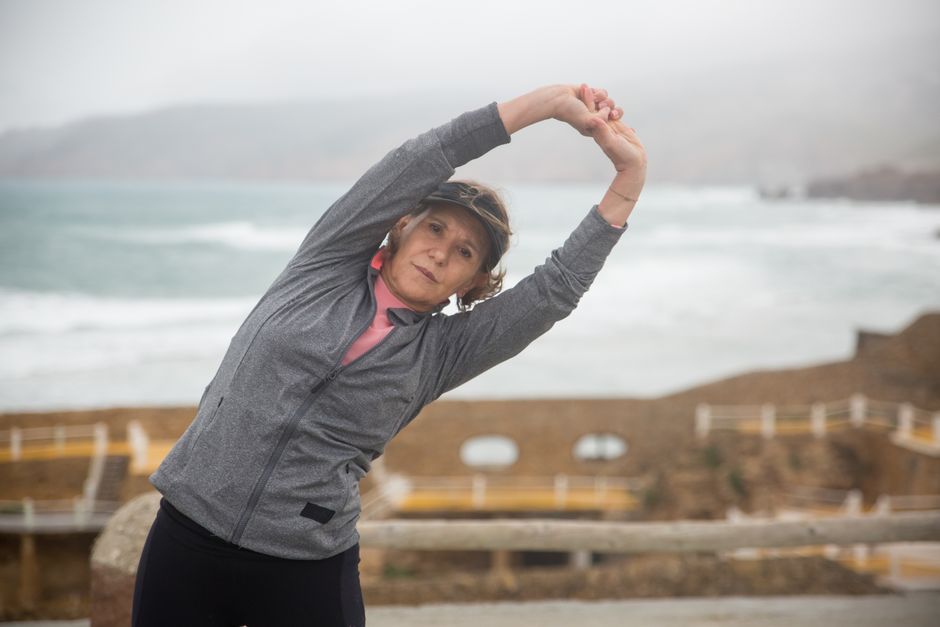
Photo: RDNE Stock project via Pexels
This article is for general informational purposes only and does not constitute medical or fitness advice. Consult your physician or a licensed physical therapist before starting a new exercise program, especially if you have existing health conditions.