 Dr. Patricia Williams
You wake up and immediately feel it: stiffness in your back, your hips, maybe your knees. For anyone over 70, those first few minutes out of bed can feel like a real struggle. The good news is simple. A 10-minute routine of morning stretches can transform how you feel all day long. No gym, no equipment, no prior experience needed.
Use this reference to pace your 10-minute routine with recommended durations based on commonly accepted guidelines for older adults.
| Order | Stretch | Position | Hold Duration | Repetitions | Target Area |
|---|---|---|---|---|---|
| 1 | Ankle Circles | Lying or seated | 5 sec per circle | 5 each direction, each foot | Ankles, circulation |
| 2 | Knee-to-Chest | Lying on back | 20-30 sec | 2 each leg | Lower back, hips |
| 3 | Seated Cat-Cow | Chair (edge of seat) | 5 sec each position | 5 full cycles | Spine mobility |
| 4 | Neck Tilts | Seated | 15-20 sec | 2 each side | Neck, upper shoulders |
| 5 | Shoulder Rolls | Seated or standing | 3 sec per roll | 10 forward, 10 backward | Shoulders, upper back |
| 6 | Seated Hamstring Stretch | Chair (one leg extended) | 20-30 sec | 2 each leg | Back of thighs |
| 7 | Calf Stretch | Standing (wall support) | 20-30 sec | 2 each leg | Calves, Achilles |
| 8 | Chest Opener | Seated or standing | 15-20 sec | 3 times | Chest, posture |
| Total time: approximately 10 minutes. Rest 5-10 seconds between stretches as needed. Always use chair or wall support for standing stretches. | |||||
General information for comparison, confirm specifics for your situation.
Why Morning Stretching Matters After 70
Your muscles lose flexibility as you age. Your joints get stiffer, especially after eight hours lying still. It’s completely normal, but you don’t have to accept it as unchangeable.
Gentle morning stretches warm up your muscles, get blood flowing, and tell your body it’s time to move. Studies show regular stretching cuts fall risk, reduces daily aches, and honestly improves your mood before breakfast.
Think of it like warming up a car before driving on a cold morning. Your body simply functions better when it’s been prepared.
Before You Begin: A Few Safety Tips
Talk to your doctor before starting any new routine, especially if you have osteoporosis, arthritis, recent surgery, or balance issues.
Then follow these rules:
- Never bounce. Slow and steady wins.
- Keep breathing. Holding your breath creates tension you don’t need.
- Stop if something hurts. Mild discomfort is fine; sharp pain isn’t.
- Go at your own pace. This isn’t a competition.
- Use support. A sturdy chair is your best friend for balance.
These stretches work in bed, sitting in a chair, or standing near a wall. Whatever your morning looks like.
Pro tip: Place a sturdy chair next to your bed the night before. Having it right there means you can ease into your routine without hunting for something to hold onto as you move from lying down to standing up.
The 10-Minute Morning Stretch Routine
10-Minute Morning Stretch Routine for Seniors · More Life Health Seniors on YouTube
This hits the areas that matter most: neck, shoulders, back, hips, legs. About one minute per stretch, and you’re done in ten.
1. Neck Side Stretch (1 minute)
Sit upright. Slowly tilt your right ear toward your right shoulder and hold for 15-20 seconds. Switch sides. This loosens the neck muscles that tighten overnight.
2. Shoulder Rolls (1 minute)
Roll both shoulders forward five times, then backward five times. Simple movement, huge impact on upper back and shoulder tension (where most people feel stiffness in the morning).
3. Seated Chest Opener (1 minute)
Sit up tall, interlace your fingers behind your back, and gently squeeze your shoulder blades together while lifting your chest slightly. Hold for 20 seconds. This undoes the forward slouch that builds overnight.
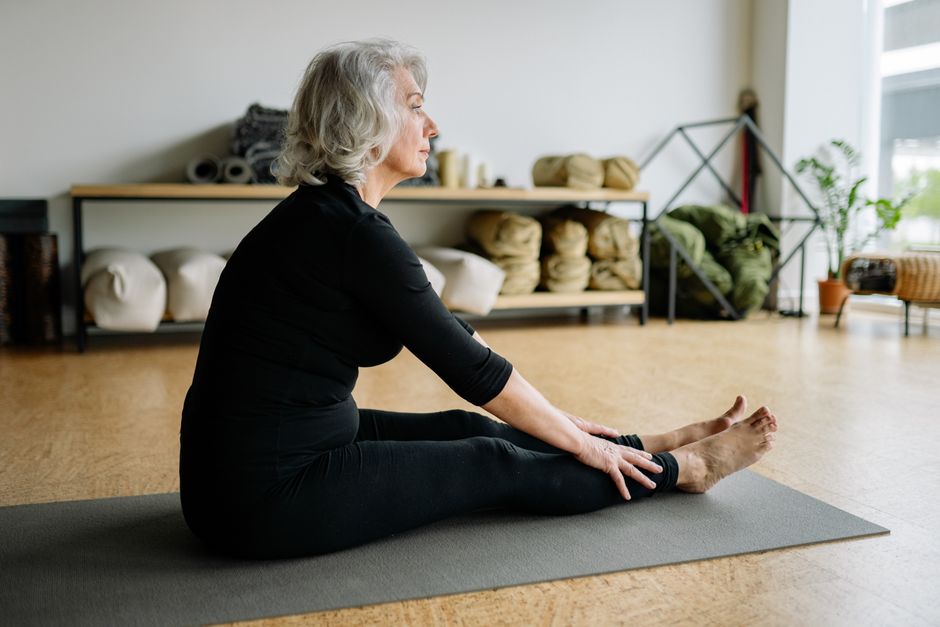
4. Seated Forward Bend (1 minute)
Hinge forward at the hips from your chair, letting your hands rest on your shins or thighs. Hold for 20-30 seconds and breathe deeply. You’ll feel it through your lower back and hamstrings.
5. Ankle Circles (1 minute)
Lift one foot slightly and rotate your ankle in slow circles: five times clockwise, five counter-clockwise. Switch feet. Your ankles control balance and walking, so getting blood flowing here matters from the first morning.
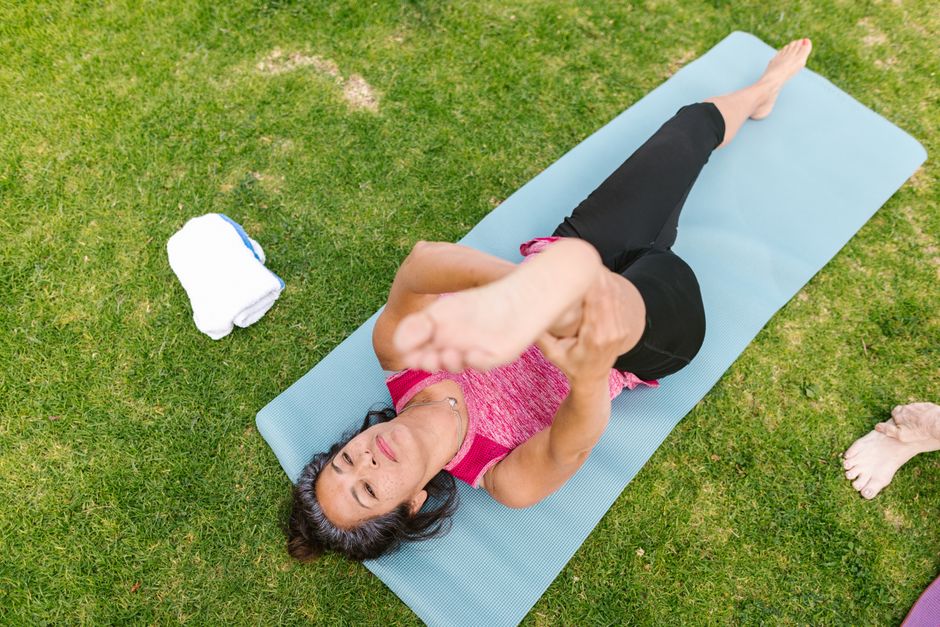
6. Seated Knee-to-Chest (1 minute)
While seated, gently bring one knee toward your chest, holding with both hands for 15-20 seconds. Switch legs. This relieves lower back and hip flexor tightness.
7. Standing Calf Stretch (1 minute)
Stand behind your chair, holding the back for support. Step one foot back and press the heel down firmly. You’ll feel the stretch in your calf. Hold 20 seconds per side. Strong calves support both circulation and your stride.
8. Hip Flexor Stretch (1 minute)
Still holding your chair, step forward with your right foot and shift your weight forward gently until you feel a mild stretch in the front of your left hip. Hold 20 seconds, then switch. Tight hip flexors are a major culprit in lower back pain.
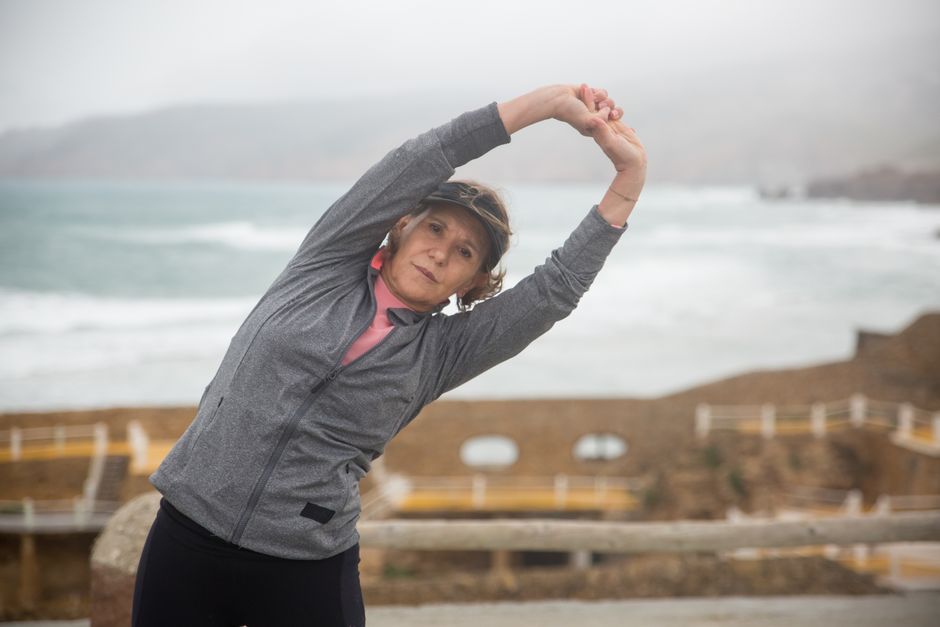
9. Standing Side Stretch (1 minute)
Stand tall holding your chair with one hand. Raise your opposite arm overhead and lean gently to the side, creating one long line from hip to fingertips. Hold 15-20 seconds per side. This opens up your entire side beautifully.
10. Deep Breathing Finish (1 minute)
Stand or sit comfortably and take five slow, deep breaths. Inhale for four counts, hold for two, exhale for four. This tells your nervous system your body is awake, calm, and ready to go.
How Often Should You Stretch?
Do this every morning if you can. Consistency builds real results, not perfection. Even four or five days a week produces noticeable improvements in flexibility and comfort within a few weeks.
Some mornings are harder than others. Even five minutes of gentle movement beats nothing. You might also find that stretching in the evening helps you sleep better.
What to Expect as You Build the Habit
The first week or two, some stretches will feel quite tight. That’s normal and just shows where your body’s been holding tension.
By weeks three and four, real changes emerge. Getting out of bed feels easier. Walking feels smoother. That familiar morning stiffness starts to fade. Some people notice better balance and posture too.
Your body at 70 or beyond can still adapt and improve. It just needs a gentle, consistent approach.
Making Stretching a Morning Ritual You Actually Enjoy
The best routine is one you’ll actually do. Pair your stretches with something you already love: the morning news, a favorite podcast, early morning quiet with tea nearby. Whatever clicks for you.
Lay out your clothes the night before as a visual reminder, or keep a simple checklist on your nightstand. Some people find it helps to stretch with a friend or spouse. The social element makes it far more likely you’ll both stick with it.
You’ve Got This
Starting a new habit at any age takes courage. The fact that you’re reading this says something about your commitment to feeling your best. Ten minutes each morning is a small investment with enormous returns: more comfortable movement, greater confidence, the kind of energy that carries you through your whole day. Be patient with yourself. Celebrate the small wins. Every single stretch is doing your body tremendous good.
Sources
- Nutramax Cosequin Senior Dog Soft Chews (60ct)
- Nutramax Cosequin DS Joint Supplement for Dogs (132ct)
Disclosure: As an Amazon Associate, we earn a small commission from qualifying purchases at no extra cost to you. We only recommend products that genuinely support the topics covered in this article.
- Nutramax Cosequin Senior Dog Soft Chews (60ct) (~$32), Senior-specific Cosequin formula with added Omega-3s, designed for aging dogs with joint and immune health needs.
- Nutramax Cosequin DS Joint Supplement for Dogs (132ct) (~$36), The #1 veterinarian-recommended joint supplement brand, clinically studied for reducing joint pain in dogs.